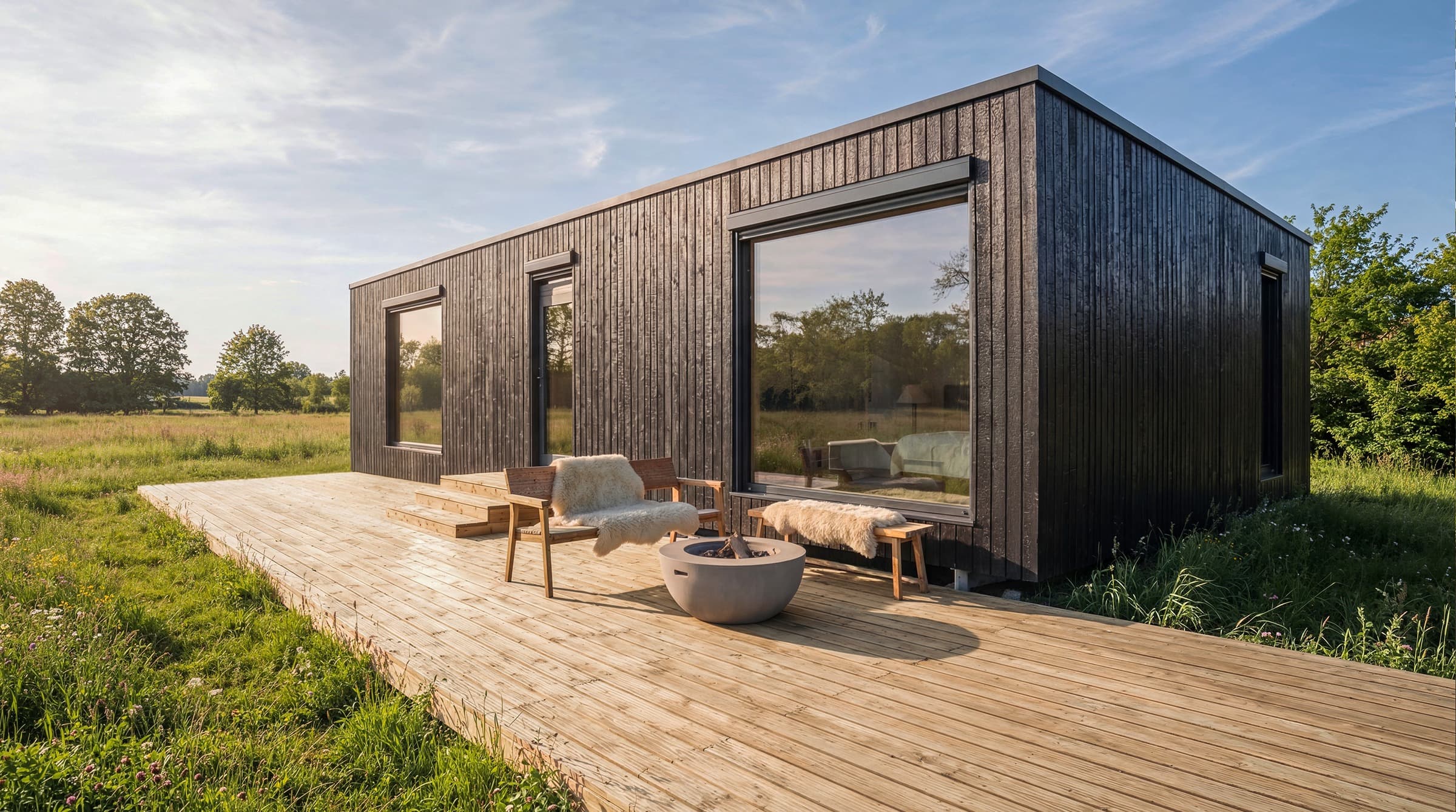
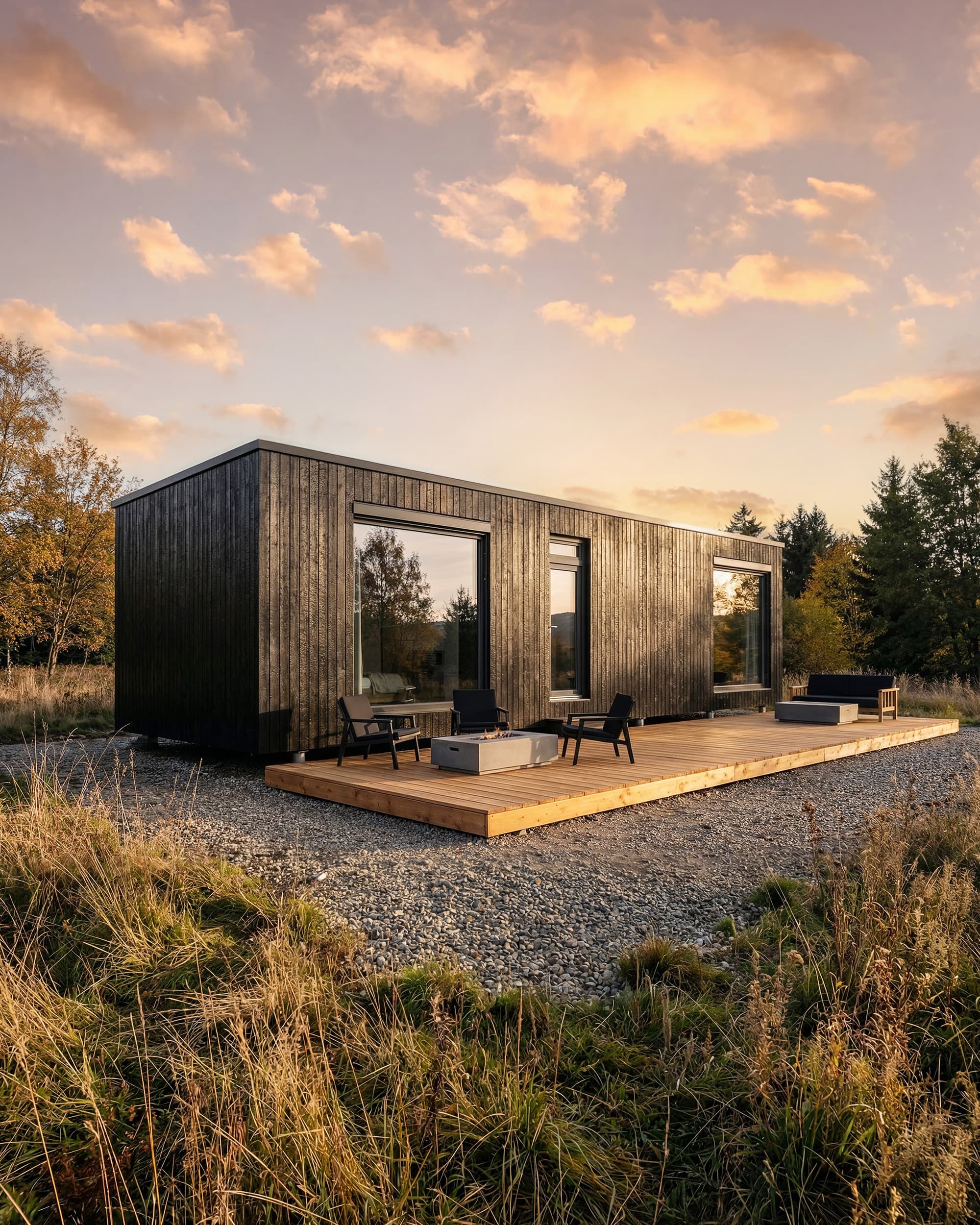
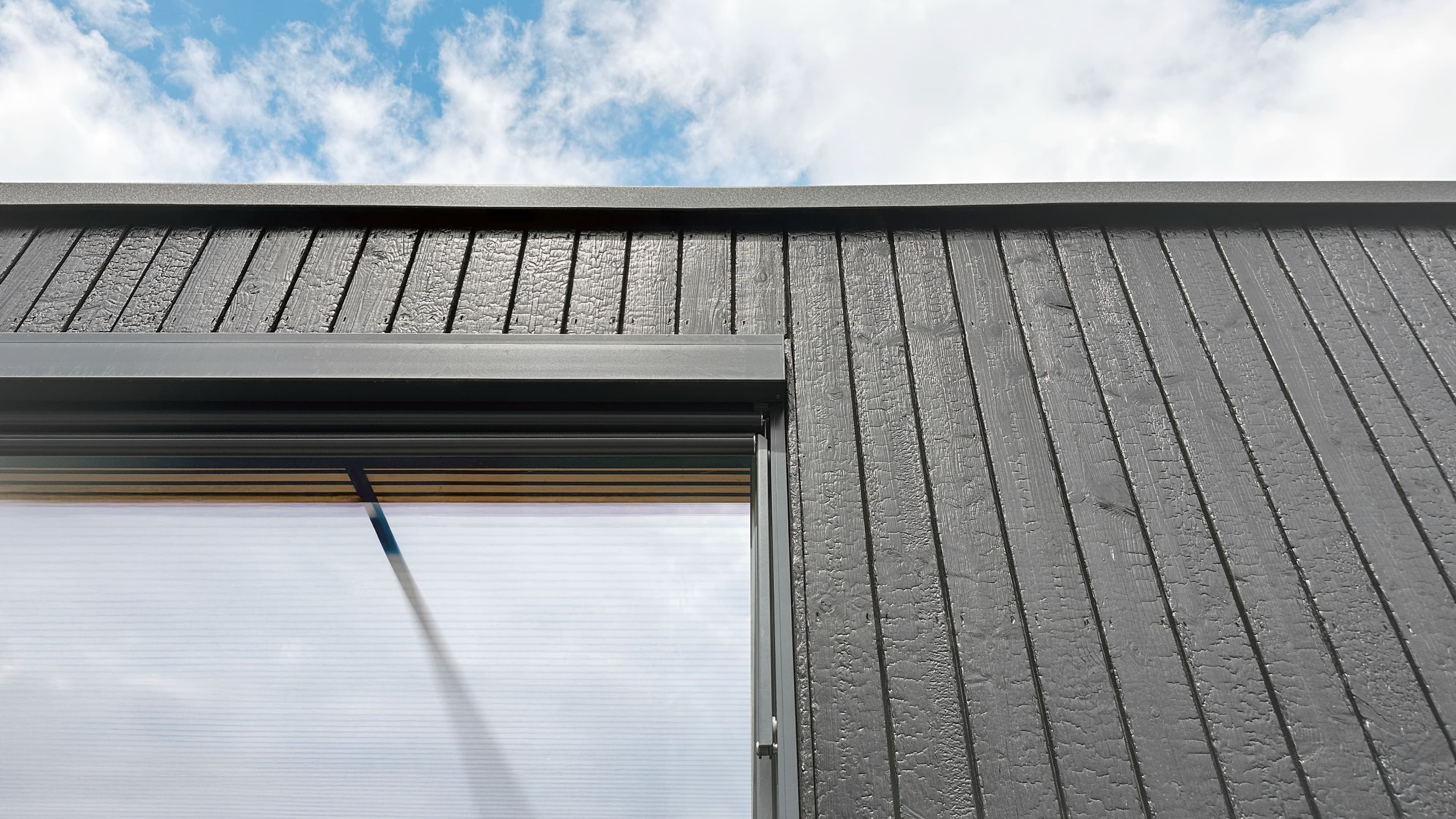
For single-family homes under three stories, timber-frame construction typically delivers better value -- using 30-50% less wood while achieving comparable thermal and structural performance. CLT excels in multi-story buildings where its superior span capabilities and seismic resistance justify the 20-30% cost premium. BIOBUILDS uses timber-frame construction throughout its modular system, with factory tolerances applied to every joint -- the right tradeoff for single-family residential.
Cross-laminated timber has dominated construction headlines for a decade, with projects reaching ever-greater heights -- from the 18-story Mjostaarnet in Norway to 25-story Ascent in Milwaukee. This visibility has created a perception that CLT represents the future of all timber construction. The reality is more nuanced. For the majority of residential projects, traditional timber-frame methods deliver equivalent or superior results at significantly lower cost.
The choice between these systems isn't about which is objectively better. It's about matching construction method to project requirements. Understanding where each excels -- and where each struggles -- allows you to make decisions based on your specific situation rather than industry marketing. This guide presents the evidence, from academic research to practical cost data, so you can evaluate both options clearly.
Understanding the fundamental differences
Timber-frame and CLT represent fundamentally different approaches to wood construction. Understanding these differences explains why cost, performance, and suitability vary so dramatically between systems.
Timber-frame construction uses a skeletal structure of dimensional lumber (typically 2x4 or 2x6 studs) to create a framework that carries structural loads. The spaces between framing members are filled with insulation, and the structure is enclosed with sheathing materials. This approach uses wood only where structurally necessary, filling the rest with lighter, less expensive materials. The method has been refined over centuries and remains the dominant construction system for residential buildings in North America, accounting for over 90% of single-family homes.
Cross-laminated timber takes a completely different approach. Developed across the EU during the early 1990s as a way to reduce sawmill waste, CLT creates large, solid panels by gluing layers of kiln-dried lumber boards stacked at perpendicular angles -- typically in three, five, or seven layers. This cross-lamination provides exceptional strength and dimensional stability, creating panels that can span large distances and resist forces from multiple directions.
| Characteristic | Timber-Frame | CLT |
|---|---|---|
| Structure type | Skeletal framework | Solid panel system |
| Typical applications | 1-3 story residential | Multi-story, commercial |
| Material efficiency | High (uses less wood) | Lower (solid panels) |
| Span capability | Limited by member size | Up to 6m without support |
| On-site modification | Easily adaptable | Requires cutting equipment |
| Typical thickness | 140-200mm wall assemblies | 100-336mm panels + insulation |
The distinction matters because these structural approaches create cascading differences in cost, construction process, foundation requirements, and optimal applications. A system designed for tall commercial buildings behaves very differently than one optimized for family homes.
Structural performance compared
Both timber-frame and CLT provide more than adequate structural performance for residential construction. The differences lie in their behaviour under specific loading conditions and their suitability for different building scales.
Load-bearing capacity
CLT panels excel at carrying loads across large spans. A 5-ply CLT panel can span approximately 6 metres under typical residential loading -- significantly more than conventional timber-frame floor joists. This capability makes CLT valuable for open-plan commercial spaces and multi-story buildings where long spans reduce the need for interior columns.
For typical residential construction, however, this capability often goes unused. A three-bedroom home rarely requires spans exceeding 4-5 metres, well within the capability of engineered timber-frame systems using I-joists or floor trusses. The additional capacity CLT provides simply becomes an expensive over-specification.
Seismic resistance
CLT has demonstrated exceptional earthquake performance in rigorous testing. The landmark SOFIE project -- a collaboration between Italy's National Research Council and Japan's National Institute for Earth Science and Disaster Prevention -- put this to the ultimate test in October 2007. A full-scale, seven-story CLT building was constructed on Japan's E-Defense shake table, the world's largest earthquake simulator, and subjected to the recorded ground motion from the 1995 Kobe earthquake.
The building performed remarkably. After multiple test sequences including earthquakes exceeding the 1995 Kobe event that destroyed over 50,000 buildings, the CLT structure showed only minor softening in connections and no residual deformation. It remained structurally sound and habitable.
Timber-frame construction also performs well in seismic events, particularly in low-rise buildings. The light weight reduces inertial forces, while properly designed shear walls provide lateral resistance. For buildings under three stories in moderate seismic zones -- which describes most European residential construction -- timber-frame provides adequate seismic performance without CLT's additional cost.
Fire performance
Both systems benefit from wood's counterintuitive fire behaviour: large timber members char on the surface, creating an insulating layer that protects the structural core. CLT's thick, solid panels provide inherent fire resistance -- a 7-inch CLT wall tested to over three hours of fire resistance in laboratory conditions.
Timber-frame systems typically rely on protective cladding (gypsum board) for fire rating rather than the wood itself. When properly detailed, timber-frame walls achieve equivalent fire ratings to CLT. The difference is that CLT provides this performance inherently, while timber-frame requires the complete assembly to function as designed.
Cost analysis for residential projects
The cost question often drives decisions between these systems, and the numbers strongly favour timber-frame for typical residential construction.
Material costs
CLT requires substantially more timber volume than timber-frame construction for equivalent buildings. Solid panels use wood throughout, while timber-frame uses wood only for the structural skeleton. Research indicates CLT requires approximately 30-50% more wood by volume than timber-frame for the same floor area. This difference directly impacts material costs.
Beyond raw timber volume, CLT panels require sophisticated manufacturing: precision cutting, adhesive application, hydraulic pressing, and specialised machining. These production requirements add cost. A Colorado School of Mines study comparing identical house designs found structural framing costs increased by 20-30% when using CLT instead of timber-frame construction.
Foundation costs
CLT's solid panels create significantly heavier structures than timber-frame equivalents. This weight requires stronger, deeper foundations. Research suggests CLT buildings may require foundations sized 35% larger than equivalent timber-frame structures. Foundation work represents a substantial portion of residential construction budgets -- often 8-15% -- making this difference meaningful.
Timber-frame construction's lighter weight allows shallower foundations and, in some cases, alternative foundation systems like ground screws that reduce both cost and environmental impact. This advantage compounds in locations with difficult soil conditions where foundation costs escalate quickly.
Labour costs
CLT offers genuine advantages in labour efficiency. Large prefabricated panels arrive on site ready for installation, dramatically reducing on-site construction time. Projects that might take months with traditional framing can reach weather-tight enclosure in weeks. Industry research suggests CLT construction can reduce labour costs by up to 25% compared to traditional timber-frame.
However, this advantage requires context. CLT installation typically demands mobile cranes and specialized crews familiar with panel handling. These requirements add costs that partially offset labour savings, particularly for smaller residential projects where crane mobilization represents a larger percentage of total project cost.
Total project costs
The Colorado School of Mines study mentioned earlier provides concrete numbers for residential comparison. For a 1,850 square foot (172m2) single-family home, total project costs were approximately $393,000 for stick-frame versus $477,000 for CLT -- a 21% premium. While CLT dramatically reduced framing time, the material and equipment costs more than offset labour savings.
For single-family homes and low-rise residential buildings, timber-frame construction typically costs 15-25% less than CLT while providing equivalent structural performance. CLT's cost advantages emerge primarily in mid-rise construction (6+ stories) where its spanning capabilities reduce structural complexity and labor savings compound across larger floor plates.
Thermal performance and airtightness
Both systems can achieve excellent thermal performance, including Passivhaus certification. The approaches differ, but the achievable outcomes are equivalent.
Thermal conductivity
CLT panels have a thermal conductivity of approximately lambda = 0.13 W/mK -- better than concrete or steel but relatively poor compared to insulation materials. A 100mm CLT panel provides roughly R-6 insulating value. This means CLT buildings almost always require additional external insulation to meet modern energy codes.
Timber-frame construction separates structure from insulation. The skeletal framework creates cavities that are filled with insulation (mineral wool, cellulose, or other materials with lambda values around 0.035-0.040 W/mK). This approach achieves high thermal resistance without requiring additional external layers, often resulting in thinner overall wall assemblies.
For Passivhaus projects targeting U-values of 0.10-0.14 W/m2K, both systems require careful design but achieve these targets through different strategies. CLT relies on external insulation layers, while timber-frame builds insulation into the wall assembly itself.
Airtightness
CLT has a reputation for inherent airtightness. Solid wood panels, when properly sealed at joints, create an excellent air barrier. The dense panel construction naturally limits air movement through the material itself.
However, this reputation requires nuance. CLT panels can shrink and swell with moisture changes, potentially creating gaps at connections over time. Best practice often includes additional airtight membranes over CLT panels to ensure long-term performance -- the same approach required for timber-frame construction.
Timber-frame systems achieve airtightness through careful membrane installation and junction detailing. While this requires more attention during construction, factory-built timber-frame modules can achieve airtightness equal to or better than CLT through precision manufacturing and quality control. A controlled factory environment makes that consistency easier to achieve than on exposed construction sites.
Passivhaus standards are easily achievable with CLT combined with proper insulation materials. The solid panel construction contributes to thermal mass and decrement delay, beneficial for summer comfort in high-temperature climates.
-- GreenSpec Building Design
Construction speed and complexity
CLT's prefabricated nature offers genuine speed advantages for site assembly. Understanding when these advantages matter -- and when they don't -- helps inform system selection.
Manufacturing and lead times
CLT panels require specialized manufacturing facilities with significant capital investment. Fewer manufacturers exist compared to timber-frame component suppliers, potentially creating longer lead times. Panel production involves laying boards, gluing, pressing, and precision machining -- a process that typically adds 6-12 weeks between design finalization and panel delivery.
Timber-frame construction uses widely available dimensional lumber and standard components. Multiple suppliers in every region mean shorter lead times and more competitive pricing. For projects on tight schedules, this supply chain advantage can offset CLT's faster site assembly.
Site assembly
CLT excels here. Large panels arrive pre-cut to specification with window and door openings already machined. A crew with a crane can erect the structure of a single-family home in days rather than weeks. One builder reported framing a CLT project in three weeks versus an estimated eight to ten weeks for traditional stick-framing.
This speed advantage requires important caveats. CLT assembly demands upfront planning precision -- on-the-spot modifications aren't practical with solid panels. Projects must be fully detailed before fabrication begins. Any design changes after manufacturing mean expensive rework or waste.
Timber-frame construction offers more flexibility. Adjustments can be made during construction without scrapping pre-fabricated components. For projects where requirements may evolve -- renovation contexts, for example -- this adaptability has genuine value.
Equipment requirements
CLT panels are heavy. Even a modest wall panel may weigh several hundred kilograms. Mobile cranes are typically essential for CLT construction, adding equipment costs and requiring site access considerations. Urban infill projects with limited crane access may find CLT impractical regardless of other advantages.
Timber-frame components can be handled manually or with light equipment. A small crew can build a timber-frame home without cranes, reducing equipment costs and site constraints.
Environmental impact and carbon storage
Both timber-frame and CLT offer substantial environmental advantages over concrete and steel. The comparison between them is more nuanced.
Embodied carbon
Mass timber products, including CLT, can reduce embodied carbon by 40-75% compared to steel or concrete construction. A review of 27 studies found CLT buildings typically achieve approximately 40% lower lifetime emissions than equivalent concrete structures. This represents a significant contribution to reducing construction's environmental impact.
Timber-frame construction offers similar advantages over steel and concrete, though direct comparison with CLT is complex. Per building, timber-frame uses less wood -- which means less carbon stored in the structure but also less forest harvesting required. The "better" choice depends on whether you prioritize maximizing carbon storage or minimizing forest impact.
Carbon storage
Timber stores carbon absorbed during tree growth. Each cubic metre of wood contains approximately 0.9 tonnes of CO2. CLT's higher timber volume per building means more carbon stored -- potentially creating structures that are effectively carbon sinks rather than carbon sources.
This benefit requires sustainable forest management. If CLT production drives unsustainable harvesting, the carbon benefits disappear. Both systems require responsible sourcing from certified forests (FSC or PEFC) where harvested trees are replaced and allowed to regrow.
End-of-life considerations
Both systems allow wood reuse or energy recovery at end of life. CLT panels can potentially be disassembled and reused in new construction if properly designed for deconstruction. Timber-frame components can similarly be salvaged, though the smaller member sizes may limit reuse options.
Most current buildings are not designed for easy disassembly, making theoretical end-of-life benefits less certain in practice. The most impactful environmental choice is often selecting timber over steel or concrete rather than choosing between timber systems.
Which system should you choose?
The decision between timber-frame and CLT depends on project specifics. Here's a framework for evaluation based on the evidence presented.
Choose timber-frame when:
- Building 1-3 stories. The structural capabilities that make CLT valuable -- long spans, lateral resistance for tall buildings -- go largely unused in low-rise construction. You pay for capacity you don't need.
- Budget matters. Timber-frame typically costs 15-25% less than CLT for equivalent residential buildings. That difference can fund better windows, superior insulation, or simply more house.
- Design may evolve. Timber-frame accommodates on-site adjustments that CLT's pre-fabricated panels cannot. For renovation projects or clients who might change their minds, this flexibility has real value.
- Foundation conditions are challenging. Lighter weight means simpler, less expensive foundations. On difficult sites, this advantage compounds.
- Local contractors are available. Timber-frame skills are widespread. CLT installation often requires specialist crews, adding cost or limiting contractor options.
Choose CLT when:
- Building 4+ stories. CLT's structural efficiency and fire performance advantages become meaningful in taller buildings where code requirements intensify.
- Large open spans are essential. If your design depends on column-free spaces exceeding 5-6 metres, CLT may be the most practical timber solution.
- Speed to weather-tight is critical. For projects where faster enclosure has significant value -- commercial buildings with aggressive timelines, for example -- CLT's rapid assembly justifies its premium.
- Maximum carbon storage is a priority. If your project explicitly targets carbon sequestration rather than just emissions reduction, CLT's higher timber volume stores more carbon.
- Exposed wood aesthetic is desired throughout. CLT panels can serve as finished interior surfaces, eliminating the need for additional cladding and creating distinctive interior spaces.
| Project Type | Recommended System | Reasoning |
|---|---|---|
| Single-family home (1-2 floors) | Timber-frame | Better value, adequate performance, local expertise |
| Multi-family residential (3-4 floors) | Either / hybrid | Project-specific analysis required |
| Mid-rise residential (5-8 floors) | CLT | Structural advantages justify cost premium |
| Commercial / public buildings | CLT | Open spans, fire ratings, speed benefits |
| Passivhaus residential | Either | Both achieve certification with proper design |
The modular advantage
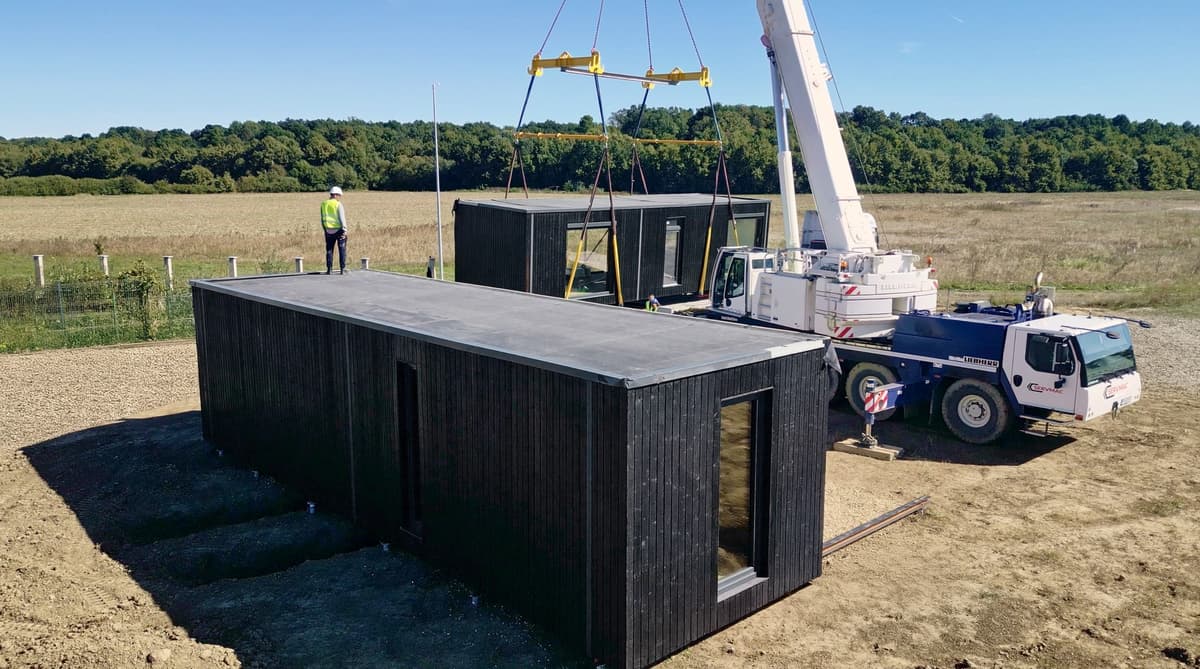
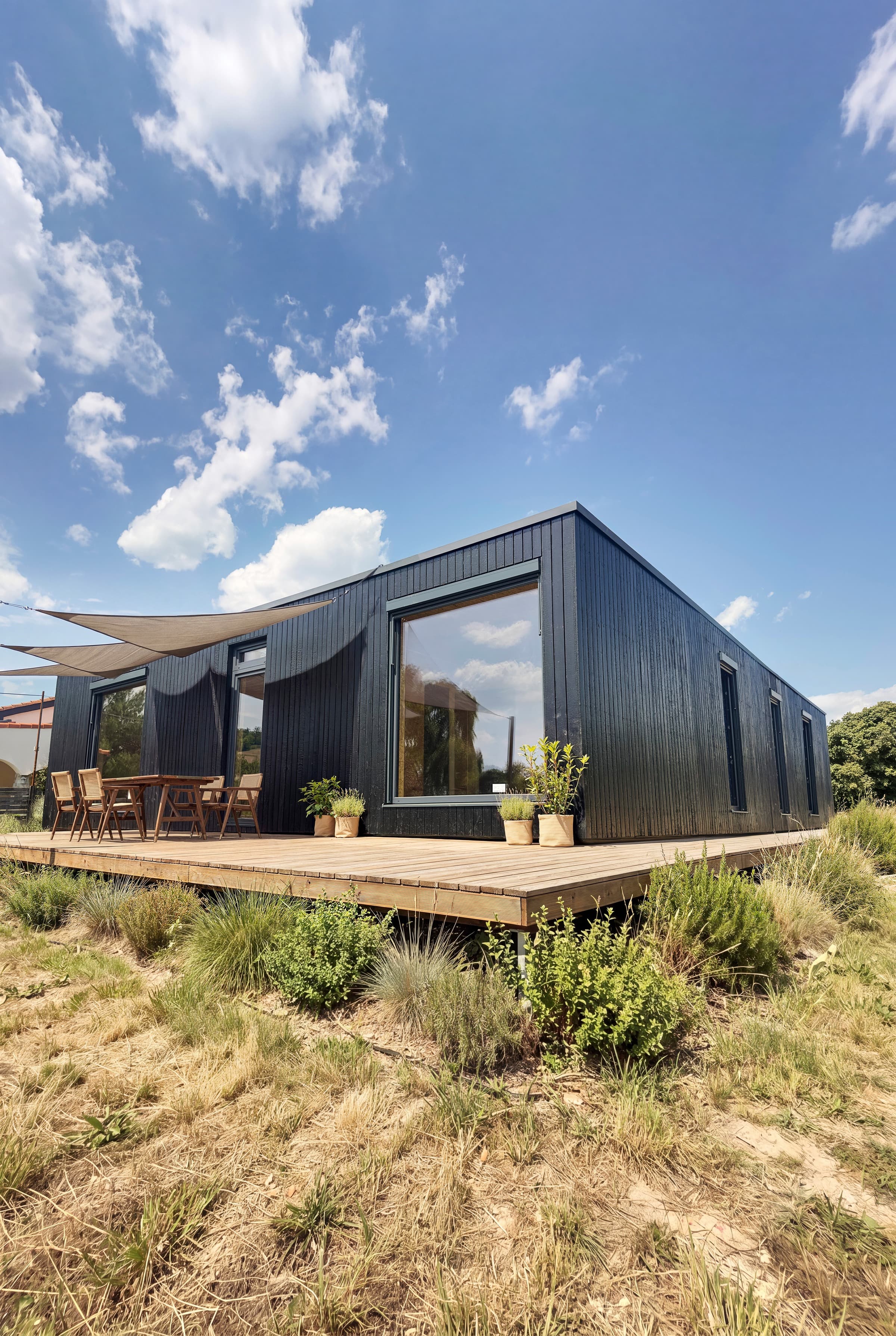
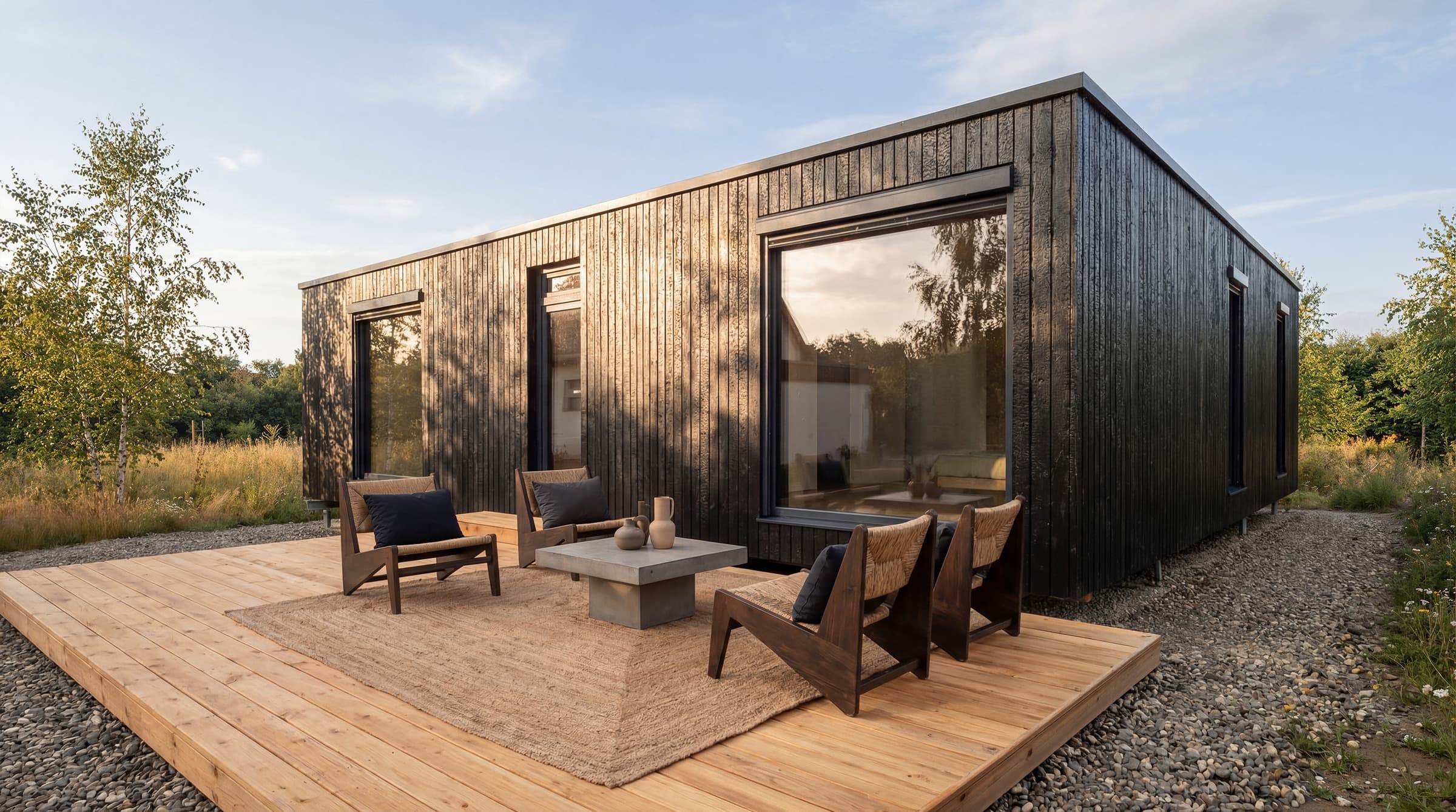
Factory-built modular construction offers a third path that combines advantages of both systems. BIOBUILDS uses timber-frame construction produced in controlled factory conditions, emphasizing:
- CLT-level precision. Factory manufacturing with millimetre tolerances delivers the fit and finish quality associated with CLT panels.
- Timber-frame economics. Material-efficient design keeps costs comparable to conventional timber-frame while exceeding site-built quality.
- Controlled execution. Factory conditions keep weather away from insulation, membranes, and finish work, which improves consistency compared with open-site assembly.
- 3-week production. The modular production process is presented by BIOBUILDS as delivering complete homes in three weeks, competitive with CLT's speed advantages while maintaining cost efficiency.
For residential projects seeking the best of both worlds -- precision manufacturing, optimal material use, verified Passivhaus performance, and competitive cost -- factory-built modular timber-frame represents the most compelling option available today.
The timber construction debate often oversimplifies into "traditional versus modern" or "cheap versus quality." The reality is that both timber-frame and CLT are excellent systems with distinct optimal applications. Understanding where each excels allows you to match method to project requirements rather than following industry trends.
For most family homes in Europe, timber-frame construction -- especially when produced in factory conditions with modern quality control -- delivers the best combination of performance, value, and sustainability. CLT remains the superior choice for taller buildings and commercial applications where its unique capabilities justify its premium cost. The informed choice is not which system is "better" but which system is better for your specific project.