
True sustainability extends far beyond solar panels and recycling bins. For new homes, embodied carbon (materials and construction) now accounts for 50% of lifetime emissions. Timber construction produces 48-75% less carbon than concrete or steel. Building lifespan matters enormously -- an 80-year home has 29% lower environmental impact than a 50-year one. Most "green" certifications show 15-30% performance gaps between design and reality; only Passivhaus delivers consistently verified results.
The word "sustainable" appears on everything from cleaning products to construction projects, often meaning little more than "slightly less harmful than the obvious alternative." In residential construction, this vagueness creates genuine confusion. Homeowners seeking environmentally responsible choices face a marketplace where 53% of green claims provide vague, misleading, or unfounded information according to the EU Commission. This guide cuts through the marketing fog to examine what genuinely determines a home's environmental impact.
Understanding sustainability requires examining the complete picture: where emissions actually originate, which material choices create meaningful differences, how long a building serves its purpose, whether occupants remain healthy inside, and which certifications deliver verified results rather than aspirational targets. The answers challenge many common assumptions about green building.
The sustainability paradox
Buildings account for 39% of global energy-related carbon emissions. This figure breaks down into two distinct categories with very different implications for homeowners. Operational carbon -- the 28% from heating, cooling, lighting, and powering buildings -- receives most attention in sustainability discussions. Embodied carbon -- the remaining 11% from materials and construction -- has historically been overlooked.
This balance is shifting dramatically. As electricity grids decarbonize and buildings become more energy efficient, operational emissions decline over a building's lifetime. Embodied carbon, by contrast, is locked in at construction and cannot be reduced afterward. The World Green Building Council projects that by 2050, embodied carbon will represent nearly half of all new construction emissions.
We need to start paying more attention to embodied carbon now if we want to make a difference in the future. As we strive for net zero by 2050, embodied carbon will play a crucial role in whether or not we succeed.
-- One Click LCA, Embodied Carbon Research
This creates a paradox. Building an extremely energy-efficient home often requires more materials, better insulation, and higher-specification components -- all of which increase embodied carbon. The most sophisticated triple-glazed windows, the thickest insulation, the most advanced heat recovery systems consume significant resources in their manufacture. The question becomes whether lifetime operational savings justify upfront material investment.
Embodied carbon: the hidden 50%
For new energy-efficient buildings, embodied carbon already accounts for approximately 50% of total lifecycle emissions. This figure contradicts the common assumption that operating a building matters most. The proportion increases further as operational efficiency improves and grid electricity becomes cleaner.
Research consistently demonstrates that embodied carbon can be reduced by 10-20% without increasing construction costs through thoughtful material selection and design optimization. Compact building forms reduce embodied carbon by up to 5% simply by minimizing envelope area. Lightweight structural design achieves up to 20% reduction by using less material overall.
The building industry acknowledges this reality. The World Green Building Council's vision calls for at least 40% reduction in embodied carbon for all new buildings by 2030, with significant upfront carbon reduction. By 2050, new buildings and infrastructure should achieve net zero embodied carbon. These targets cannot be met without fundamentally changing material choices and construction methods.
Where embodied carbon originates
The manufacturing of three materials -- concrete, steel, and aluminum -- accounts for approximately 10% of total global anthropogenic greenhouse gas emissions. These materials dominate conventional construction. Concrete requires enormous energy to produce cement clinker. Steel production typically involves blast furnaces running at extreme temperatures. Aluminum manufacturing consumes massive amounts of electricity.
Each lifecycle stage contributes emissions: raw material extraction, processing and manufacturing, transportation to site, on-site construction activities, and eventually demolition and disposal. The system boundary chosen for analysis significantly affects results -- cradle-to-gate assessments (factory output) show lower figures than cradle-to-grave analyses that include end-of-life processing.
Material choices that matter
Research comparing structural materials reveals substantial differences in embodied carbon intensity. Large-scale studies examining building frames across multiple projects have established median values that demonstrate timber's advantage.
A comprehensive analysis published in the Journal of Industrial Ecology examined 127 different frame configurations from 2 to 19 stories across timber, concrete, and steel construction. Results showed clear differences in embodied carbon intensity: timber frames averaged 119 kgCO2e/m2, concrete frames 185 kgCO2e/m2, and steel frames 228 kgCO2e/m2.
| Structural Material | Median Embodied Carbon | vs. Timber | Carbon Storage |
|---|---|---|---|
| Timber frame | 119 kgCO2e/m2 | Baseline | Stores 0.9t CO2/m3 |
| Concrete frame | 185 kgCO2e/m2 | +55% | None |
| Steel frame | 228 kgCO2e/m2 | +92% | None |
These figures tell only part of the story. Timber uniquely stores carbon absorbed during tree growth. Each cubic metre of timber in a building locks away approximately 0.9 tonnes of CO2 that would otherwise remain in the atmosphere. This transforms buildings from carbon sources into carbon sinks -- a characteristic impossible to achieve with any mineral-based material.
The US Forest Service comparison of a mass timber building (Adohi Hall at the University of Arkansas) against an equivalent steel structure found emissions per square metre of 198 kg CO2 equivalent for mass timber versus 243 kg for steel -- an 18% reduction. The timber building also required 35% smaller foundations due to lower structural weight, generating additional material savings not captured in per-area comparisons.
Beyond carbon: material health
Embodied carbon represents environmental impact, but material choices also affect occupant health throughout a building's life. Conventional construction relies heavily on synthetic materials that release volatile organic compounds (VOCs) for years after installation. Composite wood products often contain formaldehyde-based adhesives. Petroleum-derived insulation materials off-gas throughout their service life.
Organic materials -- solid timber, cellulose insulation from recycled paper, wood fiber boards, natural renders -- typically emit far fewer VOCs. They regulate indoor humidity through moisture absorption and release, contributing to more comfortable and healthier interior environments. This consideration extends sustainability beyond environmental metrics to encompass human wellbeing.
Material selection creates compounding benefits. Timber construction simultaneously reduces embodied carbon (50-75% less than concrete/steel), stores atmospheric carbon (0.9t CO2 per cubic metre), requires lighter foundations (35% reduction), and improves indoor air quality through fewer VOC emissions. These advantages multiply rather than trade off against each other.
Operational energy efficiency
Operational carbon -- emissions from heating, cooling, lighting, and powering a building -- still accounts for the majority of lifetime emissions in conventionally constructed homes. Reducing this component remains essential, but the approach matters as much as the outcome.
Most building standards focus on designed performance. Energy models predict consumption based on assumptions about occupant behavior, weather patterns, and system operation. Reality frequently diverges from predictions, sometimes dramatically. Research examining LEED-certified buildings found that more than half exceeded predicted energy consumption by over 25%. Some BREEAM-certified buildings showed actual energy-related carbon emissions four times higher than design stage expectations.
This performance gap undermines the fundamental purpose of efficiency standards. A building designed to be low-energy but operating at conventional consumption levels delivers neither environmental nor economic benefits to its occupants. The gap originates from multiple sources: optimistic modelling assumptions, changed occupant behavior, commissioning failures, and inadequate system maintenance.
Why Passivhaus performs differently
Passivhaus certification addresses the performance gap through mandatory testing rather than modelled predictions. Every certified building must pass a blower door test demonstrating actual air-tightness. This physical measurement cannot be faked or achieved through optimistic assumptions -- the building either meets the 0.6 air changes per hour target or it does not.
The requirement for tested performance creates accountability throughout construction. Builders cannot cut corners on air sealing details knowing that testing will reveal deficiencies. This verification approach explains why Passivhaus buildings consistently deliver performance within 10% of design predictions, while LEED and BREEAM certified buildings commonly underperform by 15-30%.
The strict heating demand limit -- 15 kWh/m2 annually -- reduces consumption by 95% compared to conventional German construction. This represents genuine transformation rather than incremental improvement. At such low demand levels, traditional heating systems become unnecessary. Buildings can maintain comfort using only the heat from occupants, appliances, and solar gain through windows, with minimal supplementary heating.
Longevity: the overlooked factor
Building lifespan fundamentally affects environmental impact in ways rarely discussed in sustainability conversations. Embodied carbon is amortized across years of use -- a building lasting 100 years effectively spreads its construction emissions over twice as many years as one lasting 50.
Research published in Architectural Engineering and Design Management quantified this relationship precisely. Compared to a baseline 50-year lifespan: an 80-year building reduces environmental impact by 29%, a 100-year building by 38%, and a 120-year building by 44%. These reductions require no additional technology or cost -- simply building structures that endure longer.
Nordic sustainability tools consistently assume building lifespans of 50-60 years for environmental assessments. This conservative assumption nearly doubles the annualized environmental impact of construction materials compared to realistic lifespans of 80-120 years achieved by well-built structures. The assumption may encourage selection of cheaper, shorter-lived materials whose apparent performance benefits vanish when their actual shorter useful lives are considered.
What determines building lifespan
Four factors primarily determine how long a building remains serviceable: material durability, construction quality, maintenance accessibility, and adaptability to changing needs. Material durability depends on appropriate selection for local conditions -- timber properly detailed to shed water, foundations designed for local soil, finishes suitable for regional climate. Construction quality reflects workmanship precision and attention to critical details like weather sealing and thermal bridging.
Maintenance accessibility becomes increasingly important as buildings age. Designs that allow easy inspection and repair of critical components support extended service life. Buildings where essential systems are inaccessible or where repairs require disproportionate intervention tend toward premature replacement.
Adaptability addresses functional rather than physical obsolescence. Buildings that accommodate changing family sizes, evolving technology, and shifting lifestyle preferences avoid demolition not because they cannot stand longer but because they no longer serve occupants' needs. Modular construction inherently supports adaptability -- adding or reconfiguring modules as needs change extends functional lifespan without requiring complete reconstruction.
Indoor health and air quality
Sustainability cannot ignore the humans who inhabit buildings. People spend over 80% of their time indoors. Indoor air quality directly affects health, cognitive function, sleep quality, and overall wellbeing. A "sustainable" home that harms its occupants through poor air quality fails fundamentally regardless of its environmental credentials.
EPA research found that indoor VOC levels are consistently 2-5 times higher than outdoors, regardless of whether homes were located in rural or industrial areas. During activities involving VOC-emitting products like painting or cleaning, levels can spike to 1,000 times outdoor concentrations. New buildings experience particularly high VOC levels because of abundant new materials -- adhesives, paints, sealants, flooring -- all off-gassing simultaneously.
The off-gassing from new construction follows a multi-exponential decay pattern discernible over at least two years. The most volatile compounds decay with a time-constant of days; the least volatile persist for years. This explains why new buildings often require intensive ventilation for months after completion -- the very buildings that should be healthiest can be least suitable for occupation initially.
The ventilation requirement
Energy-efficient buildings create a dilemma: the air-tightness required to minimize heat loss also prevents natural air exchange that dilutes indoor pollutants. Without mechanical ventilation, tight buildings accumulate VOCs, CO2, moisture, and other contaminants to levels that compromise occupant health.
Passivhaus addresses this through mandatory mechanical ventilation with heat recovery. Fresh filtered air circulates continuously while heat recovery systems capture up to 96% of outgoing energy. The result: constant fresh air supply without energy penalty. Air quality in properly ventilated Passivhaus buildings typically exceeds that of conventional construction despite -- or rather because of -- superior air-tightness.
Material selection provides the other half of the solution. Using organic materials with inherently low VOC emissions reduces the source rather than treating symptoms through ventilation. BioBuilds uses 98% organic materials -- timber structure, cellulose insulation, wood fiber boards -- that emit minimal VOCs from day one. Combined with continuous filtered ventilation, this creates indoor environments measurably healthier than conventional construction.
Certification reality versus marketing
The construction industry offers dozens of sustainability certifications, each promising to identify genuinely green buildings. The EU alone hosts 230 sustainability labels and 100 green energy labels with vastly different transparency and rigor. The European Commission found that half of all green labels offer weak or non-existent verification of claims.
This proliferation creates confusion and enables greenwashing -- companies investing more in marketing environmental credentials than in actual sustainable practices. Common examples include claiming buildings are "low carbon" without specifying baselines, highlighting single features while ignoring overall impact, and using emissions calculations based on industry averages rather than actual project data.
| Certification | Focus | Performance Gap | Verification |
|---|---|---|---|
| LEED | Comprehensive sustainability | >25% for majority of buildings | Documentation review |
| BREEAM | Lifecycle sustainability | 15-30% typical underperformance | Professional assessor |
| Passivhaus | Energy efficiency + comfort | Within ±10% typically | Mandatory physical testing |
LEED certification, perhaps the most recognized globally, has faced criticism for energy performance gaps. Research examining 121 LEED New Construction certified buildings found more than half exceeded energy predictions by over 25%. Total energy savings measured in new LEED buildings were 11% lower than expected according to one comprehensive study. The certification process relies on submitted documentation and energy modelling rather than verified post-occupancy performance.
BREEAM takes a more holistic approach than Passivhaus, evaluating materials, water, biodiversity, and community factors alongside energy. This breadth has value but comes at the cost of specificity -- buildings can earn high ratings through point accumulation across categories while underperforming significantly on energy. One investigation found BREEAM-certified buildings with energy-related carbon emissions four times higher than design predictions.
What differentiates genuine standards
Passivhaus stands apart through its focus on verified performance rather than design intentions. The certification requires physical testing: a blower door test proving air-tightness, and in many cases thermographic imaging to identify thermal bridges. Buildings that fail testing cannot receive certification regardless of their design quality or documentation.
This approach aligns incentives throughout the construction process. Designers must create buildable details. Contractors must execute precisely. Quality control must catch defects before completion. The testing requirement transforms sustainability from aspiration to verified reality -- exactly what homeowners seeking genuine environmental performance need.
Not all certifications deliver equal value. More than half of LEED buildings exceed energy predictions by over 25%. Passivhaus delivers verified performance within 10% of design through mandatory physical testing. When evaluating sustainability claims, ask not what the design promises but what post-occupancy measurements verify.
The complete sustainability picture
Genuine home sustainability integrates multiple factors that marketing-focused approaches typically separate or ignore. The most sustainable home possible addresses embodied carbon through material selection, operational carbon through energy efficiency, occupant health through material quality and ventilation, environmental longevity through durable construction, and verified performance through rigorous certification.
These factors interact rather than trade off. Timber construction reduces embodied carbon while storing atmospheric carbon and improving indoor air quality. Factory manufacturing ensures precision that enables both energy efficiency and extended building lifespan. Passivhaus certification guarantees the operational performance that justifies embodied carbon investment.
How BioBuilds integrates these factors
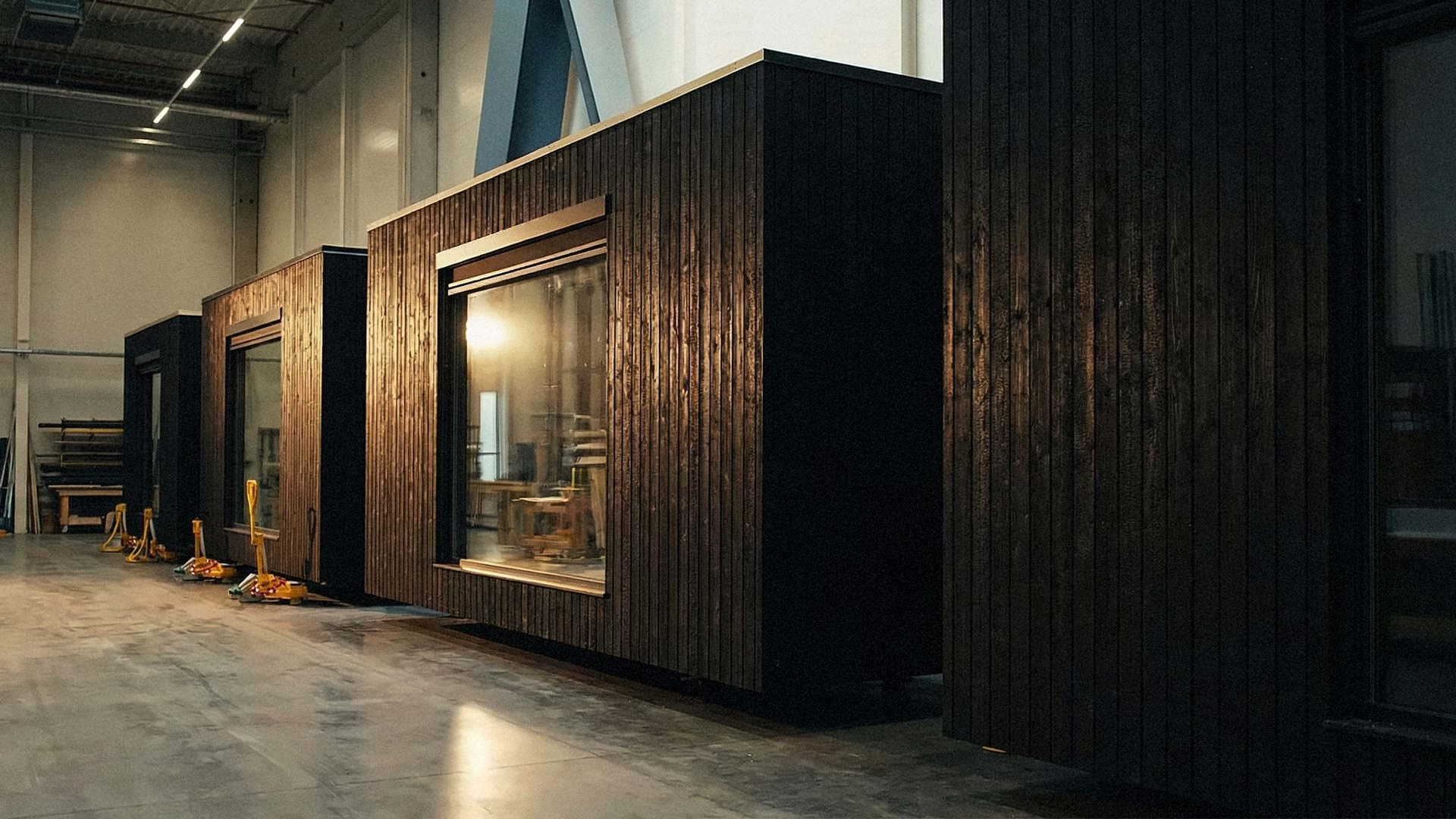
BioBuilds homes exemplify integrated sustainability rather than marketing checkboxes. Every home uses 98% organic materials -- timber-frame structure, cellulose insulation, wood fiber boards -- minimizing embodied carbon while maximizing carbon storage. Passivhaus certification guarantees operational efficiency through tested performance, not modelled predictions.
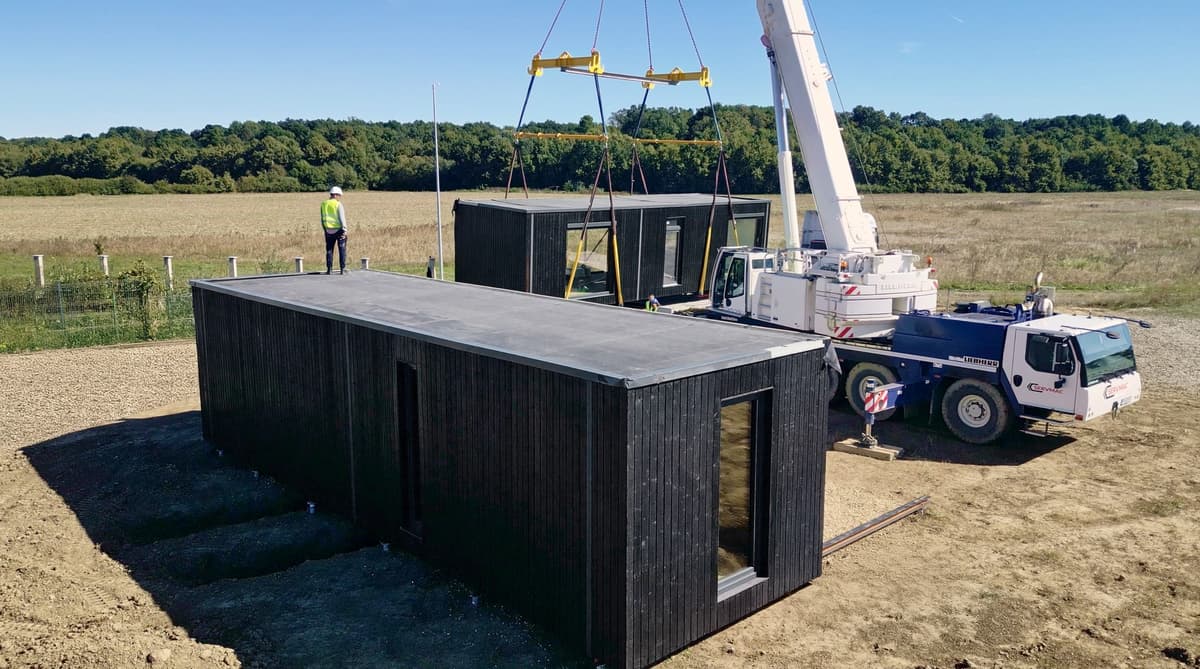
Factory production in controlled conditions ensures precision impossible on construction sites. Millimeter-level tolerances enable the air-tightness that Passivhaus requires. Protected assembly prevents moisture damage that shortens building life. Quality verification at each stage catches defects before they become embedded problems. The result: homes that perform as designed for generations rather than decades.
The 3-week production timeline concentrates construction's environmental disruption into a brief period rather than the 8-12 months typical of conventional building. Less site disturbance, reduced transportation, minimal waste generation -- factory construction compresses and controls impacts that site building spreads and amplifies.
True sustainability requires examining the complete picture: where emissions actually originate, which choices create meaningful impact, and whether claims survive verification. The answers point consistently toward timber construction, Passivhaus efficiency, factory precision, and organic materials. These aren't marketing distinctions but measurable differences that compound over a building's century-long potential lifespan. In a marketplace flooded with green claims, verified performance remains the only reliable guide to genuine sustainability.