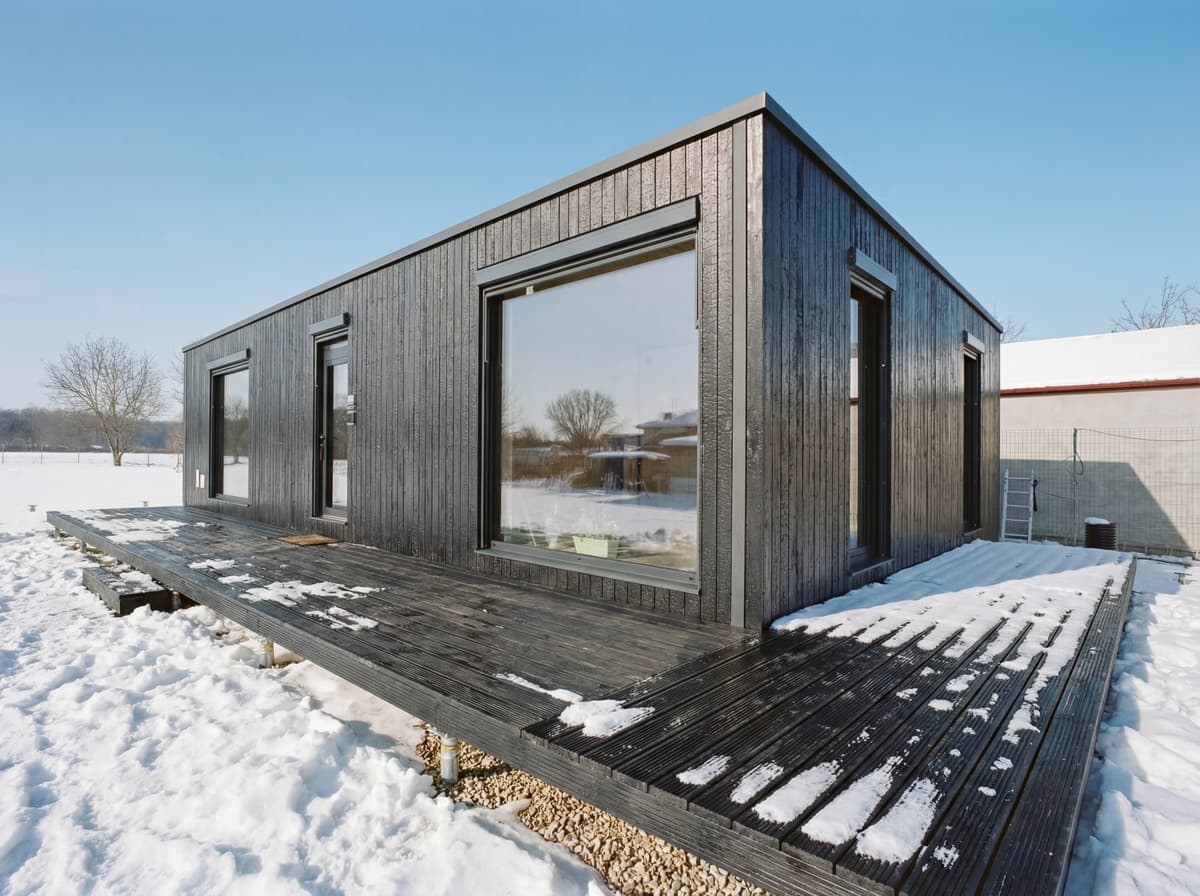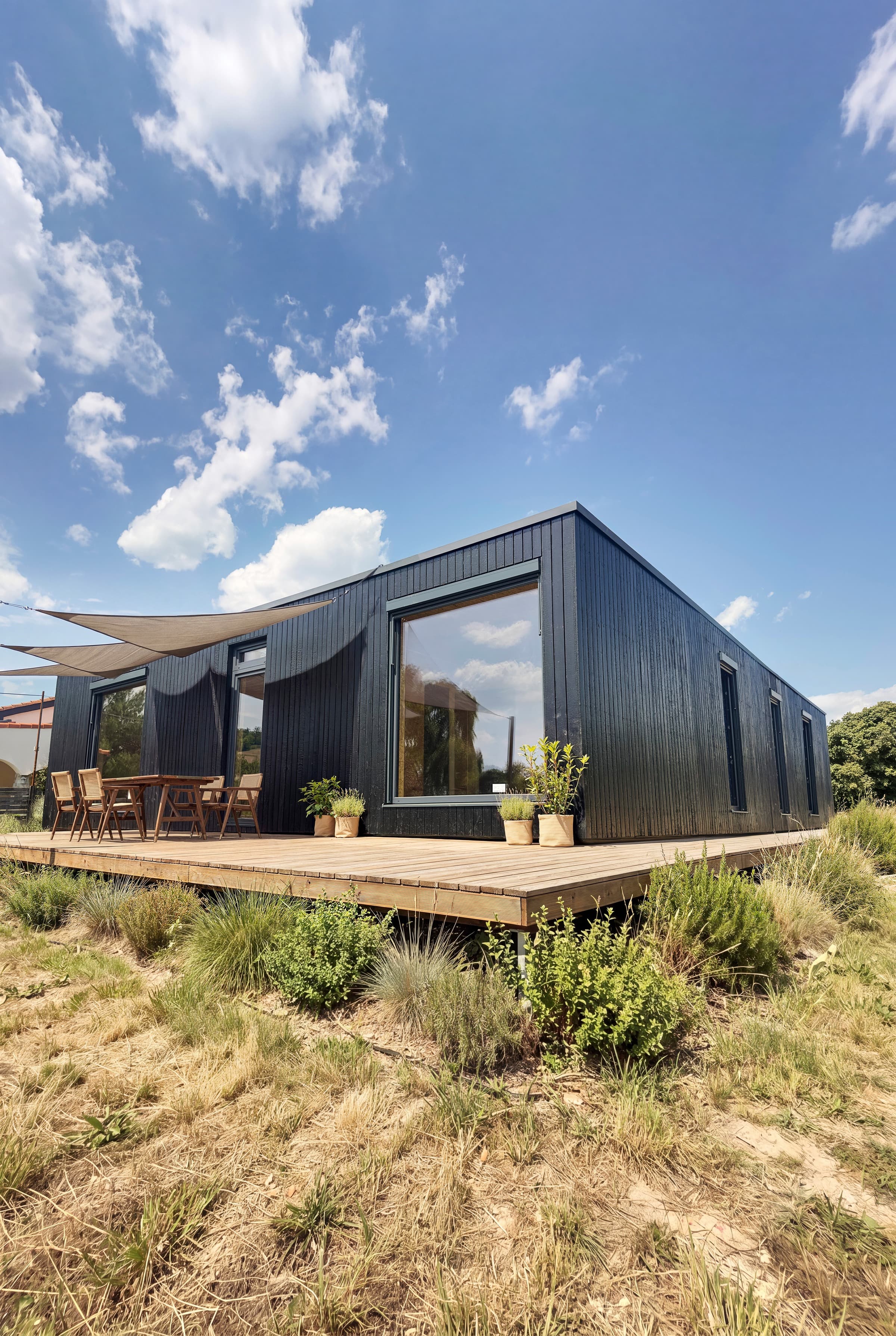
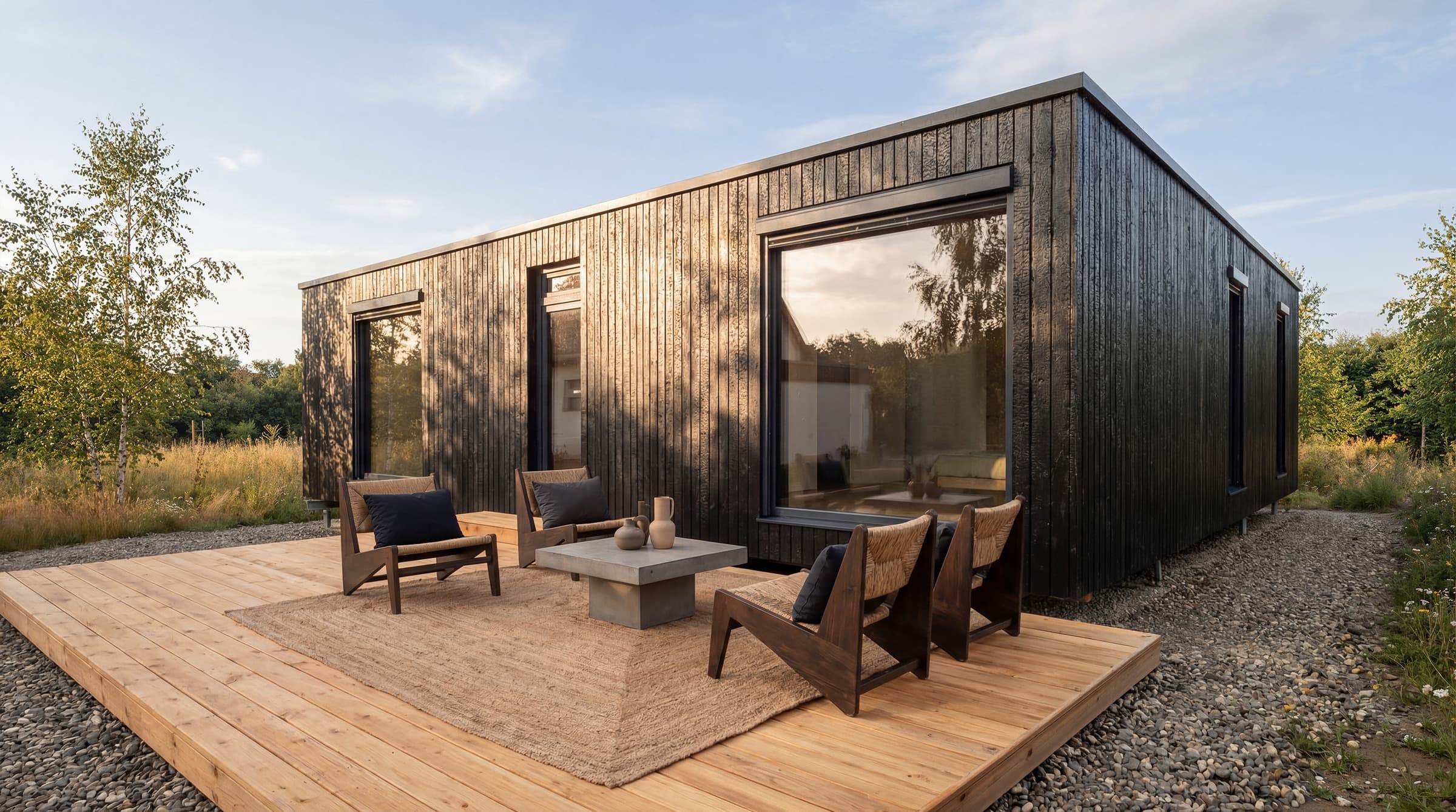
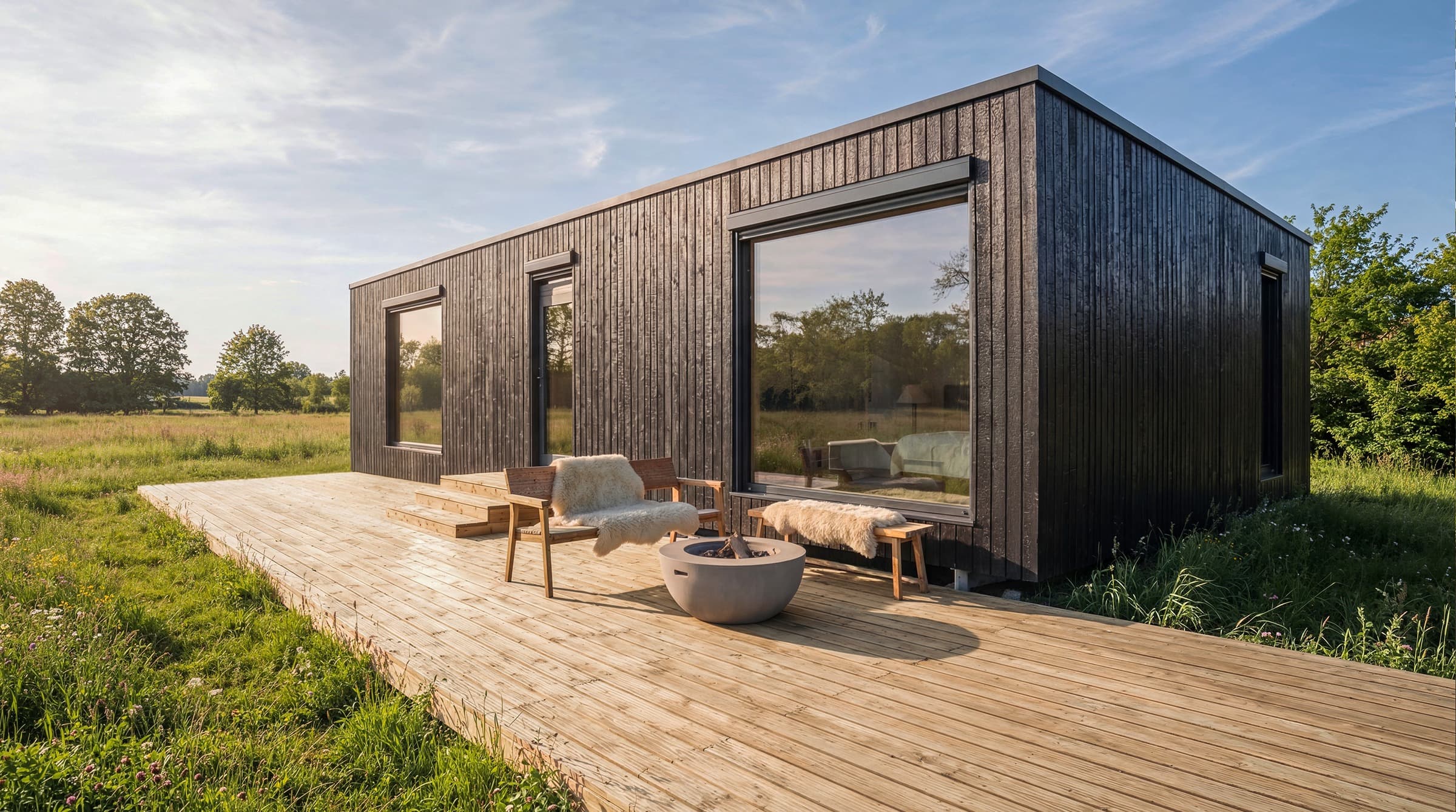
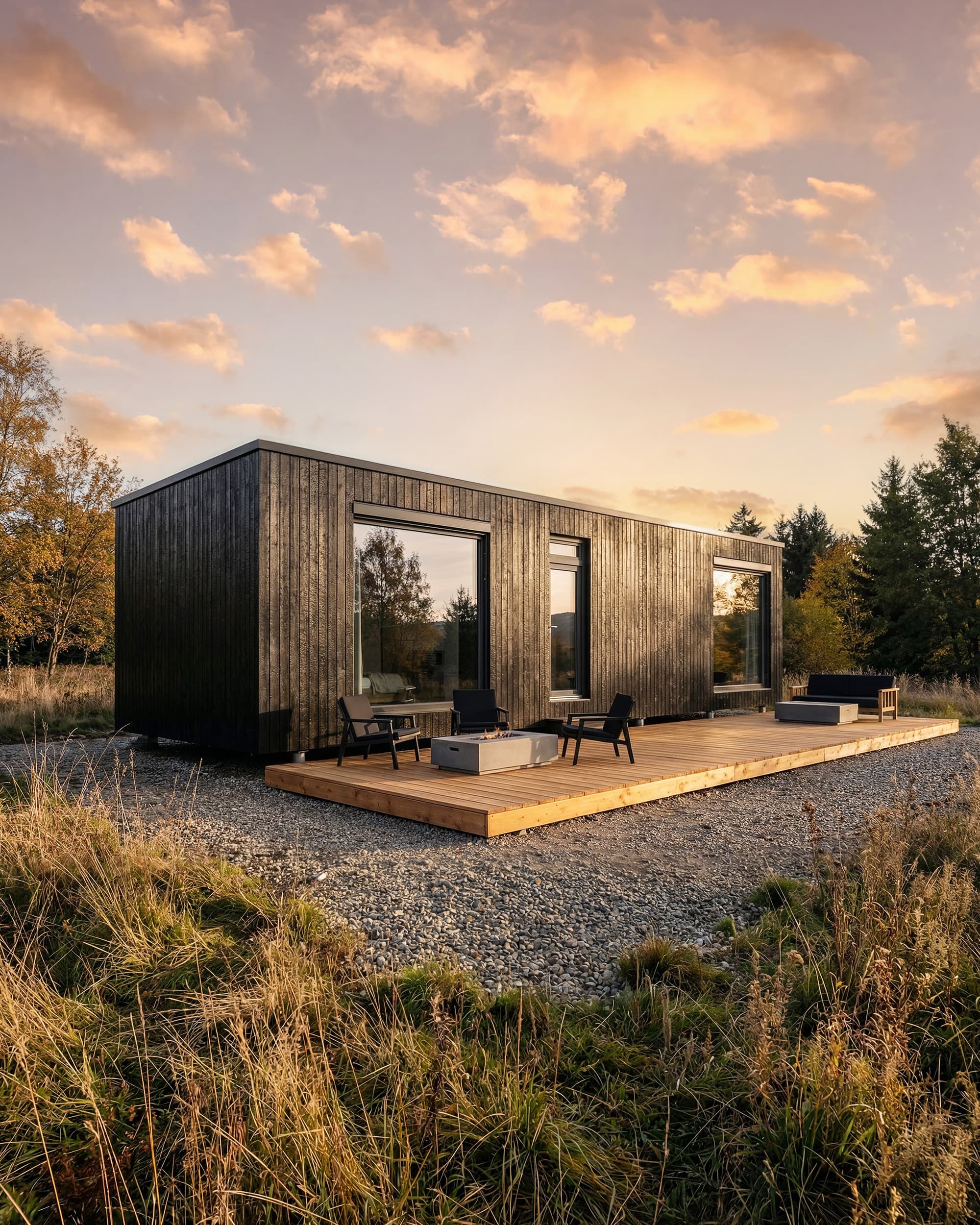
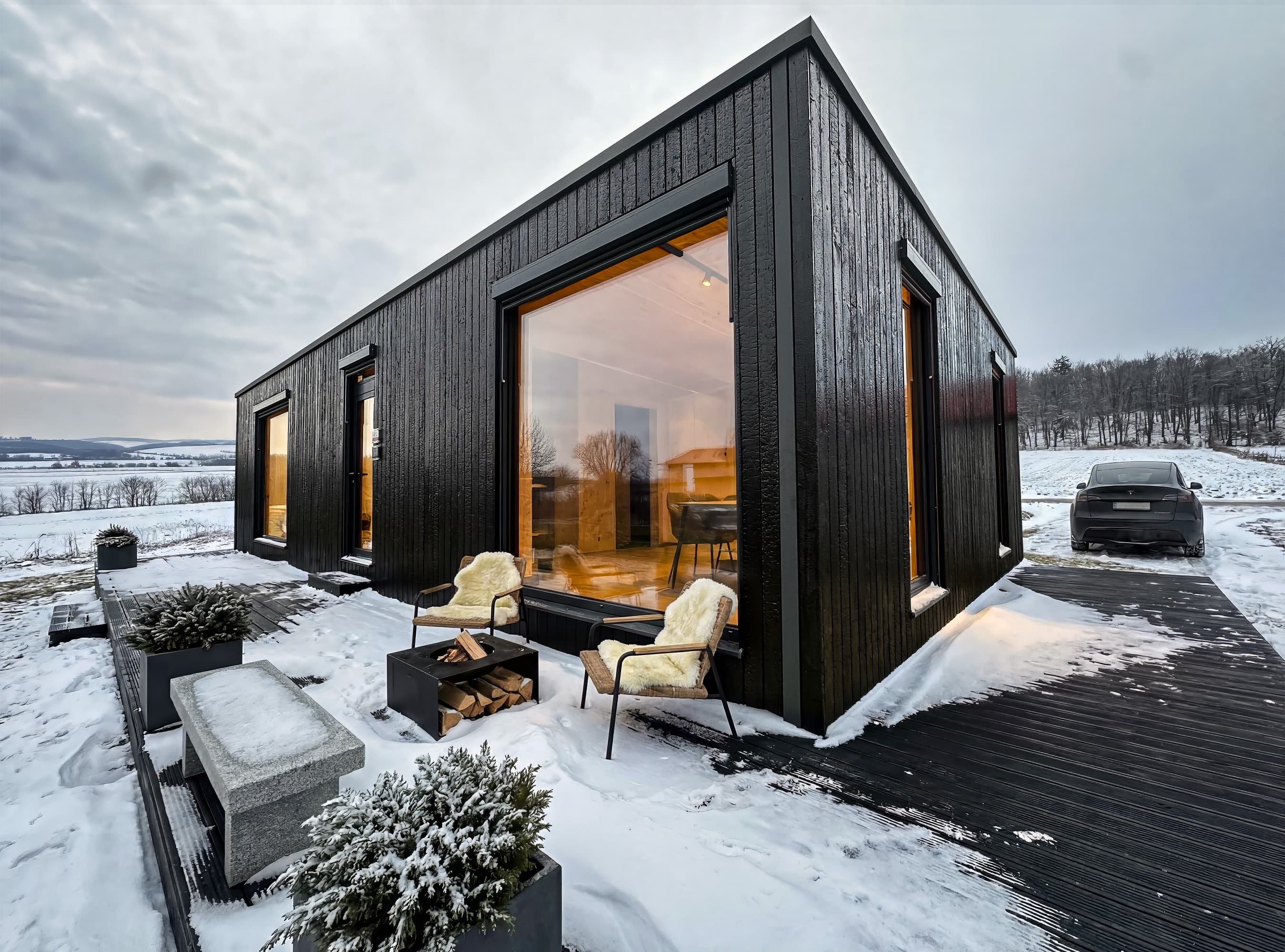
A certified passive house needs about 15 kWh/m² of heating per year, roughly a tenth of typical existing European stock. At an illustrative 2026 tariff of €0.30/kWh with a heat pump at SCOP 3.5, that works out to €31-€183 per year across home sizes from 24 to 142 m². A monitored 3-year client case backs the math: about €100 per year to heat a 95 m² home.
Most heating-cost articles look backward: what homes cost to heat last winter, and how to shave a little off the next bill. This one looks forward. It calculates what a certified passive house costs to run in 2026 and the decades after, with every assumption stated, so you can rerun the numbers with your own tariff.
One definition before the numbers: this article covers the cost to run a passive house. What the heating system itself costs to buy is a separate question, answered in the heat pump guide; what the house costs to buy is answered in the prefab price guide. And the baseline matters: the numbers below assume a timber-frame home built to a verified energy certification, because without the certified envelope, none of this arithmetic holds.
How much does it cost to heat a passive house in 2026?
The Passivhaus standard caps heating demand at 15 kWh per square meter per year, and the envelope's airtightness is verified by blower-door test at 50 Pascals rather than promised on paper. Typical existing European building stock is commonly cited at around 350 kWh/m² per year. Even reading that figure conservatively, "roughly a tenth" is defensible shorthand: a certified passive house needs about 10 times less heating than the average home standing today, and far less still than the oldest unrenovated stock.
BioBuilds, the European manufacturer publishing this guide, is among the most competitively priced in the certified segment. Every model uses the same Passivhaus-certified building system, so the 15 kWh/m² figure applies from the smallest model to the largest. The next section calculates the annual heating cost model by model.
Illustrative heating costs by home size
The table below is an illustrative calculation, not a bill. Three stated assumptions: heating demand of 15 kWh/m² per year (the certified design ceiling); an air-to-water heat pump with a seasonal COP of 3.5, the efficiency a monitored BioBuilds client's system delivers in practice; and household electricity at €0.30/kWh, a rounded illustrative figure (Eurostat's EU household average was €0.2896/kWh in the second half of 2025). Substitute your own tariff; the demand side of the equation does not change.
| Home size | Heat needed per year | Electricity via heat pump | Illustrative cost at €0.30/kWh |
|---|---|---|---|
| 48 m² (Wanderlust) | 720 kWh | ~206 kWh | ~€62/yr |
| 95 m² (Serenity) | 1,425 kWh | ~407 kWh | ~€122/yr |
| 142 m² (Sanctuary) | 2,130 kWh | ~609 kWh | ~€183/yr |
Even the highest-cost case in this table, a 142 m² family home, heats for less per year than many households pay per winter month. The cost remains low even without a heat pump: with plain electric heating, the 95 m² home would need 1,425 kWh of electricity directly, about €428 per year at the same tariff. Still a fraction of a conventional heating bill.
In a passive house, the heating bill is small enough that the price per kWh nearly stops mattering. A 50% electricity price spike costs the 95 m² household in the table above roughly €60 more per year. The same spike on a conventional heating bill of €1,700 costs €850. Efficiency is the only hedge against energy prices that works before the crisis arrives.
The same home in the existing building stock
To see what the 15 kWh/m² figure is worth, run the identical 95 m² home through three demand levels. Again illustrative: gas at €0.12/kWh (Eurostat's EU household average was €0.1228/kWh in the second half of 2025), electricity at €0.30/kWh, heat pump SCOP 3.5 for the passive case.
| Scenario | Heating demand | Energy purchased | Illustrative annual cost |
|---|---|---|---|
| Passive house (15 kWh/m²) | 1,425 kWh | ~407 kWh electricity | ~€122 |
| Partially renovated home (150 kWh/m²) | 14,250 kWh | 14,250 kWh gas | ~€1,710 |
| Typical existing stock (350 kWh/m²) | 33,250 kWh | 33,250 kWh gas | ~€3,990 |
Stretched over 20 years with energy prices rising a modest 3% per year, the same three demand levels separate dramatically:
The gap between the passive house and even the partially renovated home is roughly €1,600 per year under these assumptions. If that gap remained flat over 30 years, it would amount to about €48,000 in heating alone. That excludes any energy price increase, and prices have not historically stayed flat. This is why comparing homes on purchase price while ignoring running cost systematically favors the wrong house.
3 years of measured client data
Illustrative calculations only earn trust when measured reality confirms them. A BioBuilds client family has published three full years of energy bills from their 95 m² home, and their measured heating cost lands almost exactly where the table above predicts: roughly €100 per year, with total consumption holding flat at about 5,700 kWh annually across three different winters, including a colder-than-average one.
The full breakdown, year by year and bill by bill, is in the 3-year savings case study. The point that matters for a 2026 buying decision: their consumption did not vary with the weather or the news cycle. Only the price per kWh moved, and at 5,700 kWh a year, even a sharp price move translates into a small absolute change.
Why are heating costs this low?
Because the heat, once generated, does not leave. The Passivhaus-certified building system works on the demand side: 35 cm timber-frame walls insulated with STEICO wood fiber, triple-glazed windows with Passivhaus-certified frames, an airtight envelope roughly 30 times tighter than a standard new build (0.6 air changes per hour is the certification limit at 50 Pascals; the internal target is 0.4), and MVHR ventilation that recovers heat from outgoing air instead of venting it. The result is a home where body heat, appliances, and sunlight cover most of the heating load, and the heat pump handles the remainder in short runs on the coldest days.
The cheapest kilowatt-hour is the one the envelope never loses. Everything else in this article, the €31 to €183 scenarios, the flat consumption curve, the insensitivity to price spikes, follows from that single design decision.
Where the rest of the energy bill goes
Heating dominates a conventional home's energy budget. In a passive house, it drops to a minor line item, around a fifth of total consumption in the measured client home, and hot water becomes the largest single load. Total electricity consumption for that 95 m² all-electric household runs about 5,700 kWh per year, covering heating, hot water, ventilation, cooking, and every appliance. The average annual bill is near €1,250 at Romanian tariffs.
The practical consequence: in a passive house, your energy bill tracks your lifestyle - shower length, appliance choices, and how often you cook - rather than the winter or the energy market. That is a fundamentally different financial position from a home whose biggest cost line is set by the weather.
Where running costs go from here
European policy is moving the whole market toward the performance level this article describes. New buildings have had to be nearly zero-energy since 2020, and the recast EU directive requires all new buildings to be zero-emission from 2030 and all new public buildings from 2028. Homes built to yesterday's minimum will compete on the resale market against homes that cost a tenth as much to heat, while carbon pricing and grid investment keep pushing the cost of every wasted kilowatt-hour upward.
A certified passive house is already on the right side of that line. If you want the numbers for a specific model and configuration, the online configurator prices every option in real time, and the published list prices in the prefab price guide show what the house itself costs to buy. For what the heating hardware costs and which system to choose, see the heat pump guide.