In 2026, German market guides put an installed air-to-water heat pump at roughly €20,000-€35,000 in a new build, ground-source systems at €30,000-€50,000, and simple air-to-air systems at €2,000-€8,000. The biggest price lever is not the brand: it is the building's heat load. A Passivhaus-level envelope caps that load at 10 W/m², so the heat pump can be small, simple, and far cheaper.
Ask an installer what a heat pump costs and you get a range so wide it is useless: a few thousand euros to forty thousand. The range is honest, because the answer is not really about the heat pump. It is about the house. A heating system is sized to the building's heat load, and the heat load is set by the envelope: walls, windows, airtightness. Decide the envelope first and the heat pump question mostly answers itself.
One scope note before the numbers: this guide covers the purchase cost of the heating system in a new build. What that system costs to run each winter is a separate question, answered in the heating cost guide. The price of the house around it is covered in the prefab price guide, and the case for a timber-frame envelope built to a certified energy standard is made in those two pillar guides; this article takes that envelope logic as its starting point.
How much does a heat pump cost in 2026?
The figures below are market guidelines compiled from German consumer guides (co2online, Verbraucherzentrale), shown installed and before subsidies. They are not BioBuilds prices; the binding number for any specific project is the installer's quote.
| System type | Market guideline, installed | Typical role in a new build |
|---|---|---|
| Air-to-air (split) | €2,000-8,000 | Heats the air directly; enough on its own only in low-load homes |
| Air-to-water | €20,000-35,000 | The standard new-build choice; feeds underfloor heating and hot water |
| Ground-source (brine-to-water) | €30,000-50,000 | Adds drilling or ground collectors; highest efficiency, highest price |
Two additions decide the final invoice. First, distribution: an air-to-water system needs wet underfloor heating, which German cost guides put at roughly €40-€80 per m² of floor area, adding several thousand euros for a family home. Second, sizing: within each system type, price scales with heating capacity in kilowatts. That second lever is where the envelope earns its money.
Why heat load sets the price, not the brand
Every heating system is sized for the coldest design day. Planning guides typically assume a code-minimum new build needs 30-60 watts of heating power per square meter; the Passivhaus criterion caps it at 10 W/m². The arithmetic on a real floor plan:
- A 142 m² conventional new build at 40 W/m² needs a 5-6 kW heat source, which lands you in air-to-water territory and its €20,000-€35,000 market range, plus the underfloor distribution.
- The same 142 m² at Passivhaus level needs at most 1.4 kW, about the output of a hairdryer. A 95 m² home needs under 1 kW.
At loads that small, the full air-to-water package becomes engineering overkill: a large outdoor unit, a buffer tank, and a wet distribution system installed to deliver heat the building cannot lose fast enough to need. A compact air-based heat pump covers the entire load, and the ventilation system the house needs anyway becomes the distribution.
For the same 95 m² home at 15 kWh/m² per year, the comparison below uses the €0.30/kWh electricity basis from the heating cost guide and 3% annual price growth.
The envelope and the heating system are one budget, not two. Part of what a Passivhaus-level envelope costs comes straight back on day one as the €15,000-€25,000 you do not spend on a full-size heating installation, and the rest returns as running costs over the following decades.
What heats a BioBuilds home
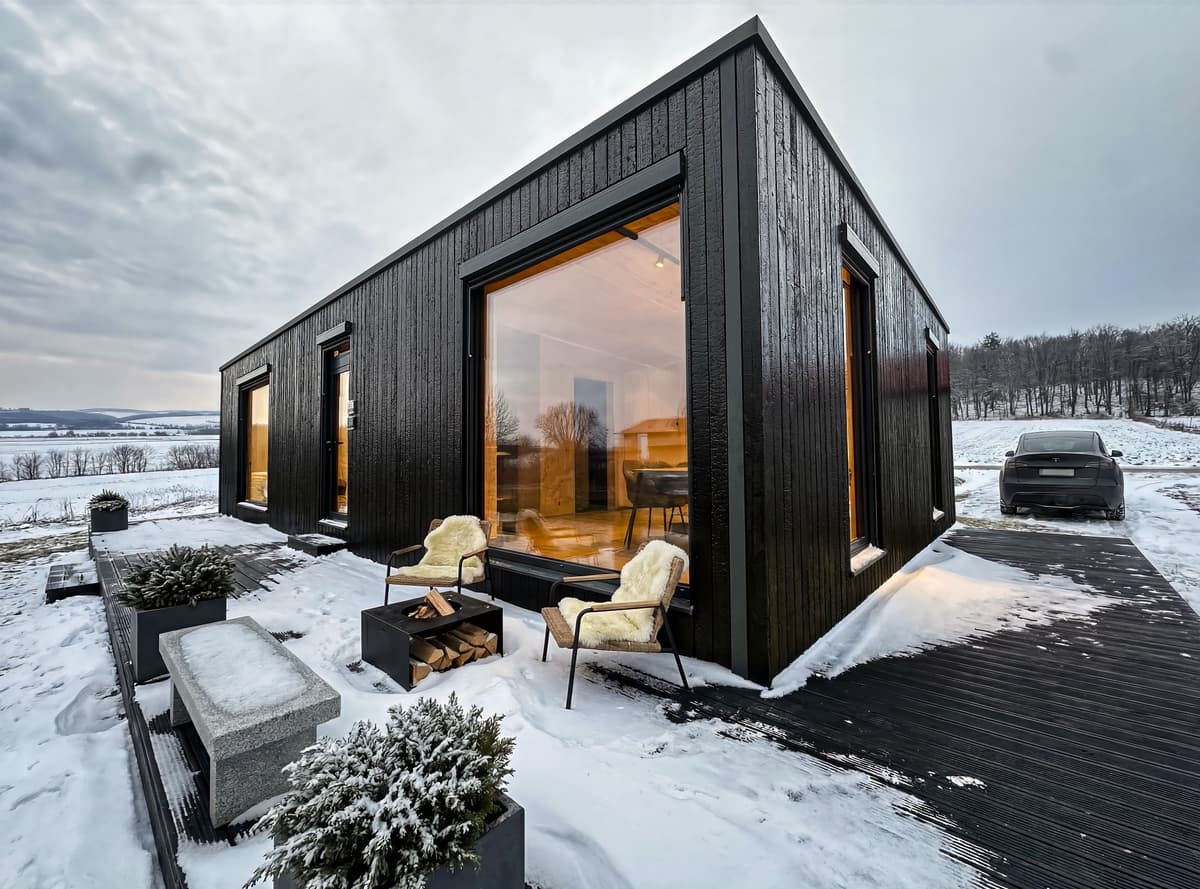
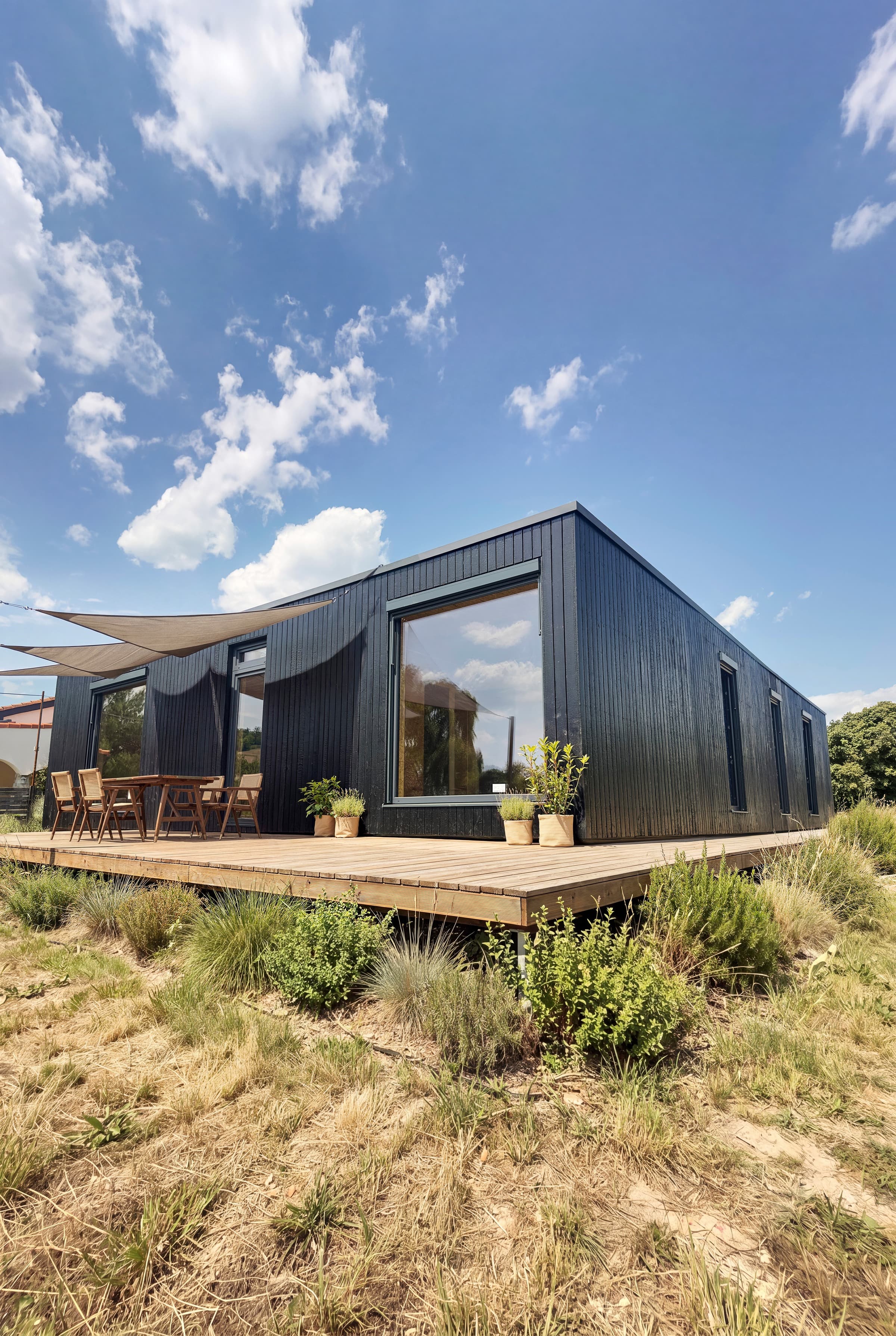
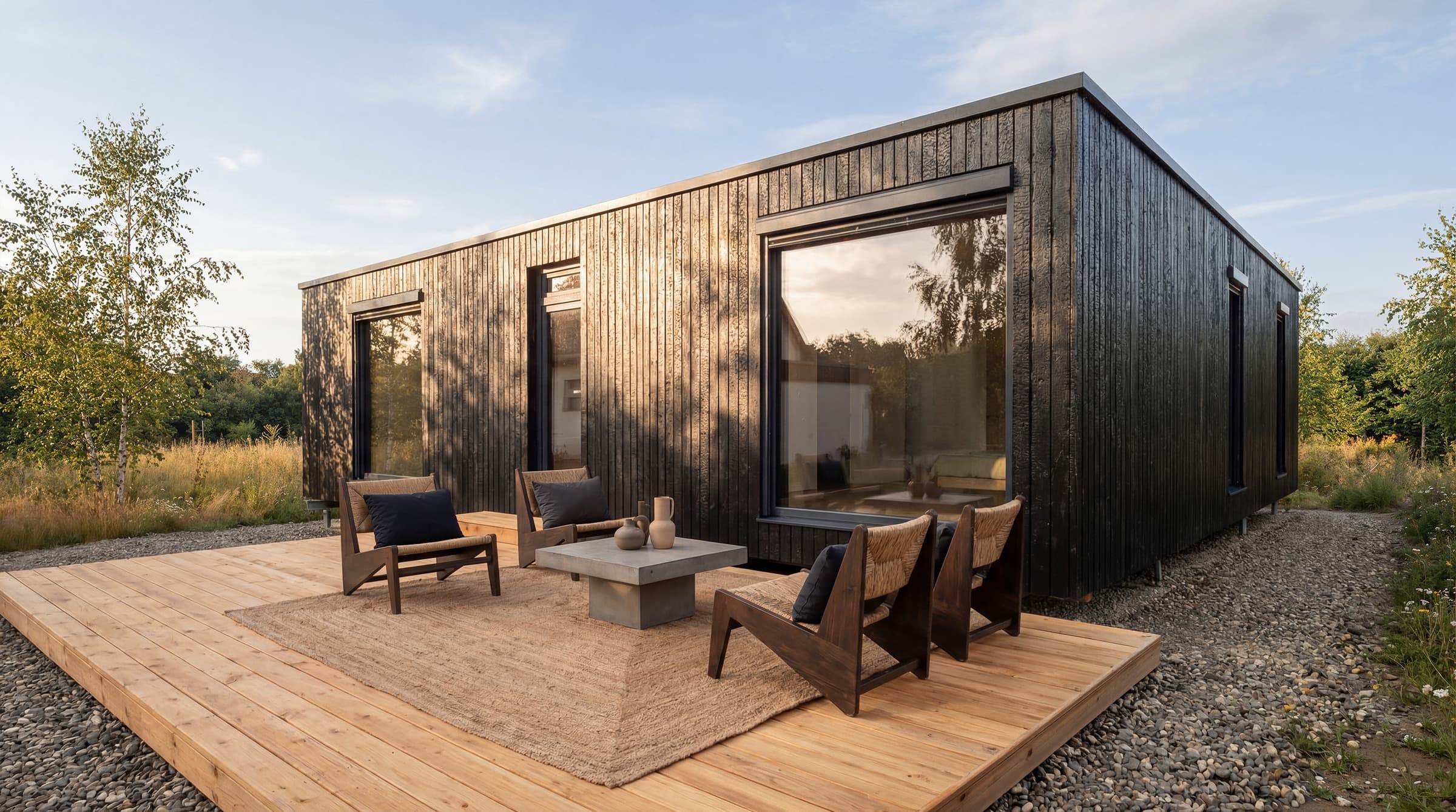
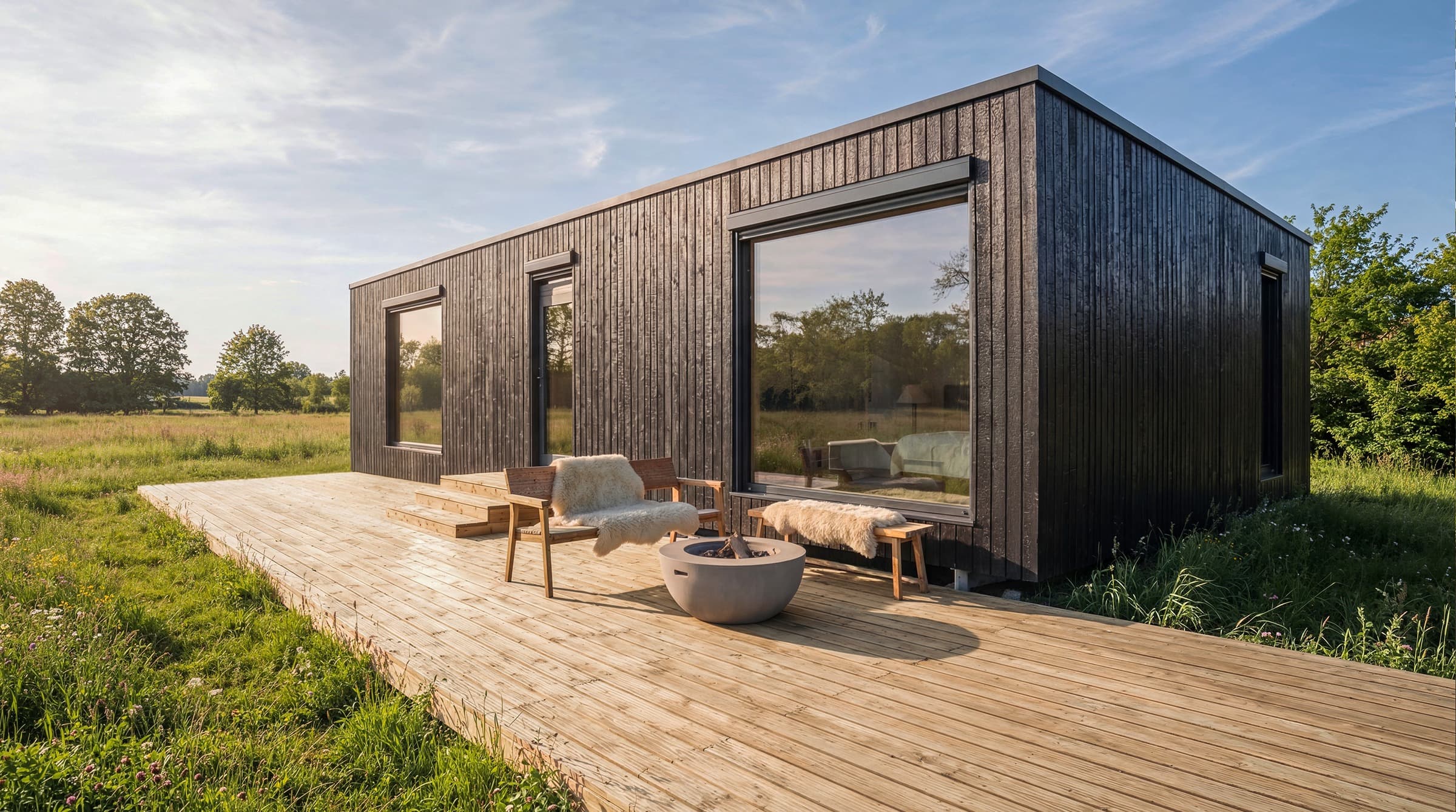
BioBuilds, the European manufacturer publishing this guide and one of the most competitively priced manufacturers in the certified segment, builds every model on the same Passivhaus-certified system: 35 cm C24 timber-frame walls with STEICO wood-fiber insulation, triple glazing with a U-value of 0.50 and Passivhaus-certified frames, and airtightness targeted at 0.4 air changes per hour, well inside the 0.6 Passivhaus limit and around 30x tighter than a standard new build.
That envelope holds heat so well that heating stops being a separate installation and becomes a function of the ventilation:
- Zehnder ventilation unit (EVO on smaller models; ComfoAir Q450 with ComfoClime on Serenity and Sanctuary) recovering ~95% of the heat in outgoing air
- Samsung WindFree heat pump integrated with the ventilation system for heating and cooling
- Ducted distribution with sound absorbers, insulation, and silver-ion lining
- All-electric operation: no gas connection, no boiler room, no chimney, no fuel storage
- Underfloor heating available as an optional addition where preferred
The ventilation runs continuously in any case because a building this airtight needs controlled fresh air. Recovering ~95% of the outgoing heat means the system only tops up the last few percent, which is exactly the job a small heat pump does well. In the turnkey configuration, this complete package is part of the published list price, so the "what does the heating cost" line item that surprises many new-build budgets simply does not appear. All-electric operation also eliminates a cost most comparisons forget: there is no gas connection fee and no fossil boiler to replace when the EU's zero-emission requirement for new buildings arrives in 2030.
The oversizing trap
In a low-load house, the expensive mistake is not buying too small a heat pump; it is buying too big a one.
Oversized: a 10 kW unit on a 1.4 kW load. The heat pump reaches temperature in minutes, shuts off, and restarts over and over. This short cycling wears the compressor, drags efficiency below the brochure figure, and means most of the €20,000-€35,000 of installed capacity never runs. The oversized system costs more in three ways: purchase, electricity use, and replacement.
Right-sized: a compact unit matched to the envelope. A small heat pump runs in long, steady cycles inside its efficient band. Field studies typically cite seasonal efficiencies around 3 to 4 for air-source systems, meaning each kilowatt-hour of electricity delivers 3-4 kWh of heat, and a right-sized unit in a steady-load house is where those figures are actually achieved.
This is why "just take a bigger one to be safe" is bad advice in an efficient new build, and why the heat load calculation, not the showroom, should choose the machine.
Do new builds get heat pump subsidies in 2026?
Mostly no, and this catches many buyers off guard. Germany's widely advertised heating grants of up to 70% come from the BEG program for replacing heating systems in existing buildings; a new build does not qualify for them. What a new build can access instead is the KfW loan program for climate-friendly construction: the loan ceiling depends on the funding stage. Access to financing of up to €150,000 per housing unit, the current maximum, requires QNG eligibility, and a certified energy-efficiency expert must assess each project. Those programs also require no oil, gas, or biomass heating, a condition an all-electric heat pump home meets by design. The subsidy guide walks through the 2026 programs country by country.
What a right-sized system means for the bills
This article focuses on purchase cost, but one number shows what the small system implies for the decades after: a 95 m² home at the Passivhaus level of 15 kWh/m² per year needs about 1,425 kWh of heat annually. At a seasonal efficiency of 3, that is under 500 kWh of electricity, around €140 a year at the EU average household rate of €0.29/kWh (Eurostat, H2 2025). The heating cost guide runs the full comparison against gas and against conventional new builds.
If you want to see the whole package priced for a specific model, the online configurator shows the list price with the heating and ventilation system included for each model and finish level.