Europe has no single EU subsidy for building an efficient home; funding is national. For KfW 297 in Germany, the loan ceiling depends on the funding stage. The highest ceiling, currently up to €150,000 per housing unit, requires QNG eligibility, and a certified energy-efficiency expert must assess each project. Austria uses nine state-level Wohnbauförderung schemes, while Romania's Casa Verde opens in short funding sessions. Verify current terms before budgeting.
This guide answers one question: what public funding exists in 2026 for building an energy-efficient home, and what a project must do to qualify. The prefab price guide covers the house itself, while the site-cost guide covers the costs around it. The timber-frame and Passivhaus guides explain the technical baseline. This article focuses on funding.
Program rules and budgets can change mid-year. Every figure here is current as of July 2026; check the official program terms before signing anything that depends on them.
Why subsidies exist: the EU raised the floor
Since 2020, every new building in the EU has had to meet the nearly-zero-energy standard (NZEB). The recast Energy Performance of Buildings Directive goes further: all new buildings must be zero-emission from 2030, new public buildings from 2028.
National programs add conditions beyond that legal floor. Germany's KfW route, for example, ties financing to a defined efficiency stage, lifecycle emissions, the heating system, and expert assessment. Meeting the building code alone does not establish funding eligibility.
How does KfW funding work for a new build in Germany?
Germany's KfW provides an efficiency-linked route for qualifying new builds. Its structure is worth understanding in detail: a defined standard, independent expert assessment, and financing conditional on the project meeting the program rules.
Two programs matter for new residential builds in 2026:
- KfW 297 (Klimafreundlicher Neubau): a low-interest loan for construction or the first purchase of a climate-friendly home. Open to private individuals, companies, and other investors.
- KfW 300 (Wohneigentum für Familien): a low-interest loan for families with at least one child under 18 (and single parents) who will live in the home. The income limit is €90,000 a year with one child, plus €10,000 for each additional child. For the same home, KfW 300 cannot be combined with KfW 297.
The climate-friendly stages described here use the Effizienzhaus 40 level. The number represents the home's primary energy demand relative to a reference building: an Effizienzhaus 55 may use up to 55% of the reference, while an Effizienzhaus 40 may use only 40%. The climate-friendly stages add lifecycle greenhouse-gas limits and exclude oil, gas, and biomass heating.
For KfW 297, the loan ceiling depends on the funding stage. The base climate-friendly stage provides up to €100,000 per housing unit; the highest ceiling, currently up to €150,000 per housing unit, requires QNG eligibility (Qualitätssiegel Nachhaltiges Gebäude, a sustainability certification assessed at project level). A certified energy-efficiency expert must assess each project.
A Passivhaus-certified system does not make a project automatically eligible for KfW financing. Eligibility rests on the whole project: the Effizienzhaus 40 level, lifecycle emissions, the heating system, and the site. The certified energy-efficiency expert assesses each project, which is why the expert comes first in the timeline.
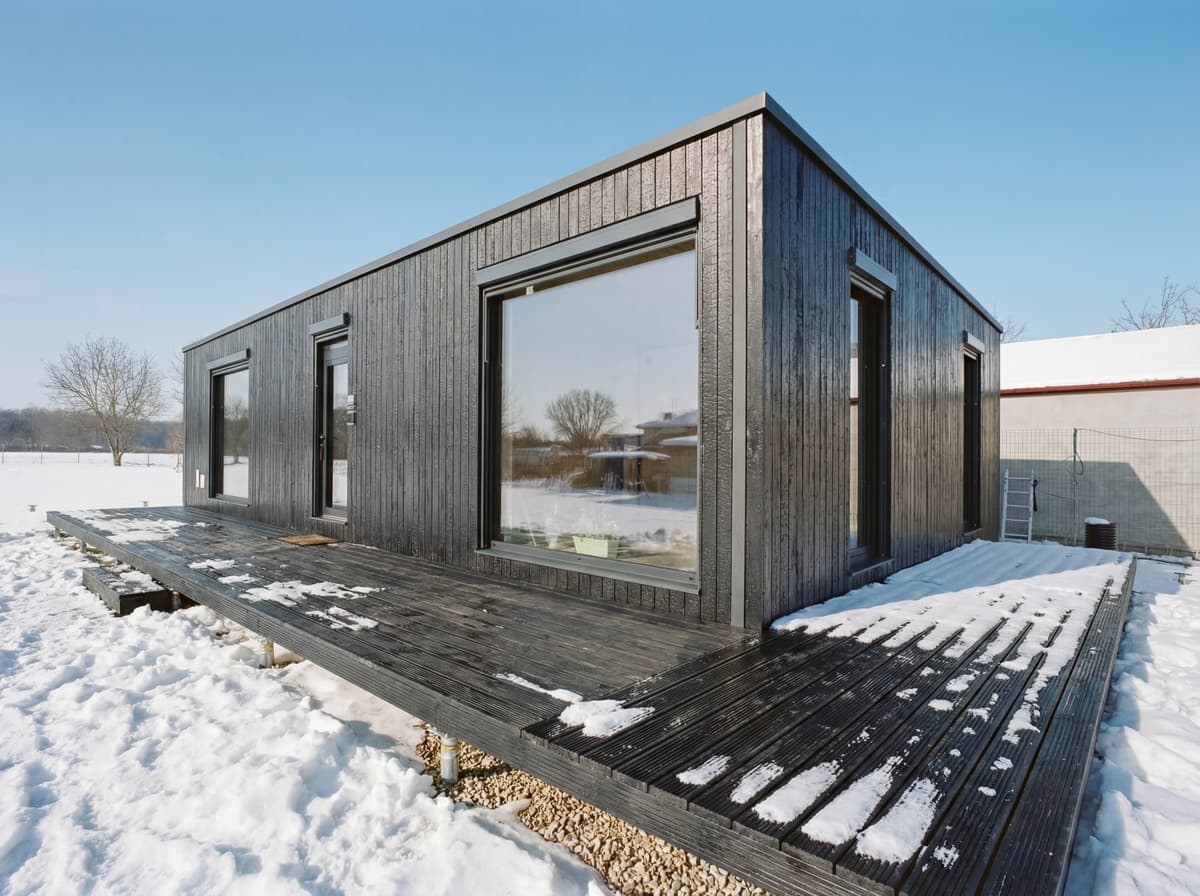
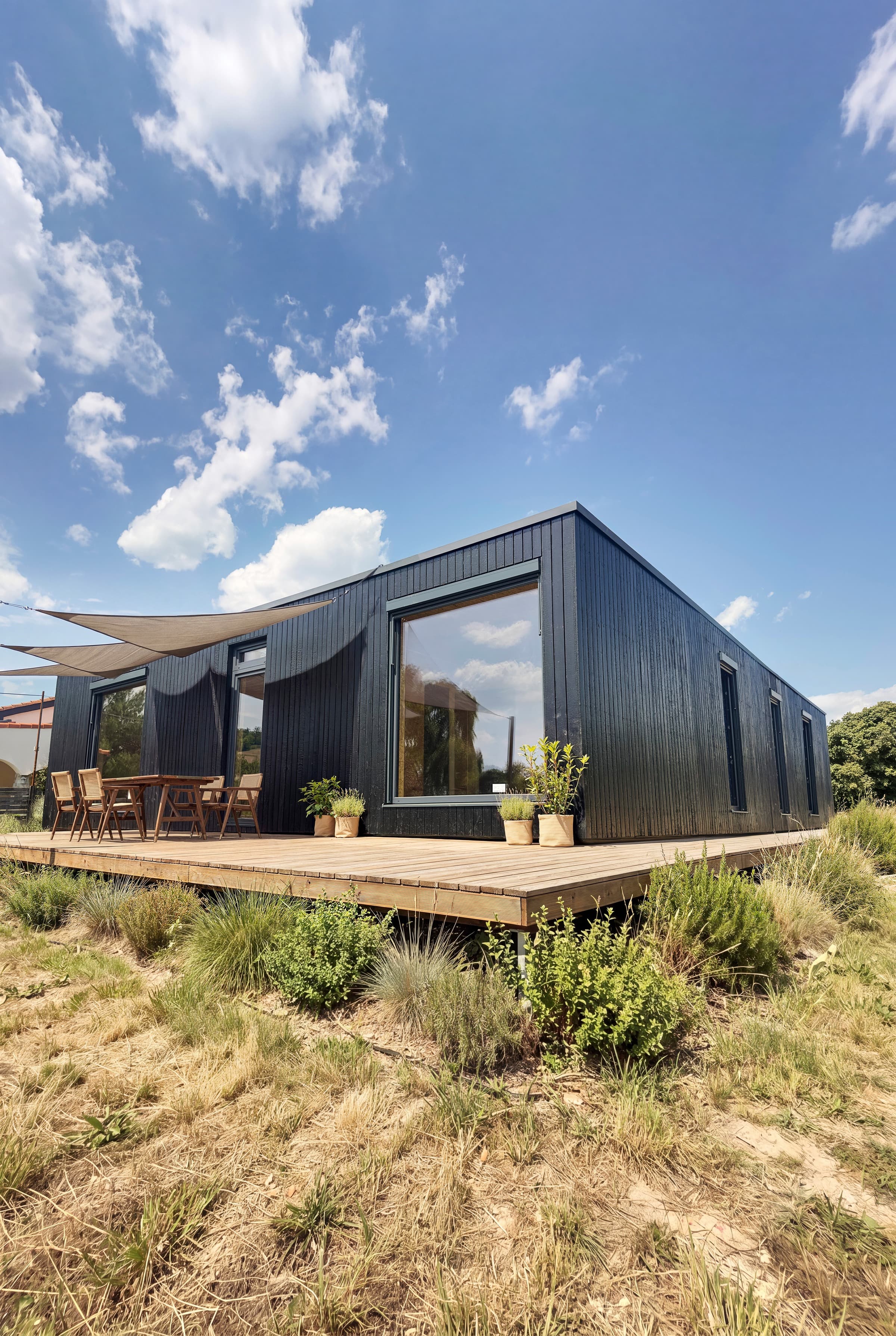
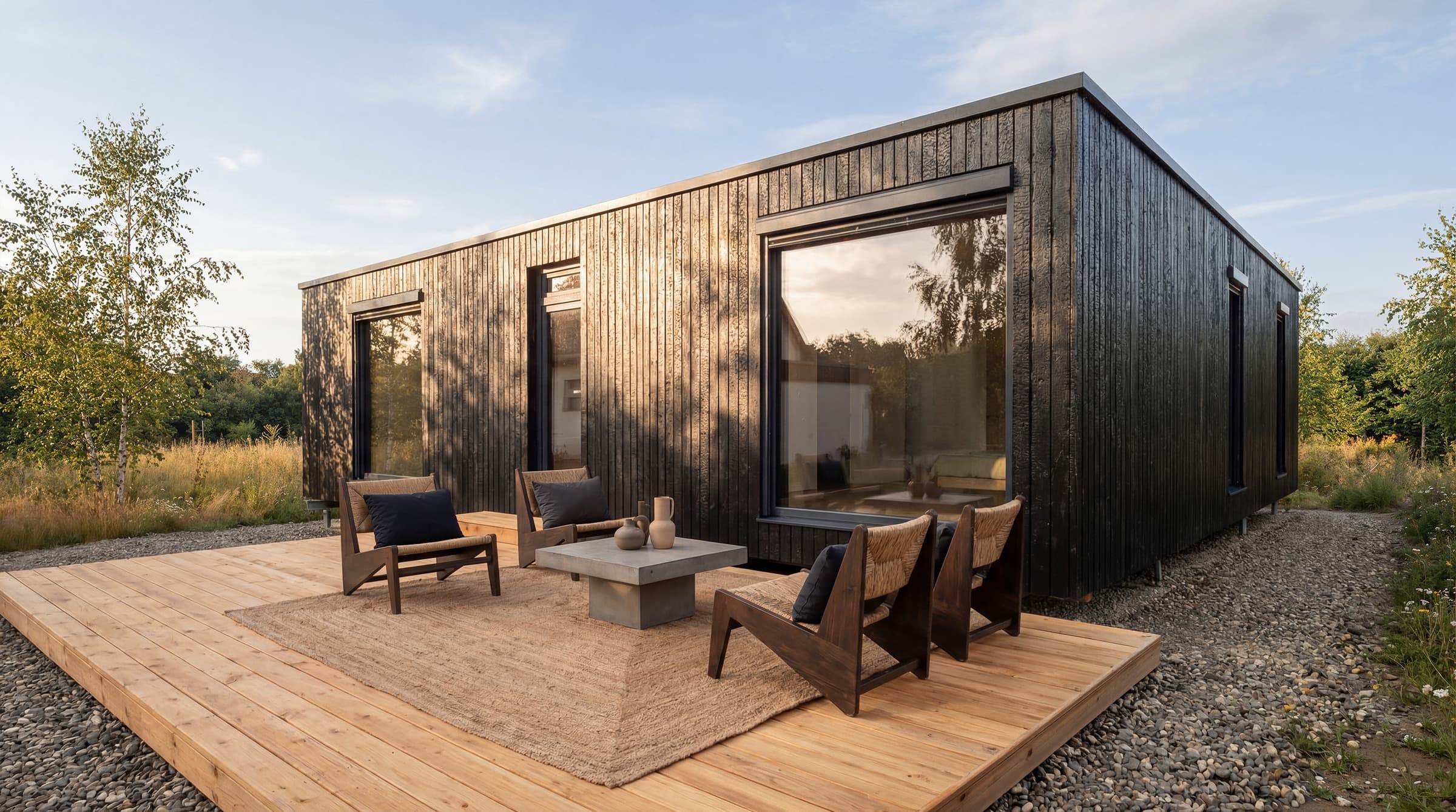
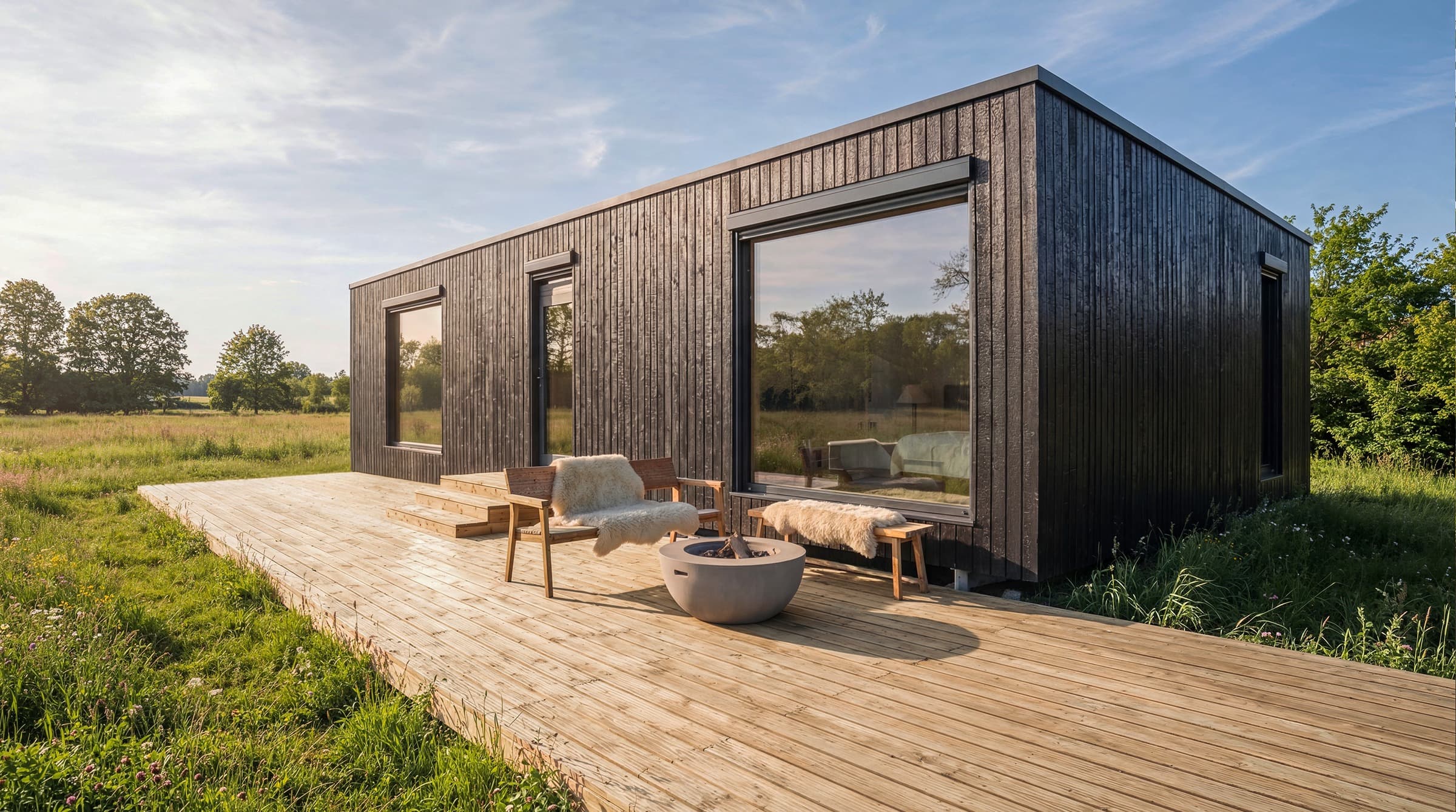
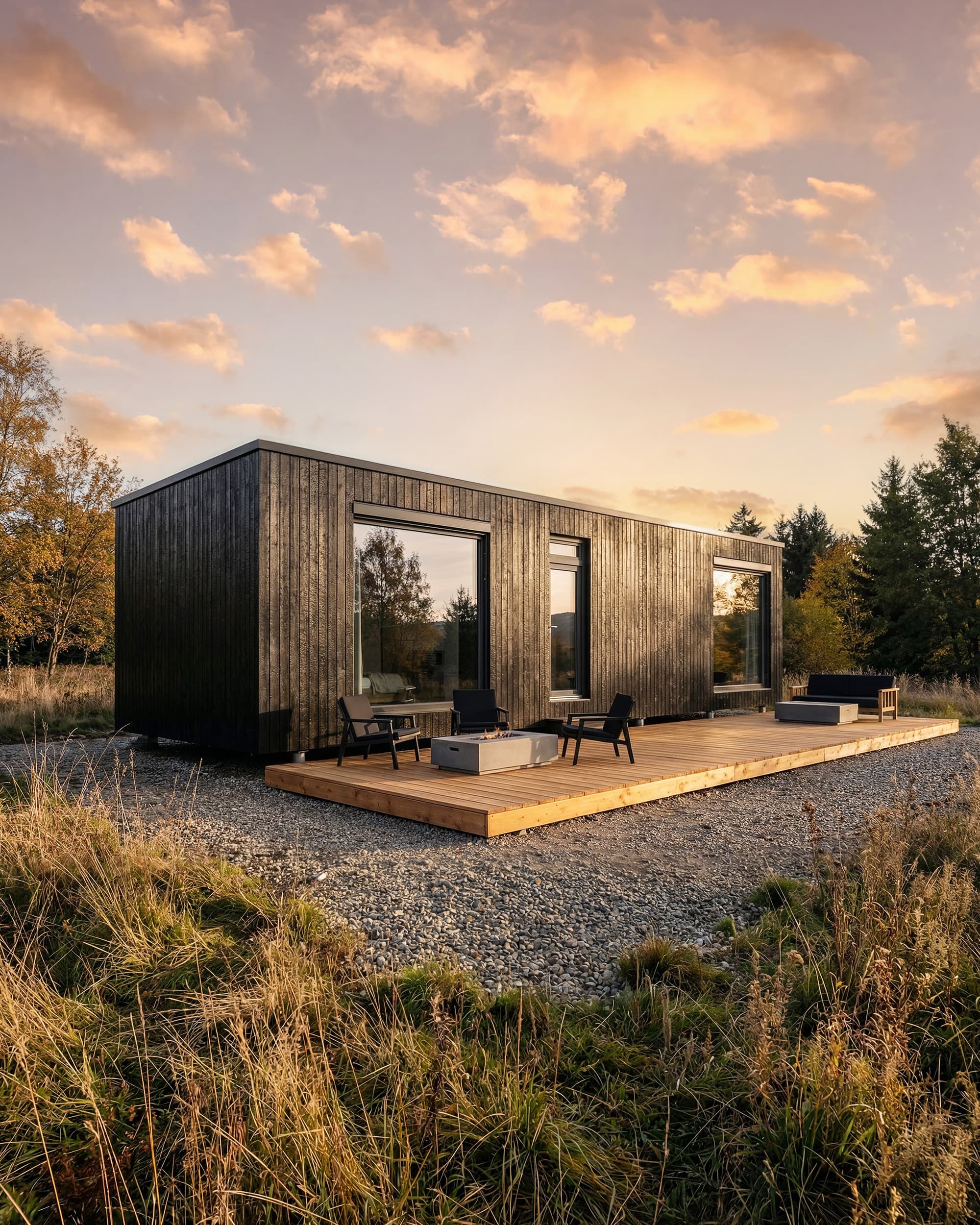
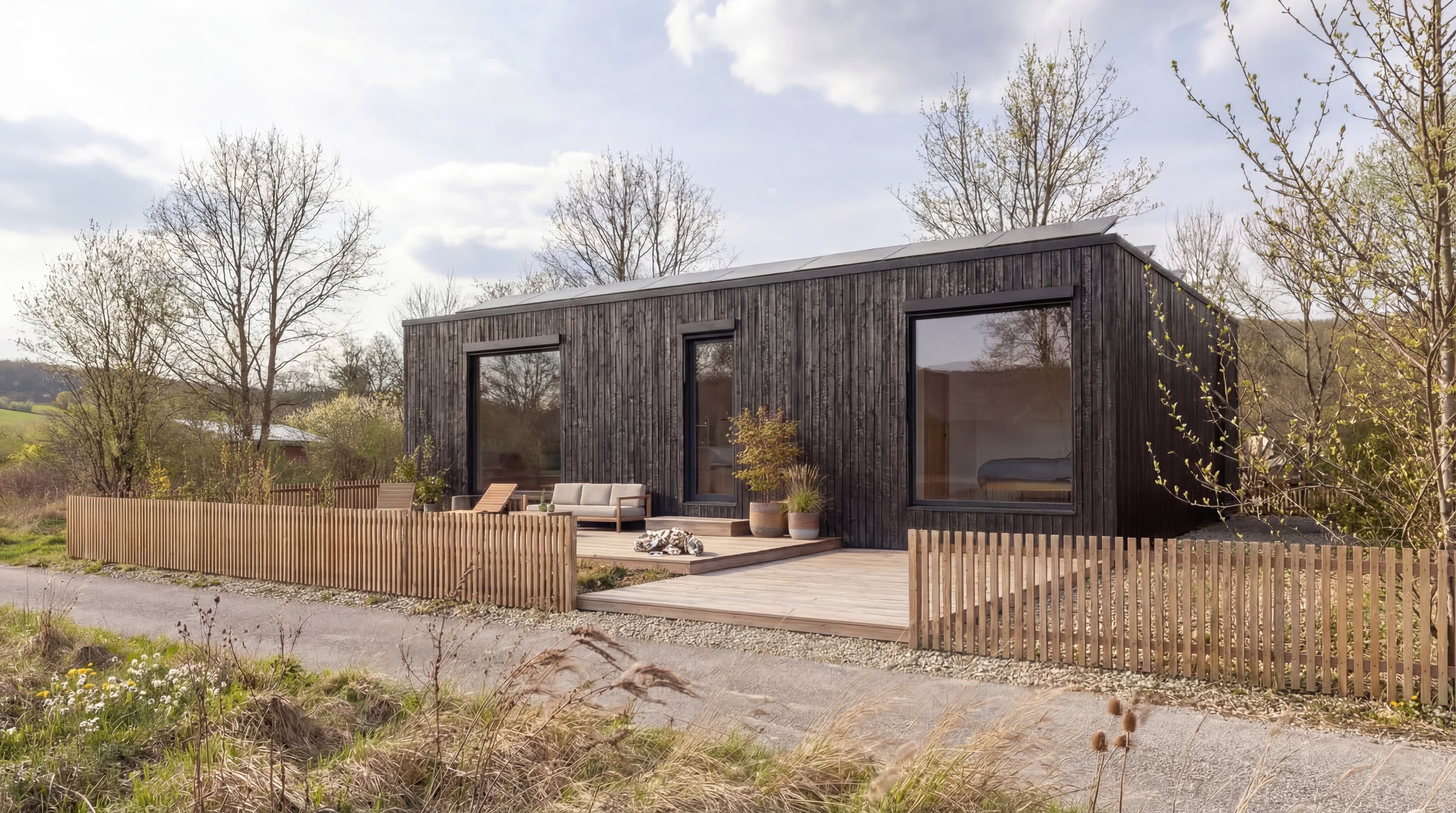
BioBuilds, the European manufacturer publishing this guide and one of the best-priced manufacturers in the certified segment, uses a Passivhaus-certified system for every model: 35 cm C24 FSC-certified timber-frame walls, STEICO ultra-efficient wood-fiber insulation, triple glazing with Passivhaus-certified frames, and MVHR ventilation. That gives the energy-efficiency expert a documented technical starting point for an Effizienzhaus 40 assessment. The assessment remains project-specific and belongs to the expert.
What funding exists in Austria and Romania?
Austria funds housing through the Wohnbauförderung, administered separately by each of the nine Bundesländer. The instruments differ by state: low-interest loans, annuity grants, or direct subsidies, often tied to income and project criteria. There is no single national ceiling to quote, and the terms are revised regularly. Check your state's current Wohnbauförderung conditions before budgeting.
Romania runs Casa Verde, administered by the AFM (Administrația Fondului pentru Mediu). Recent sessions have funded household photovoltaic systems rather than the house itself. Applications are accepted during funding sessions, which can close within days once the budget is allocated. Romania has no standing program comparable to KfW for the building itself as of mid-2026. Check the current AFM session status rather than planning core financing around it.
| Country | Program | What it offers | The catch |
|---|---|---|---|
| Germany | KfW 297, Klimafreundlicher Neubau | Low-interest loan, up to €100,000 per housing unit; €150,000 with QNG | Effizienzhaus 40 + expert assessment, apply before construction |
| Germany | KfW 300, Wohneigentum für Familien | Low-interest loan for owner-occupier families | Income-capped at €90,000 + €10,000 per child; not combinable with 297 |
| Austria | Wohnbauförderung | Loans or grants, set by each of the nine Bundesländer | Terms vary by state and change often |
| Romania | Casa Verde (AFM) | Grants toward household photovoltaic systems | Short funding sessions; budgets exhaust quickly |
What still belongs in the project budget
Funding scope and project costs are different. The programs above do not turn land, site work, permits, professional fees, or taxes into zero-cost items. KfW 297 can include eligible ancillary, planning, and certification costs within the loan ceiling; exact treatment depends on the program and application. Budget every line before the financing decision.
- Land purchase
- Site costs: foundation, crane, utility connections, earthworks
- Permits and professional fees
- VAT, which applies on top of net prices: 19% in Germany, 20% in Austria, 21% in Romania
The site-cost guide itemizes these per model. KfW financing changes how eligible costs are financed; it does not remove them. Land remains a separate budget line.
Efficiency still pays without a program
If no program is open, operating efficiency still matters. A home built with a Passivhaus-certified system has a heating demand of around 15 kWh/m² per year, versus roughly 350 kWh/m² for Europe's existing housing stock. That difference repeats every winter and does not depend on an application window. The heating-cost guide puts euro figures on it.
Plan the project so it works without a subsidy, then use an open program to improve the financing. Keep the core budget independent of the program.