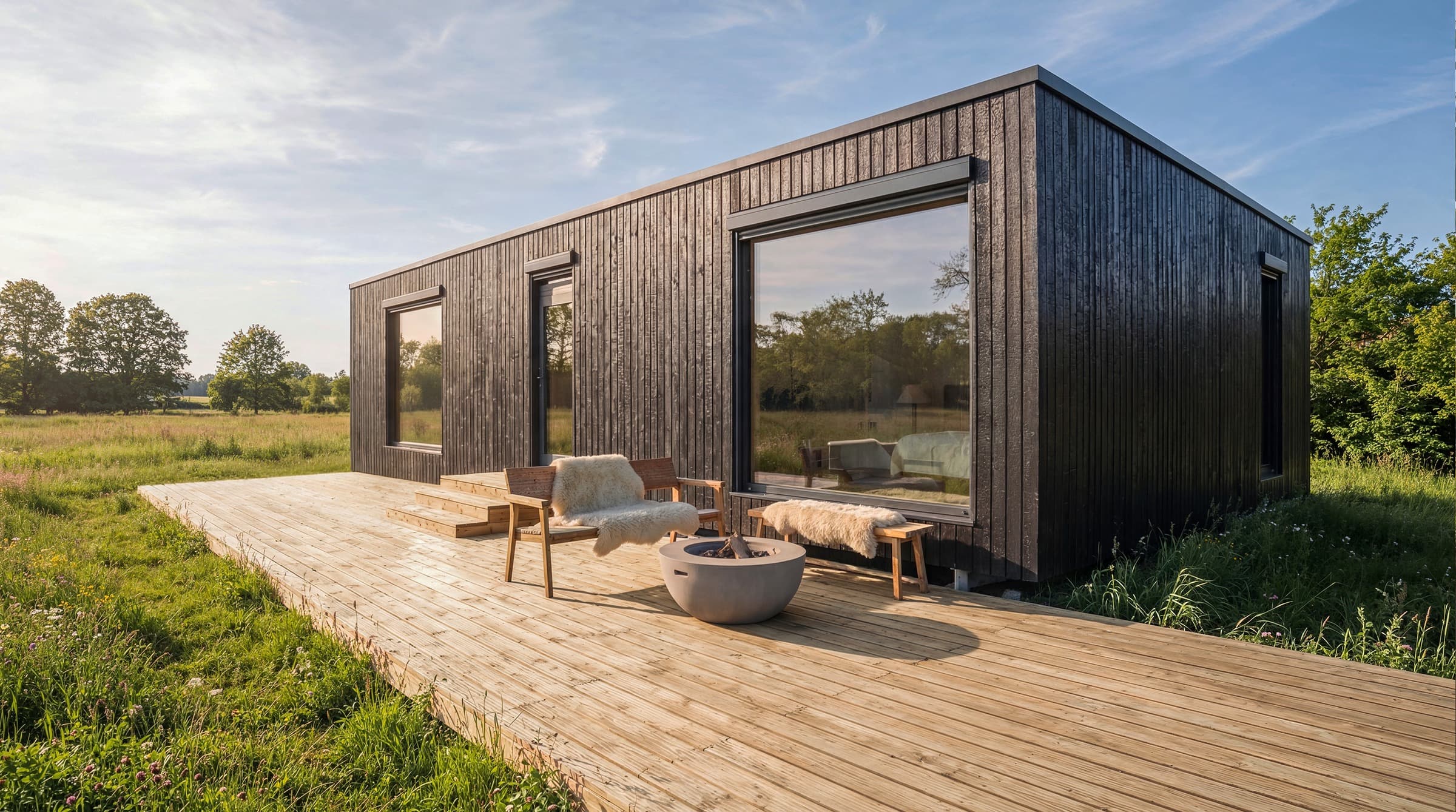
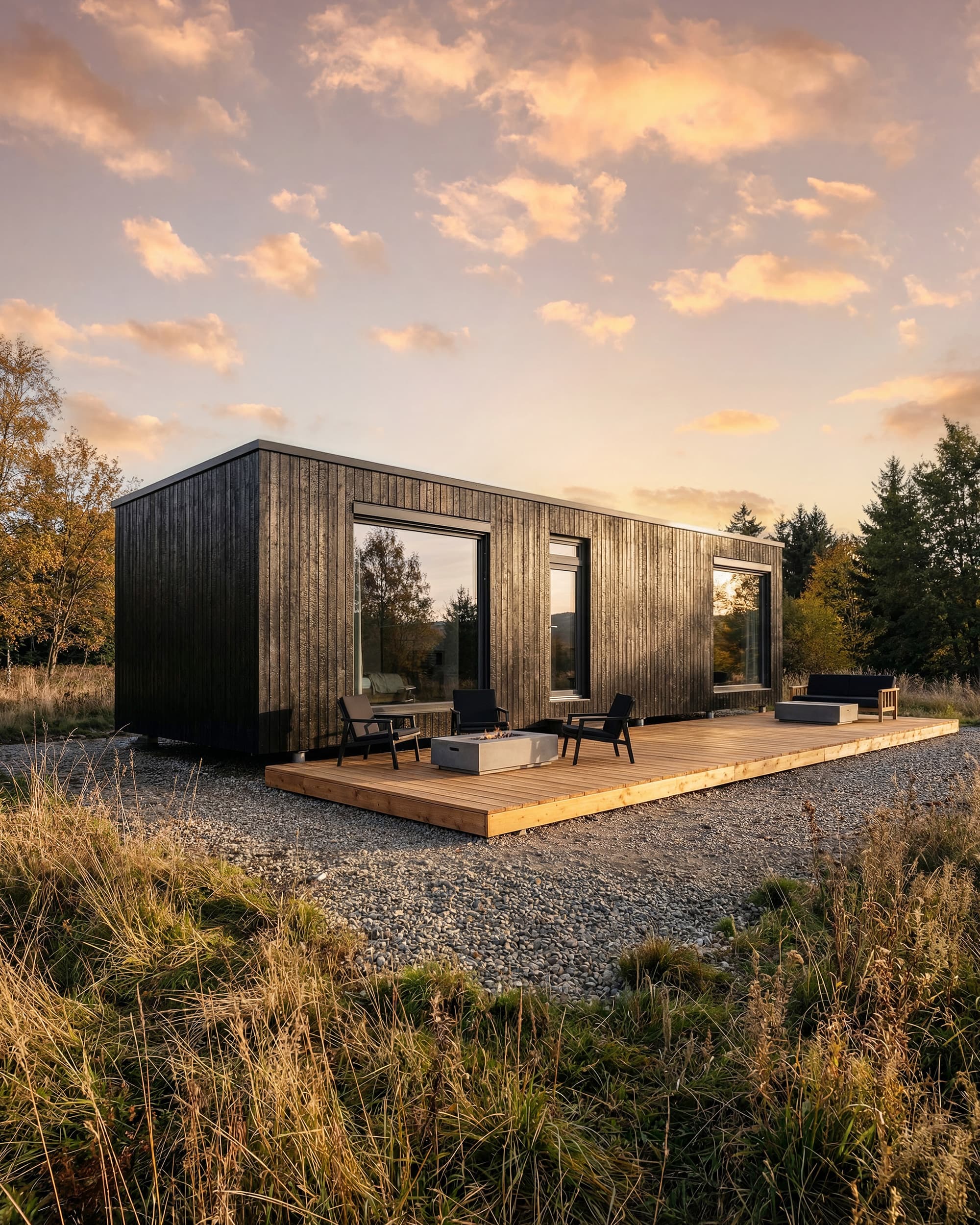
A modular home on a permanent foundation is financed with a mortgage or construction loan like any new home, once your lender accepts the building system, property and payment schedule. The difference is timing: BioBuilds asks for 10% to reserve your offer, 40% for materials, 40% for production and 10% at delivery, so 90% is due before delivery. Agree the releases with your lender first.
Start with two questions: how much will the lender approve, and how much will it release before delivery? Those are different figures. A plot can provide security without providing cash for the factory payments. This guide explains the BioBuilds milestones, the full project budget and the national programs to discuss with your lender.
Can you get a mortgage for a modular home?
Yes, once your lender has accepted the proposed home. Ask it to assess the house before you order: the construction system, the valuation, insurance and the payments before delivery, confirmed in writing. Prepare these documents for its checklist:
- Proof that you own the plot, or a purchase contract for it, because the land secures the loan.
- The planning or building permit, or the route to it.
- The supplier's offer or contract: price, scope, finish level and payment schedule.
- A budget for everything outside the house price: foundation, connections, transport, fees.
- Your income, existing debts and own funds, assessed against the national lending rules.
Rules checked on 16.10.2026 differ by market. Ireland's standard first-time buyer limits are four times gross income and 90% loan-to-value, with limited lender allowances. Romania's general debt-service limit is 40% of net income; the 45% exception concerns a qualifying first home purchase and should not be assumed for construction. Austria's KIM-Verordnung expired on 30.06.2025, but supervisory lending standards remain relevant. See the Central Bank of Ireland, Romanian lending regulation, Articles 18–20 and FMA guidance.
For a cross-border project, ask which rules and income documents your lender applies. The EU mortgage guide explains that residence, employment and property location can affect approval. Compare the European Standardized Information Sheets for the annual percentage rate of charge, total repayment, fixed-rate period and early-repayment terms.
How do stage payments work when the house is built in a factory?
Construction loans commonly release funds against certified progress on site. BioBuilds builds the house in the factory while your plot is prepared, so its invoices fall due before the lender can see the house on the land.
BioBuilds' payment schedule reflects that:
| Installment | Share of the house price | Due |
|---|---|---|
| Reservation | 10% | When you sign and reserve your offer |
| Materials | 40% | When your production slot is allocated |
| Production | 40% | When the start of production is notified |
| Delivery | 10% | When the home is available at the agreed destination; inspection takes place on the trailer before unloading |
The material and production payments complete your production reservation, subject to readiness and available slots. For your financing, this means 90% of the house price falls due before delivery. Use the signed offer and contract to confirm the amounts and dates. Ask the lender to state in writing what it will release at each milestone, which evidence it needs and how long each release takes. If it cannot fund factory payments, agree an alternative funding source and its repayment terms before signing.
Worked cash-flow check: reservation plus materials is 10% + 40% = 50% of the house price; the production payment takes the total to 90%. If your lender releases nothing toward the house before delivery, you need that 90% from other confirmed funds, plus any site costs already due. The last 10% is due at the destination, before the completed home's final valuation may be available. The mortgage deposit and the supplier's reservation payment are different calculations.
Show your lender the payment schedule at the first meeting. Before signing, confirm the source and release conditions for every payment, including the final 10% at delivery.
What else needs financing besides the house?
The house price is one part of the budget. Finance the whole project:
- The house. BioBuilds prices start from €78,540 for Wanderlust 48 in Exterior Finished and from €134,470 in Turnkey, including an illustrative 19% German VAT. Turnkey includes the interior finishes, ventilation and heat pump; kitchen furniture and appliances are separate. Exterior Finished leaves the interior fit-out to you. Its displayed package includes the preselected plumbing and electrical panel options; ventilation is optional. See what a prefab home costs for all models.
- The site. Foundation, utility connections, crane and permits. BioBuilds' site-cost estimate for Wanderlust 48 starts from €47,600, on the same VAT basis. Our guide to costs outside the house price lists them.
- Transport. Quoted separately for your destination, except in Ireland, where it is included in the price. On-site assembly is arranged by the client with BioBuilds' local partners at no extra cost; the crane and site works remain separate.
- The land, if you are buying it, with its taxes and notary or registration fees.
Ask for a single cost plan that also shows remaining interior work, insurance, lender and valuation fees, interest during construction and temporary housing. Reconcile these against the house and site quotes so you do not count the same item twice. Use destination-specific tax figures in the loan application; the English storefront's German VAT rate is illustrative.
Which public programs help finance a new home?
Support depends on the country and changes often. The main programs in BioBuilds' markets as of 16.10.2026:
| Country | Program | What it offers |
|---|---|---|
| Germany | KfW 297/298, 300 and 124 | 297/298: up to €100,000, or €150,000 with QNG; 300: ceilings of €170,000 to €270,000 for eligible families; 124: up to €100,000 for owner-occupation. Each has separate conditions |
| Austria | Wohnbauförderung | Loans and grants from each federal state, with income, floor-area and energy conditions |
| Romania | Noua Casă | State-guaranteed purchase loans: at least 5% down for homes up to €70,000; at least 15% for eligible new homes from €70,001 to €140,000. It does not fund construction on your own plot |
| Ireland | Help to Buy | For eligible first-time buyers: the lowest of €35,000, 10% of the purchase value or self-build approved valuation, and qualifying tax paid. The new cap applies to qualifying contracts or first self-build drawdowns from 07.10.2026 |
Check the official terms for KfW 297/298, KfW 300, KfW 124, Austria's state housing programs, Noua Casă and Help to Buy. A Passivhaus-certified building system alone does not establish KfW eligibility.
Check the application sequence before signing or paying. KfW 297/298 and 300 have specific pre-contract rules and permitted suspensive conditions; 124 has different project-start rules. For Irish self-builds, Help to Buy requires a first mortgage drawdown before the claim, so it is not cash available simply on approval. Our guide to subsidies for energy-efficient homes covers the efficiency programs in more detail.
Financing a modular home step by step
To see the price of your layout and finish, and the figure your bank will work with, configure your home.