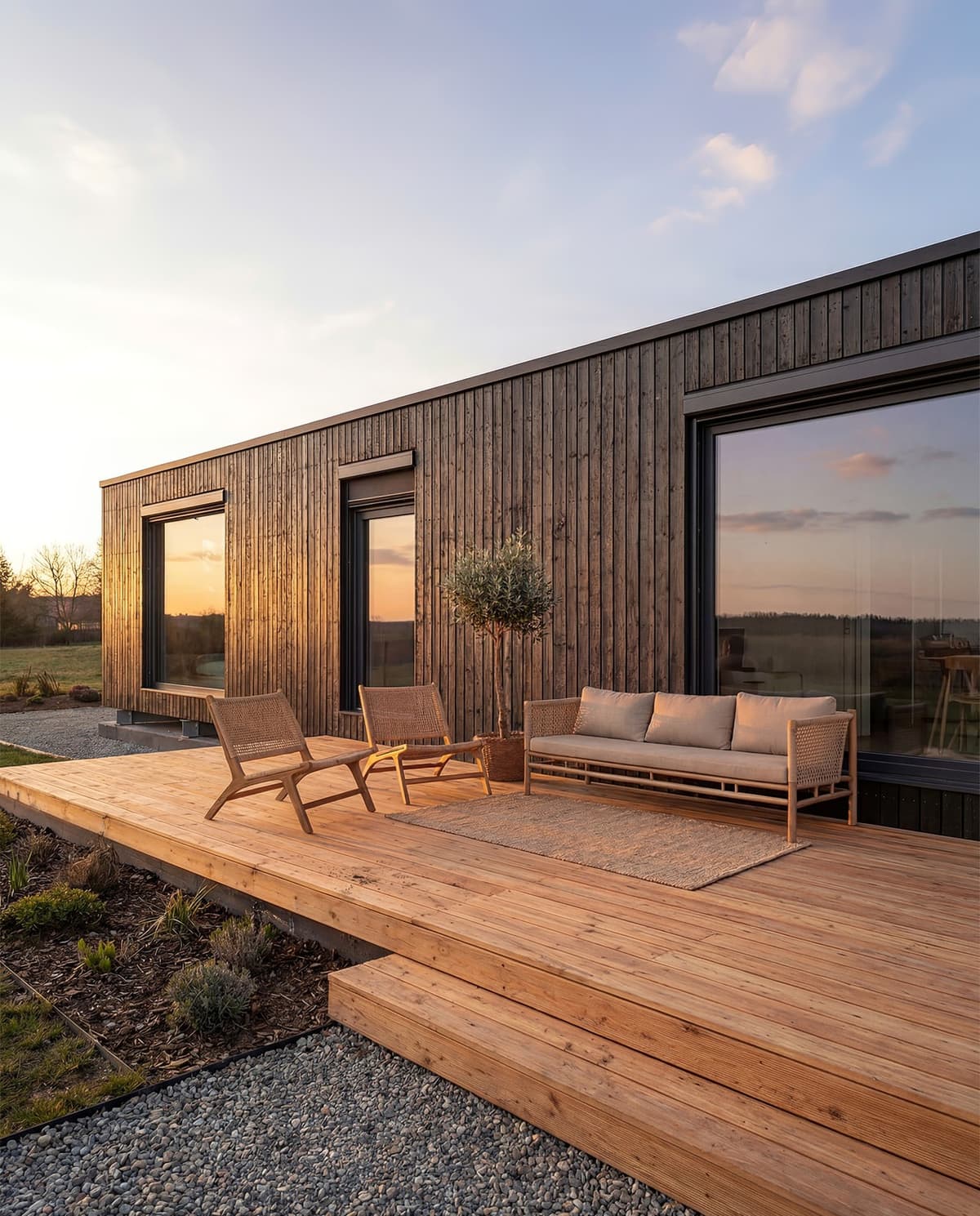
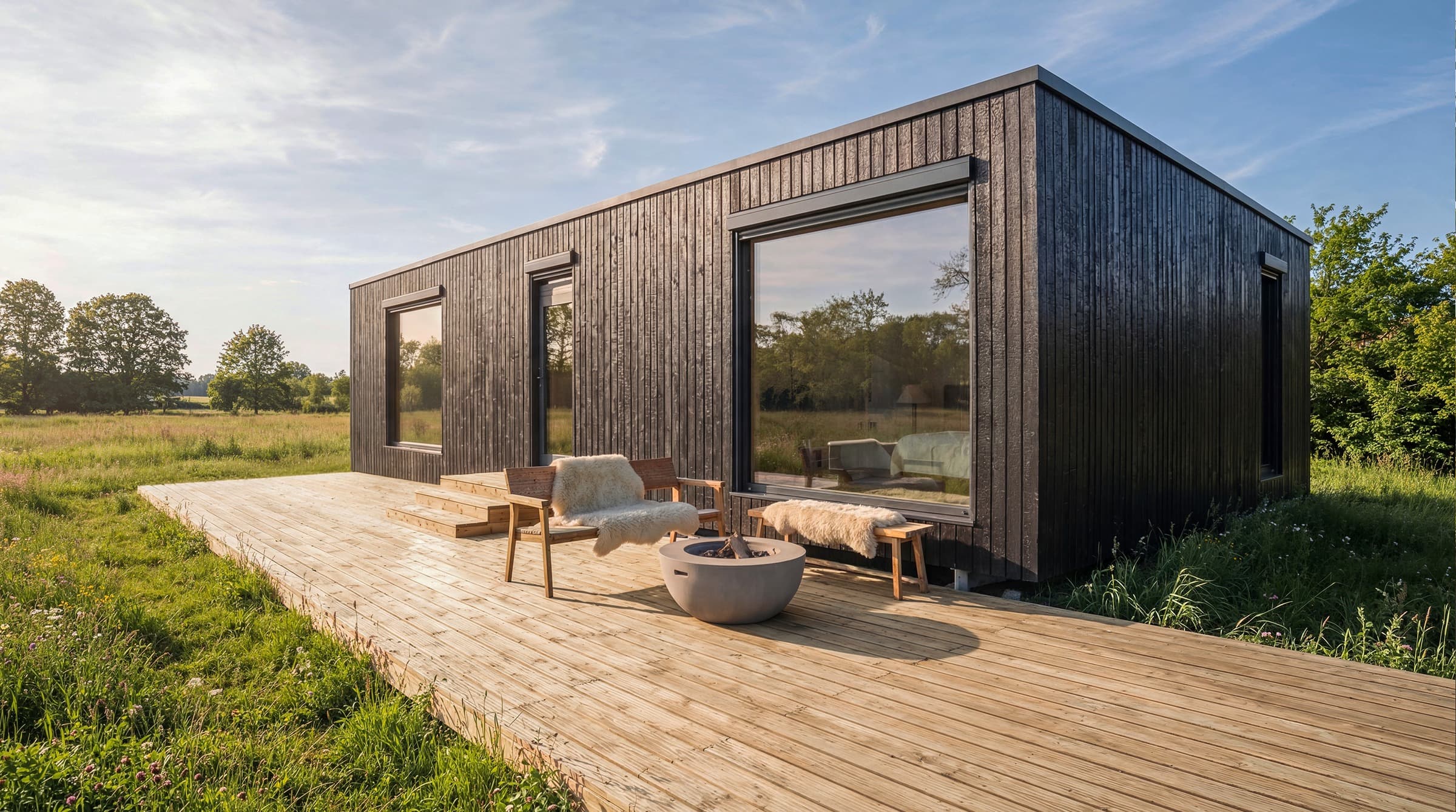
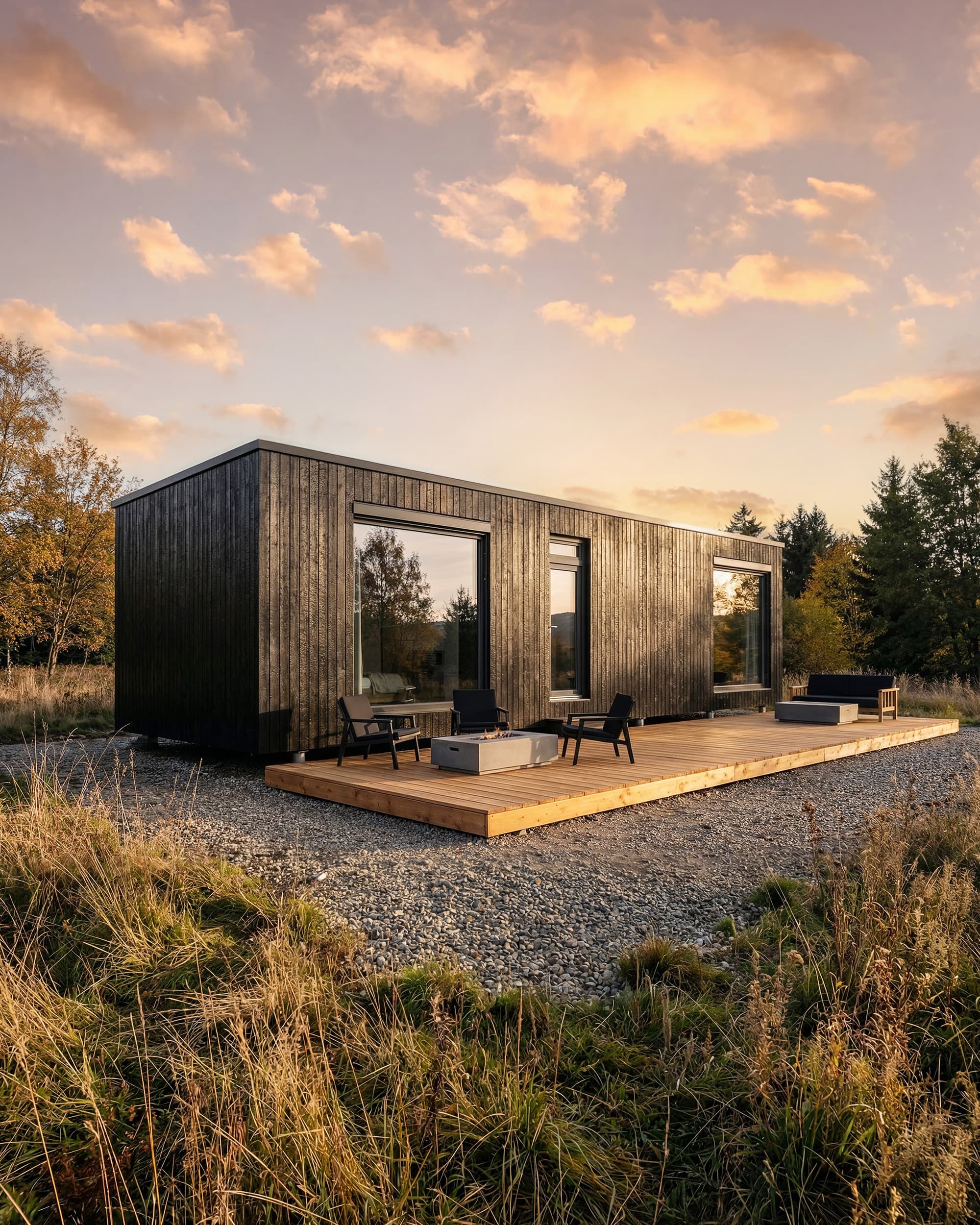

After 3 years in their 95m² BioBuilds Serenity, Alex and Andreea have saved approximately €8,300 compared to conventional energy costs. Their annual energy bills average €1,250, covering heating, hot water, ventilation, and all appliances. Heating alone costs roughly €100 per year. Here's the full breakdown.
Why they chose Passive House
When Alex and Andreea started looking for a home in 2022, they had one non-negotiable requirement: they didn't want to become slaves to their house. Not in 5 years, not in 20 years. They'd watched friends and family pour money into heating bills, emergency repairs, and endless maintenance. They wanted a home that would take care of them, not the other way around.
Three years later, they have hard numbers to back up their decision. Their 95m² Passive House has cost them €3,705 total in energy over 36 months. A comparable conventional home in Romania would have cost approximately €12,000 over the same period. The difference, over €8,300, is real money that stayed in their pockets. But the numbers only tell part of the story.
The decision wasn't primarily about saving money. It was about sustainability, both for their future and for the planet. Alex works in tech, Andreea in marketing. They spend most of their time indoors, often working from home. Indoor air quality, thermal comfort, and long-term resilience mattered more to them than shaving a few euros off monthly bills.
We didn't want to think about our house. We didn't want to worry about insulation degrading, systems failing, or energy prices spiking. We wanted to make one good decision and then just live our lives.
- Alex
The Passivhaus standard offered exactly that: a building methodology focused on long-term performance rather than short-term cost optimization. The certification requires verified outcomes, actual measured results, not just design intentions. Buildings either pass or they don't. That binary clarity appealed to both of them.
They also thought about the 20-year horizon. Energy prices in Romania have been volatile. The 2022 crisis saw wholesale electricity spike to €489/MWh before government caps intervened. Gas subsidies are ending in 2026. Anyone building a conventional home today is betting that energy will stay cheap. Alex and Andreea didn't want to make that bet.
The house: 95m² Serenity
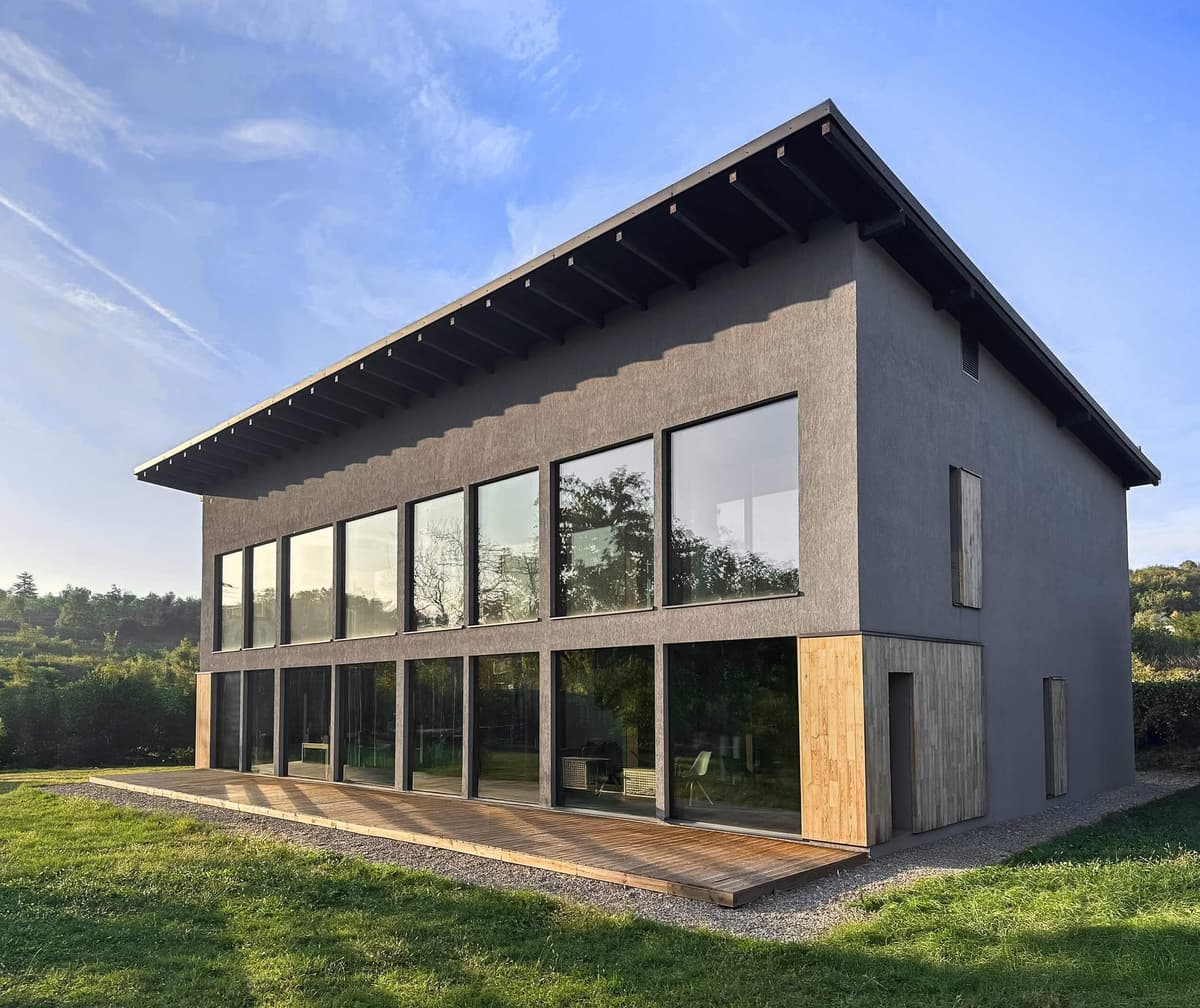
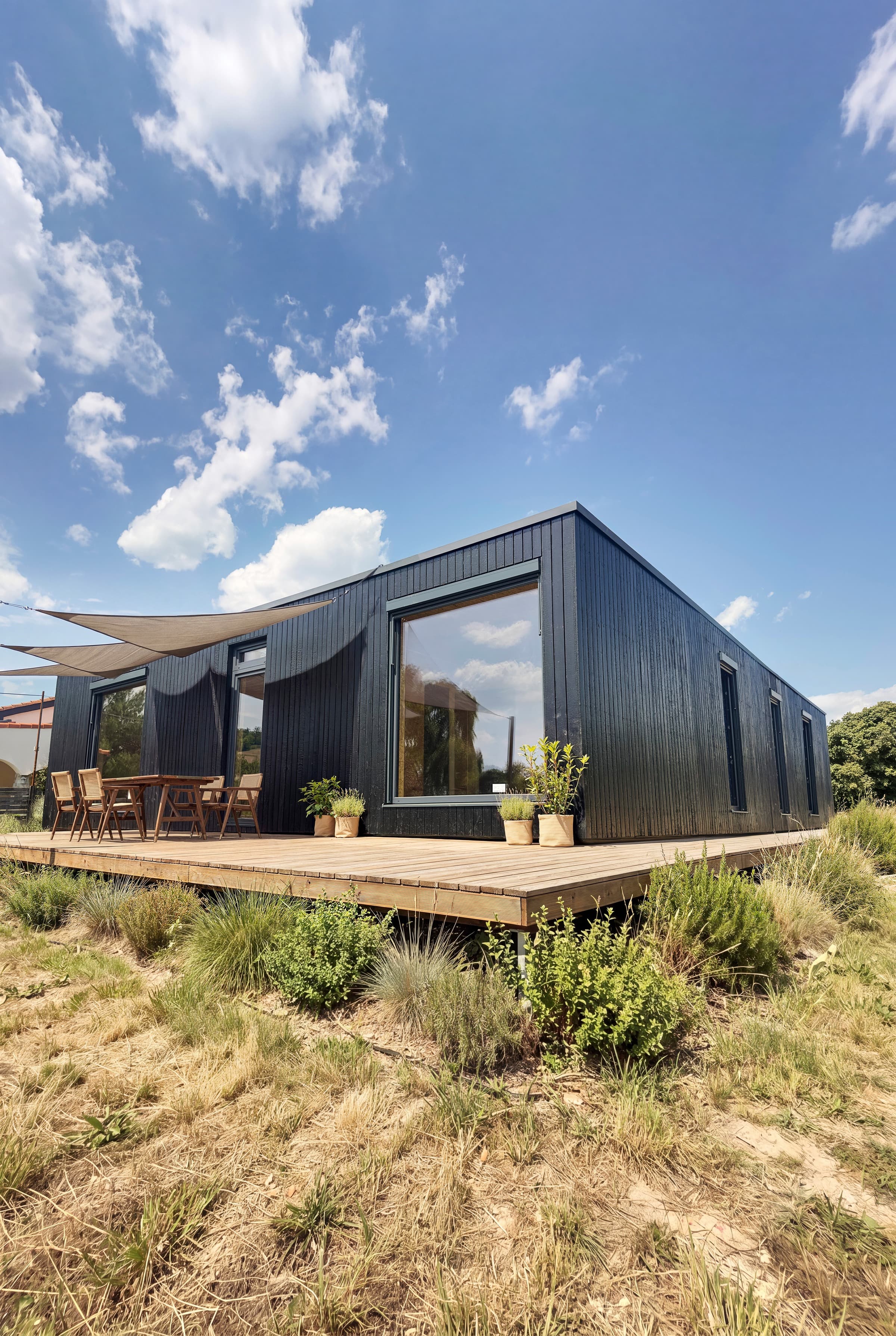
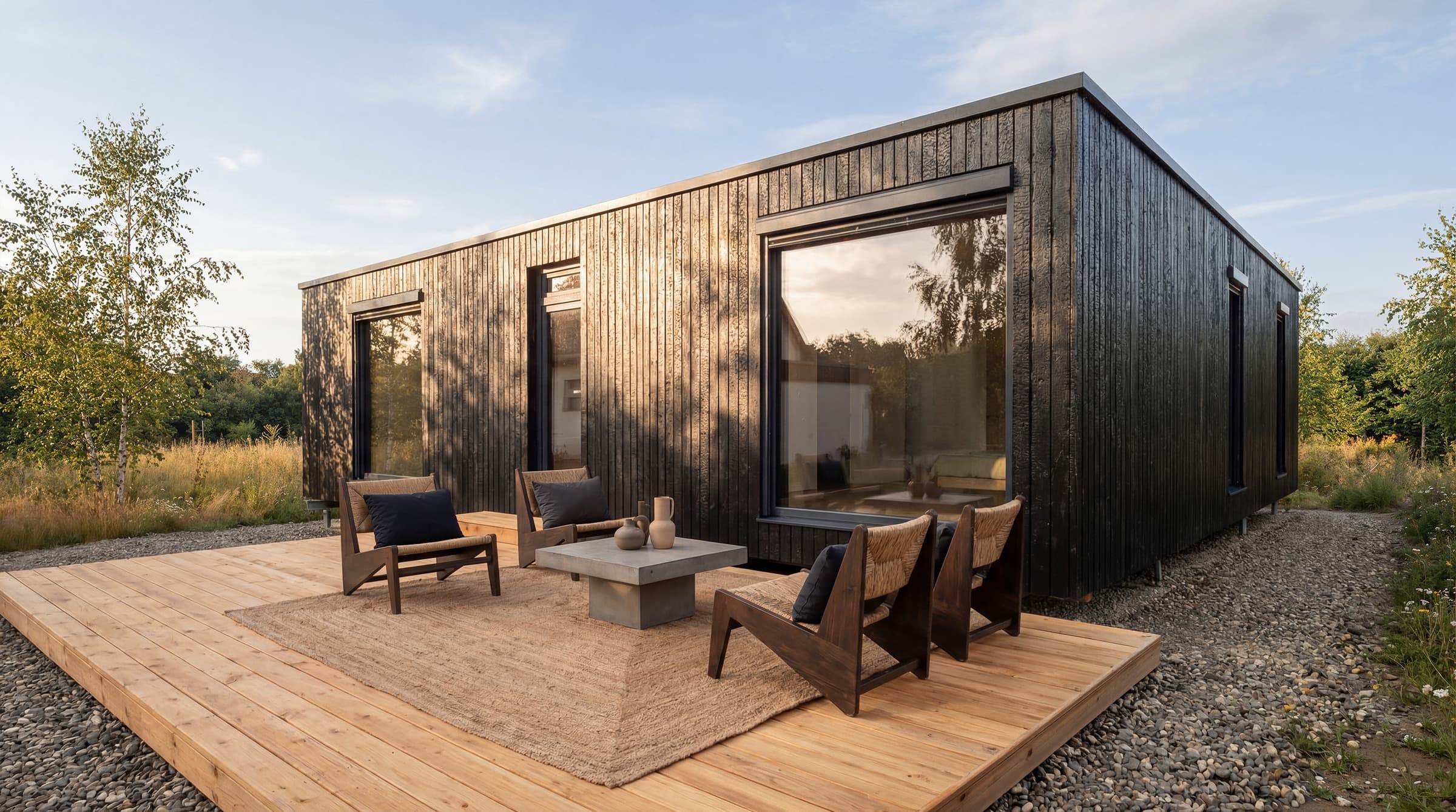
They chose the BioBuilds Serenity model, 95m² with 3 bedrooms, designed for a small family. The modular construction meant the house was manufactured in 3 weeks at the BioBuilds facility, then transported and assembled on their land in under a week. Total project timeline from contract to move-in: approximately 6 weeks.
The home meets full Passivhaus Classic certification: heating demand under 15 kWh/m² per year, airtightness below 0.6 air changes per hour at 50 Pa pressure, and primary energy under 60 kWh/m² annually. Their actual measured performance came in even better than the certification threshold, a benefit of factory-controlled precision assembly.
Key systems include a Zehnder MVHR (mechanical ventilation with heat recovery) unit that provides constant fresh filtered air while recovering 96% of outgoing heat, triple-glazed windows with U-values of 0.8 W/m²K, and an air-to-water heat pump for the minimal heating and hot water needs. The walls use 336mm of wood fiber insulation, organic, breathable, and effective.
Where the energy actually goes
This is where Passive House data gets interesting. In a conventional Romanian home, heating dominates, typically consuming 55–80% of total energy. In Alex and Andreea's home, the hierarchy flips entirely.
| Category | Annual kWh | Share | Annual Cost |
|---|---|---|---|
| Hot water | 2,280 | 40% | ~€570 |
| Appliances & electronics | 1,710 | 30% | ~€425 |
| Space heating | 1,140 | 20% | ~€100* |
| Lighting | 285 | 5% | ~€70 |
| MVHR ventilation | 285 | 5% | ~€70 |
| Total | 5,700 | 100% | ~€1,235 |
*Heat pump with SCOP 3.5 means 1,140 kWh of heat requires ~325 kWh of electricity
The revelation: hot water is now the biggest energy expense, not heating. This is the signature of a properly functioning Passive House. When you reduce heating demand by 90%, the stuff that used to be a rounding error (showers, dishwashers, washing machines) becomes the dominant load.
Space heating costs them roughly €100 per year. That's not a typo. The heat pump's seasonal coefficient of performance (SCOP) of 3.5 means every kWh of electricity produces 3.5 kWh of heat. Combined with a heating demand of just 12 kWh/m², the math is straightforward: 95m² x 12 kWh/m² = 1,140 kWh of heat needed, divided by 3.5 SCOP = ~325 kWh of electricity, times €0.25/kWh = roughly €80–100.
In a Passive House, heating becomes almost irrelevant to your energy bill. Hot water and appliances dominate. This means your consumption is tied to your lifestyle choices (shower length, appliance efficiency) rather than external factors like winter severity or energy prices.
Year-by-year costs: 2023–2025
Romania's energy prices have been volatile over the past three years. Government price caps kept electricity artificially low through mid-2025, then expired, causing rates to jump 30–50% overnight. Alex and Andreea's bills reflect this reality, but the low consumption baseline means the impact was manageable.
| Year | Avg. €/kWh | Consumption | Annual Bill |
|---|---|---|---|
| 2023 | €0.19 | 5,650 kWh | €1,075 |
| 2024 | €0.21 | 5,720 kWh | €1,200 |
| 2025 | €0.25 | 5,730 kWh | €1,430 |
| 3-Year Total | - | 17,100 kWh | €3,705 |
Notice that consumption stayed essentially flat across all three years, around 5,700 kWh annually, even though 2024 had a colder-than-average winter and 2025 saw a heatwave in July. The building's thermal mass and superior insulation buffer against weather extremes. What changed was price, not usage.
The 2025 jump from €1,200 to €1,430 reflects the end of Romania's electricity price caps in July 2025. Their consumption barely changed (5,720 to 5,730 kWh), but the average rate increased from €0.21 to €0.25/kWh. Even with that 19% price increase, their annual bill rose only €230, a manageable increase because the consumption baseline is so low.
Compared to conventional homes
What would Alex and Andreea have paid in a conventional 95m² Romanian home? The average Romanian residential building consumes approximately 308 kWh/m² annually, one of the highest rates in the EU. That translates to roughly 29,260 kWh per year for a 95m² home.
However, conventional Romanian homes typically use gas for heating (subsidized at €0.061/kWh until March 2026) and electricity for everything else. The blended cost calculation is more complex:
| Year | Conventional Est. | Passive House Actual | Annual Savings |
|---|---|---|---|
| 2023 | €3,650 | €1,075 | €2,575 |
| 2024 | €3,950 | €1,200 | €2,750 |
| 2025 | €4,415 | €1,430 | €2,985 |
| 3-Year Total | €12,015 | €3,705 | €8,310 |
The savings accelerated each year, from €2,575 to €2,750 to €2,985, because conventional energy costs rose faster than Passive House costs. Romania's gas subsidies are ending in March 2026, which will likely push conventional heating costs up another 50–100%. Alex and Andreea's all-electric setup, already efficient, becomes even more advantageous as gas prices normalize.
Projected Year 4 (2026): If gas subsidies end and prices rise to market rates (~€0.10–0.12/kWh), a conventional home's heating costs alone could reach €2,500–3,000. Add electricity for appliances and hot water, and total conventional costs could exceed €4,500. Alex and Andreea's Passive House will likely stay around €1,400–1,500. The gap widens even further.
What living in it actually feels like
Numbers are useful, but they don't capture what it's actually like to live in a Passive House. Here's what Alex and Andreea notice most after three years:
Temperature consistency
The house maintains 21–22°C year-round with minimal intervention. There are no cold spots near windows, no drafts, no rooms that are warmer or cooler than others. The temperature difference between floor and ceiling is typically less than 1°C. In winter, they might run the heat pump for a few hours during especially cold nights. In summer, the external shading and thermal mass keep things cool without air conditioning.
The weirdest adjustment was not having a heating routine. In our old apartment, October meant turning on radiators, adjusting thermostats, bleeding the system. Here, we just... don't. The house handles it.
- Andreea
Air quality
The MVHR system provides constant fresh air, filtered, temperature-controlled, and humidity-balanced. They no longer wake up with stuffy rooms or have to choose between fresh air and thermal comfort. Andreea's seasonal allergies have improved noticeably since the F7 filters remove most pollen and particulates. Dust accumulation is dramatically lower than in their previous home.
Silence
Triple-glazed windows and super-insulated walls provide 35–40 dB of noise reduction. Their plot is near a moderately busy road, but inside, they barely hear traffic. The MVHR unit runs continuously but operates at 25–30 dB, quieter than a refrigerator. The only regular sound is the occasional click of the heat pump starting.
The mental shift
Perhaps the biggest change is psychological. They don't think about their house. They don't check weather forecasts to decide whether to preheat. They don't worry about whether they can afford to keep it warm next winter. The house just works, quietly, in the background, while they focus on everything else in their lives.
That was the original goal: a home that takes care of them instead of demanding care. Three years in, it's delivered exactly that.
For Alex and Andreea, the €8,300+ in savings over three years has been substantial. But what matters more is the trajectory: savings that grow each year as conventional energy costs rise, a building that will perform identically in year 20 as it does today, and a daily life unburdened by the small anxieties that come with inefficient housing. The investment wasn't about this year's energy bill. It was about the next 50 years of not worrying about it.