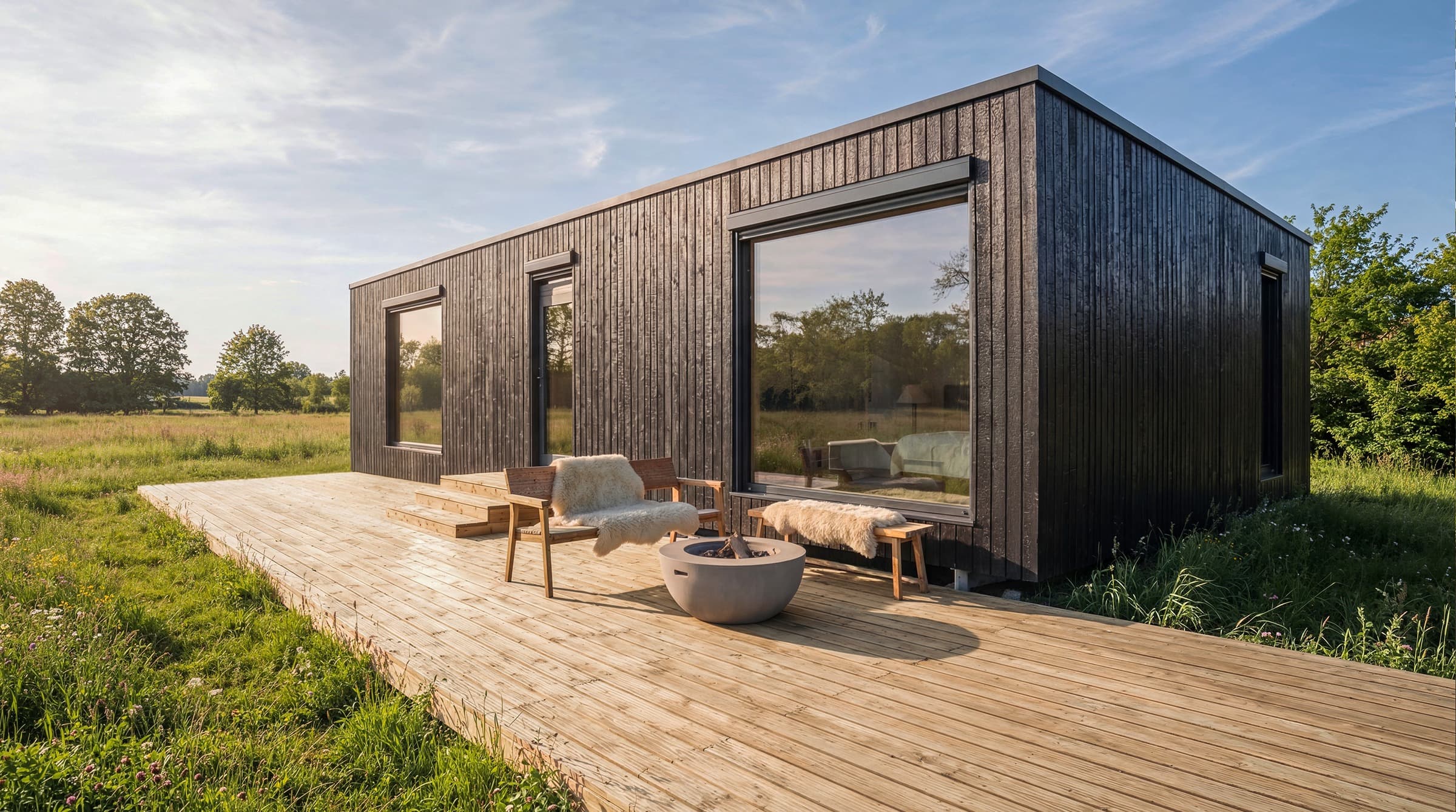
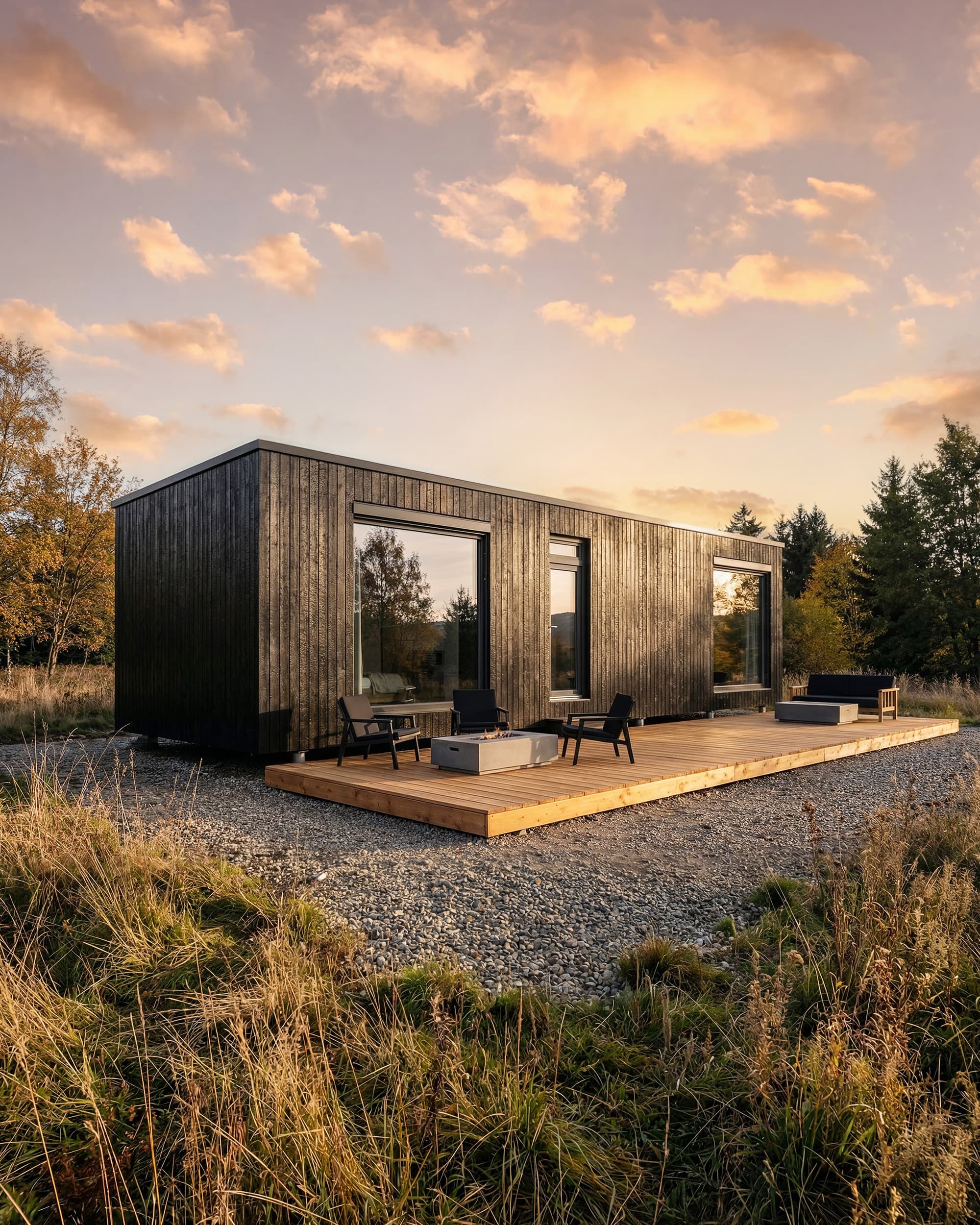
Brochures all promise quality; certificates, contracts, and registries tell the truth. This guide gives you a 9-criteria scorecard you can apply to any prefab manufacturer in Europe: certification proof, fixed contract price, price transparency, factory access, published energy data, warranty terms, references, delivery inclusions, and payment structure. Every criterion is verifiable in writing, and BioBuilds scores itself against all nine at the end, exclusions included.
Choosing a prefab manufacturer makes the entire project hinge on one decision. In a traditional build, a weak plumber costs you a bathroom; in prefab, one company carries the structure, the systems, the delivery, and the warranty. That is exactly why prefab works, and exactly why the choice of manufacturer deserves more rigor than a brochure comparison.
This guide answers a single question: which manufacturer should you trust? The 2026 price guide covers what the house itself costs; the buying guide explains the purchase process and the contract step by step; the site-cost guide covers the costs around the house.
One scope note before the criteria: based on our analysis, the manufacturers worth considering all produce factory-built homes with a timber frame and energy certification. The two linked guides explain why; this scorecard assumes you are comparing within that segment.
How do you compare prefab home manufacturers?
With one rule: a claim only counts if it can be verified in writing or in person. Adjectives score zero. "Premium quality," "eco-friendly," and "German engineering standards" appear in every brochure on the market; a certificate number, a published price list, and a factory address do not. Each of the nine criteria below meets that standard, which means you can run the same scorecard against any manufacturer, including us, in one email: ask for each item in writing and count the direct answers.
- Certification with registry proof: named issuer, certificate scope, verifiable entry
- Fixed contract price: the signed figure holds, with the hold period in writing
- Price transparency: prices visible before a sales meeting, not after
- Factory visit: a real production facility you are invited to see
- Published energy data: heating demand, airtightness, U-values as numbers
- Warranty terms in writing: durations, scope, and who services claims
- References: years in business, homes delivered, owners you can contact
- Delivery inclusions: named Incoterm, transport insurance, explicit exclusion list
- Payment structure: milestone-tied tranches, final payment at your site
1. Certification with registry proof
Anyone can print "certified" on a website. A real certification has three parts: a named issuing body, a defined scope, and an entry you can verify with the issuer. For energy performance, the reference institution is the Passive House Institute in Darmstadt, which maintains public databases of the buildings and components it certifies, so a claim is checkable rather than a matter of trust. Demand the certificate itself and read the scope line: certifying one showcase house is not the same as certifying the building system every customer receives.
2. Fixed contract price
Three numbers appear during a prefab purchase: the configured estimate, the personalized offer, and the contract price. Only the last one is binding, so the question is what happens to it after signing. Demand in writing: the final gross price in the contract, how long it holds, and the exact conditions under which it could change. An open-ended indexation clause reintroduces the cost drift that prefab was supposed to eliminate.
3. Price transparency
Some manufacturers publish their prices; others provide a quote only after a sales meeting. The difference is not cosmetic. Published lists let you benchmark any offer against the market's per-square-meter bands in an evening, and they signal that every buyer pays from the same list rather than a figure the salesperson estimates they will accept. Quote-only pricing makes comparison shopping slow by design. Demand a price in writing before you hand over your phone number.
4. Factory visit
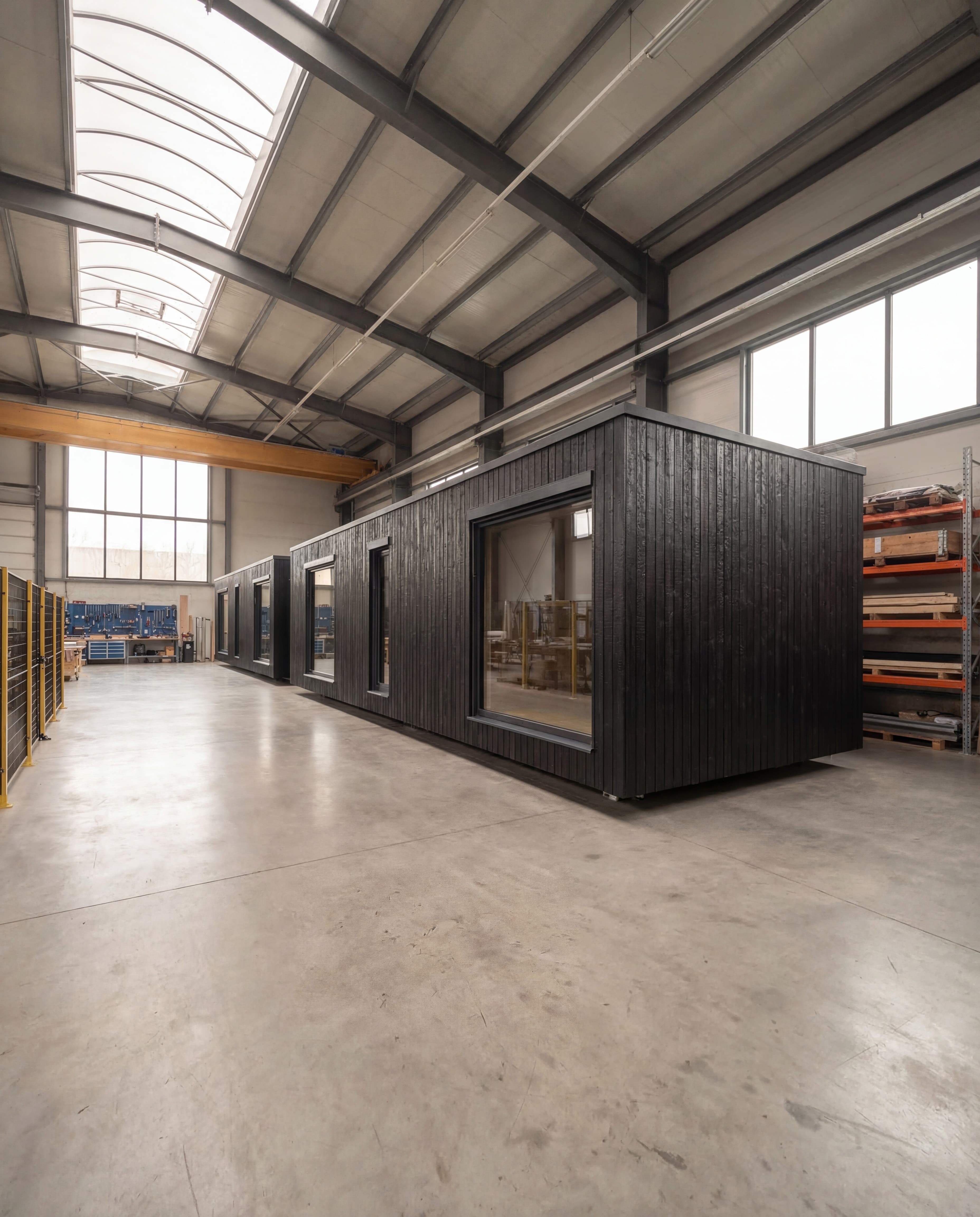
A factory tour is the cheapest due diligence available. In two hours you see whether the production line exists, whether the materials being installed match the brochure, and whether the company manufactures at all, because some "manufacturers" are brands that subcontract production and have no factory. Demand the production address in writing and an invitation to visit. A manufacturer that will not show you its factory is answering the question anyway.
5. Published energy data
Since 2020, every new building in the EU has had to be nearly zero-energy, and from 2030 new buildings must be zero-emission (public buildings from 2028), so "meets energy standards" describes the legal minimum, not an achievement. The differences appear in the numbers: heating demand in kWh/m² per year, the airtightness test result in air changes per hour, and window U-values. For context, the Passivhaus airtightness limit is 0.6 ACH at 50 Pascals of test pressure, while a leaky older house can reach around 20 ACH. Demand all three figures in writing; a manufacturer that describes efficiency only in adjectives either has not measured it or prefers you not to see the result.
6. Warranty terms
Every EU seller owes the legal conformity warranty; the differences lie in what they offer beyond it. Demand three things in writing: the structural warranty duration, what the warranty covers beyond the legal minimum, and who actually services a claim in year four: the manufacturer or a subcontractor that may no longer exist. Component warranties (windows, heat pump, membranes) are provided separately by their manufacturers, and a serious seller lists them instead of blending everything into one vague "full warranty."
7. References
Certification proves the system; references prove the company. Three numbers matter: years in business, homes delivered, and countries served, because a manufacturer with ten delivered homes may build well but cannot show you ten winters of performance. Demand at least one completed home you can visit or one owner you can contact. Fresh renders are not references, and neither is a testimonial without a name.
8. Delivery inclusions
Two offers with the same headline price can differ by thousands of euros in what the price includes. The key term is the Incoterm: DAP means the manufacturer delivers to your plot at its own risk; Ex Works means the price ends at the factory gate and transport, insurance, and border risk are yours. Demand the named Incoterm, confirmation of whether transport is insured, and the explicit list of what is not included (typically unloading, crane, positioning, and hookups; the site-cost guide itemizes that side). An honest exclusion list is a green flag; a quote with no exclusion list is where the surprises live.
9. Contract payment structure
The payment schedule tells you who carries the risk. A healthy structure ties each tranche to a verifiable event (contract, production slot, production start, delivery), with the final tranche due only when the house is physically at your site. A schedule that collects most of the price before production starts moves the manufacturer's business risk onto you. Demand the full schedule in the contract, with the triggers named.
A manufacturer that answers all nine questions in writing can still be the wrong choice for your project. One that refuses to answer them in writing is always the wrong choice. The scorecard's real output is not a ranking; it is the shortlist of companies willing to be verified.
How does BioBuilds score on its own scorecard?
BioBuilds, the European manufacturer publishing this guide and among the best-priced in the certified segment, applies the same test to itself. Here is the row-by-row answer, exclusions included:
| Criterion | BioBuilds answer |
|---|---|
| Certification proof | Building system certified by the Passive House Institute, Darmstadt (the world's first modular building system with this certification); EPD-verified materials. Verifiable with the institute. |
| Fixed contract price | The personalized offer confirms the configured estimate as a final gross price; the offer is valid for 30 days, and the signed contract holds the price for a pre-agreed period. |
| Price transparency | All list prices published, from €78,540 (Wanderlust 48 m², semi-finished) to €458,150 (Bloom 190 m², turnkey), €2,411–2,801/m²; the configurator prices every option live. |
| Factory visit | Yes, at the production facility in Moreni, Romania. A factory visit is a standard, scheduled step in our sales process. |
| Published energy data | Heating demand ~15 kWh/m² per year; airtightness 0.4 ACH, the measured average of BioBuilds homes that varies with each project, against the 0.6 ACH Passivhaus limit; triple glazing with Ug = 0.50 W/m²K in Passivhaus-certified frames. |
| Warranty terms | 5-year structural guarantee, in addition to your statutory defect rights; component manufacturers' warranties apply in addition. |
| References | 220+ passive houses delivered across 5 countries over 14 years. |
| Delivery inclusions | Transport included in Irish storefront prices; quoted separately by destination elsewhere. On-site assembly included through our partners. Crane, hookups, permits and site works budgeted separately. |
| Payment structure | 10% at signing, 40% at production-slot allocation, 40% at production start, 10% when the home is at your destination, inspected on the trailer before unloading. |
The 35 cm timber-frame walls, STEICO wood-fiber insulation, and the standardized 3-week factory production process behind these answers are documented across this blog; the configurator shows the published prices applied to your own configuration. But note what the table is for: not to declare a winner, but to show what nine direct answers look like, so you can recognize their absence elsewhere.
Green flags and red flags at a glance
- A certificate with a named issuer and a checkable registry entry, scoped to the building system, not a showcase house
- Prices published before any sales contact, so every buyer benchmarks from the same list
- An open factory with a standing invitation to visit the production line
- Energy performance stated in numbers: kWh/m² per year, ACH, U-values
- An explicit not-included list next to the named Incoterm
- A final payment tranche due at your site, after inspection
- "Certified" with no issuer, scope, or certificate number anywhere in the documents
- A price that exists only after a sales meeting, different for every buyer
- No factory address, or reasons why a visit is never quite possible
- Efficiency described entirely in adjectives: "eco," "energy-saving," "premium insulation"
- A payment plan that collects most of the price before production starts
- Verbal promises: "we usually include that" is not a clause
Run the scorecard against every manufacturer on your shortlist, including us, and keep the written answers next to the contract they belong to. The buying guide picks up from there: what the process looks like step by step once you have chosen whom to trust.