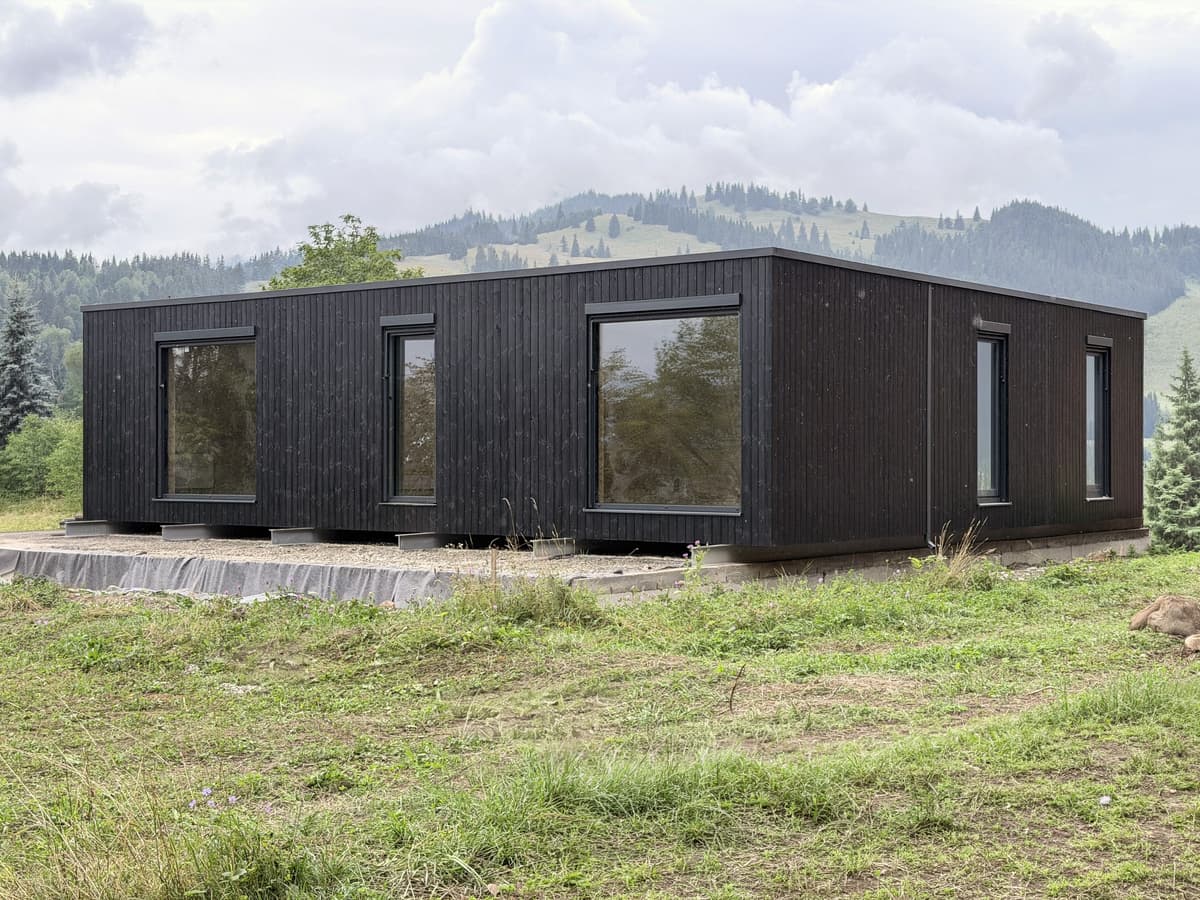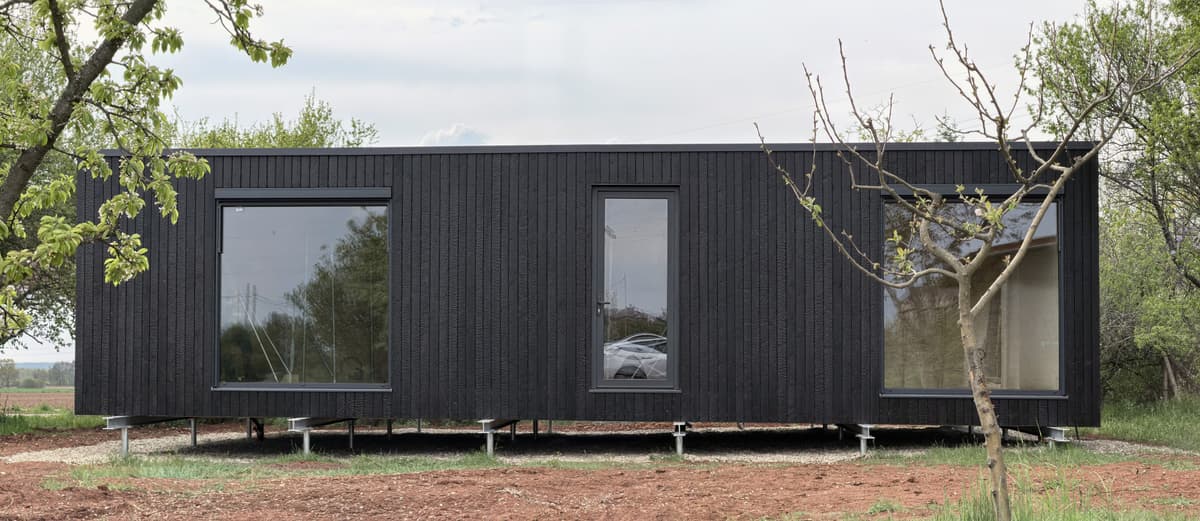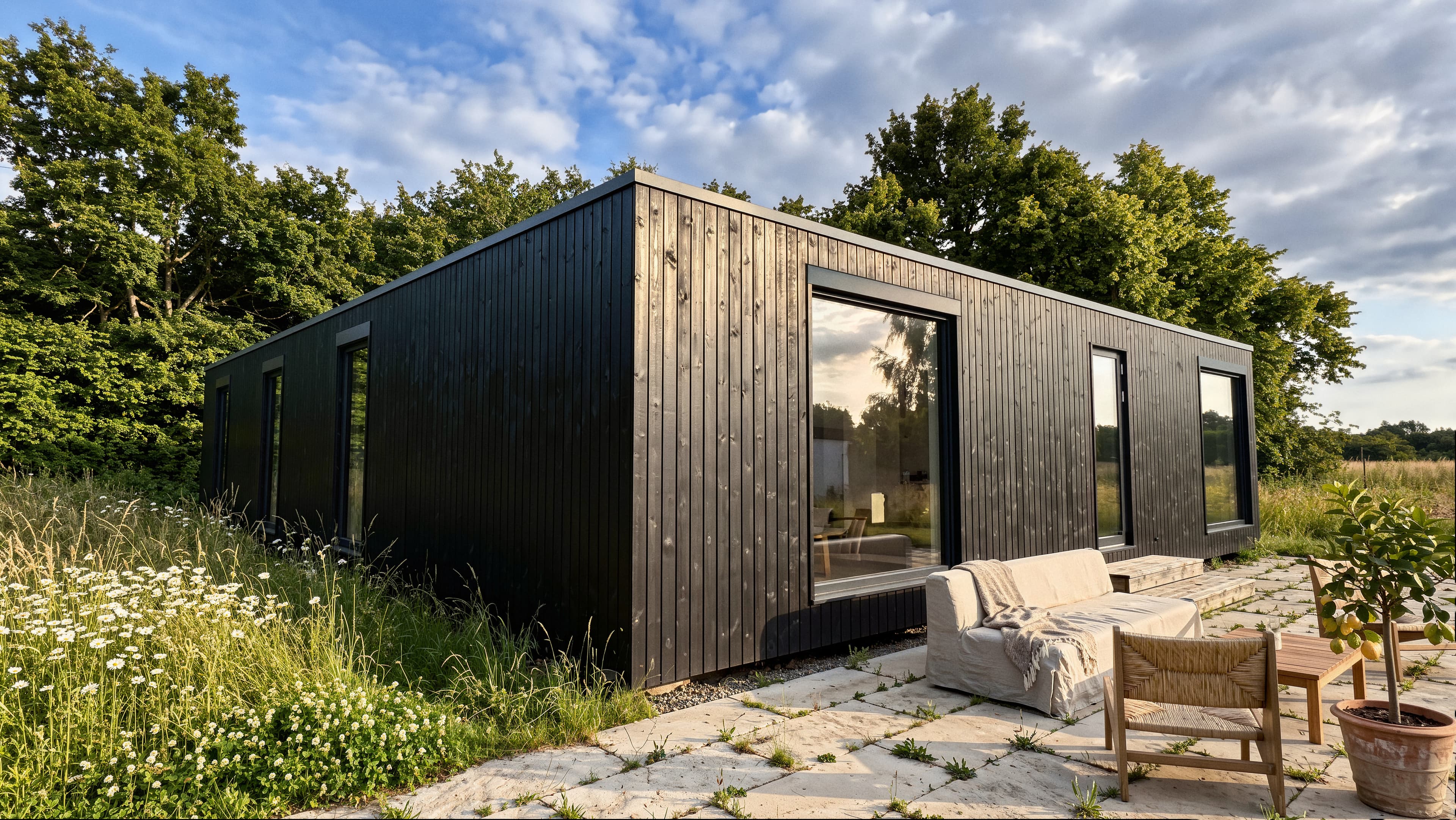
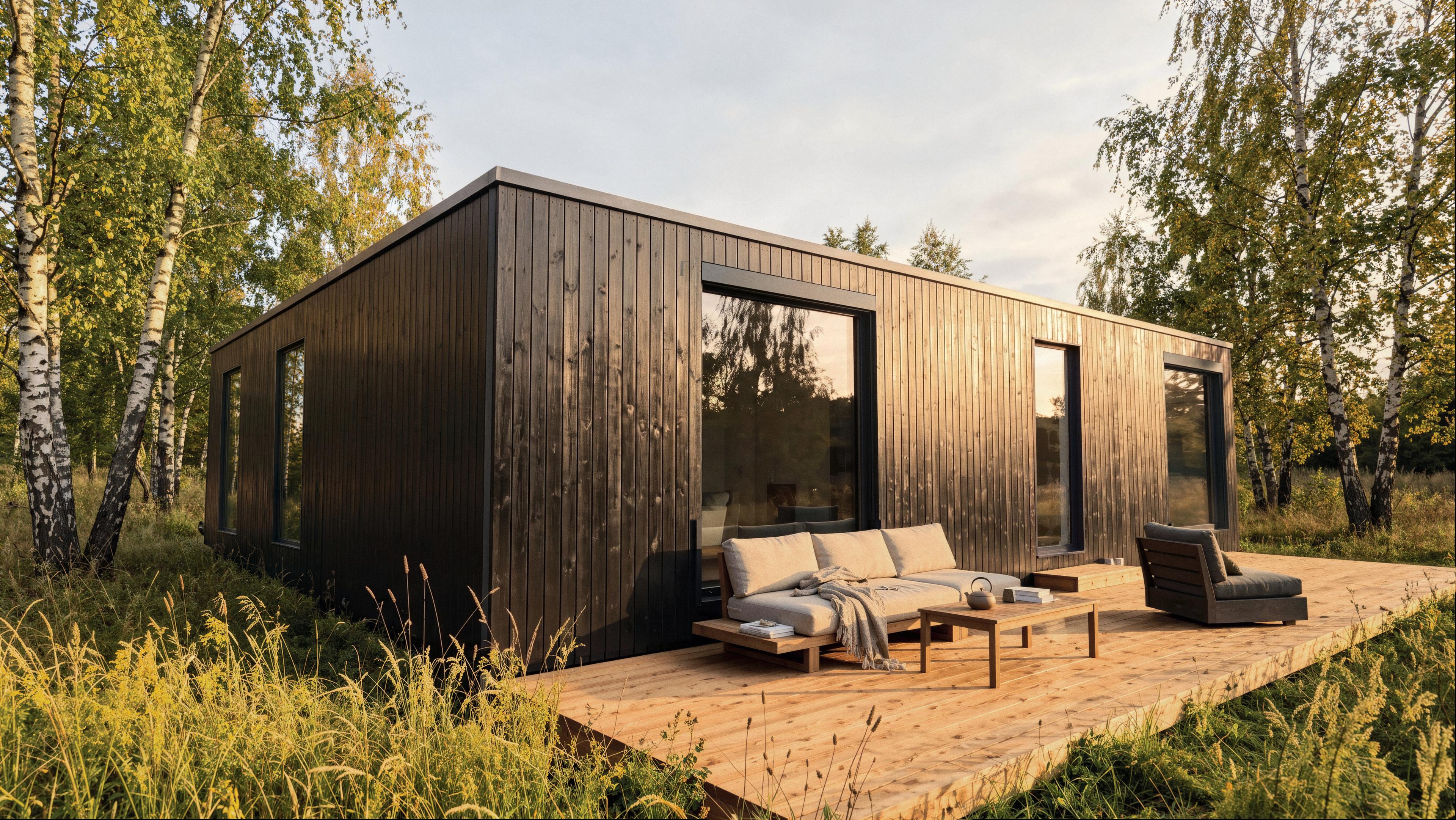
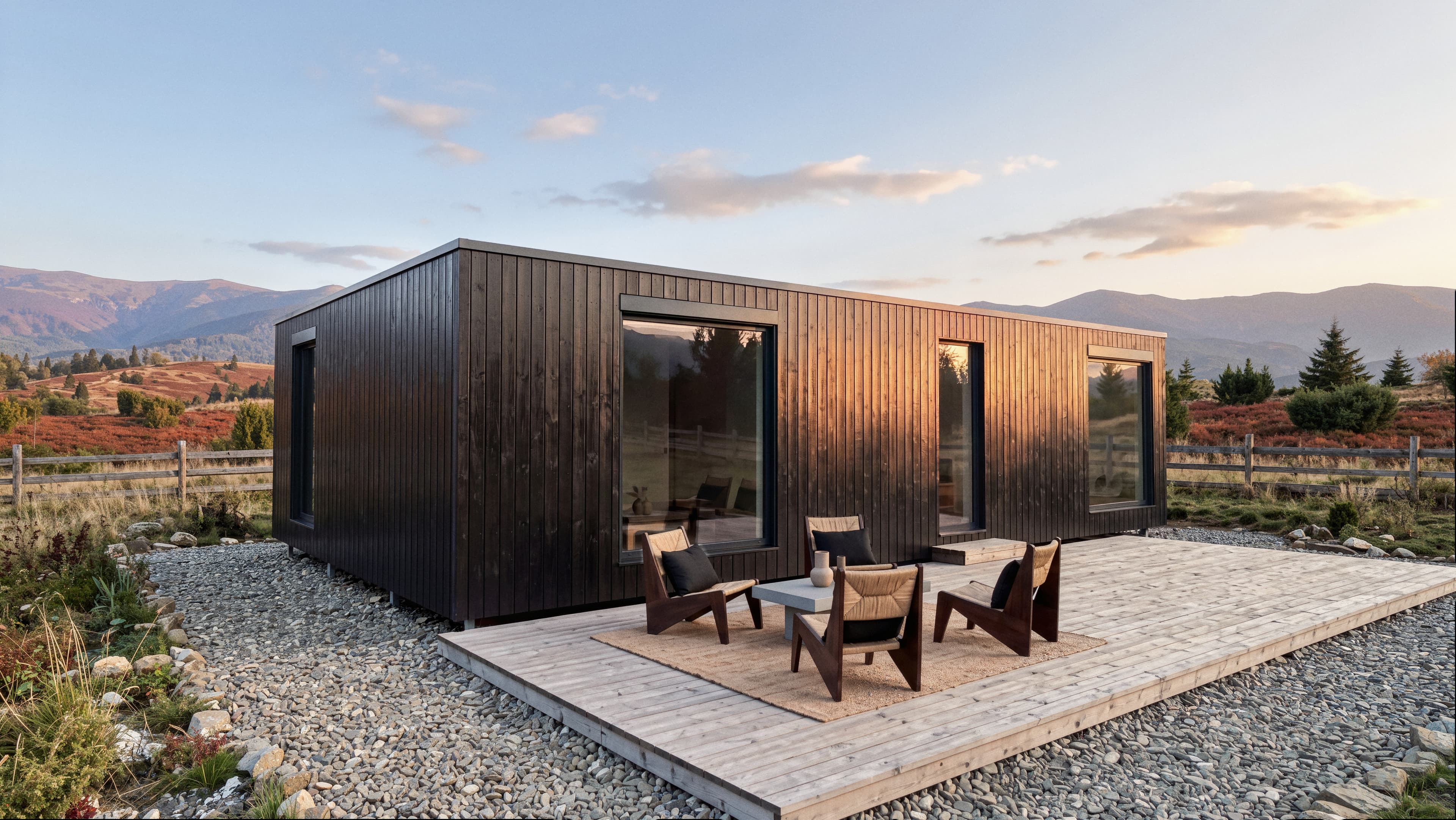
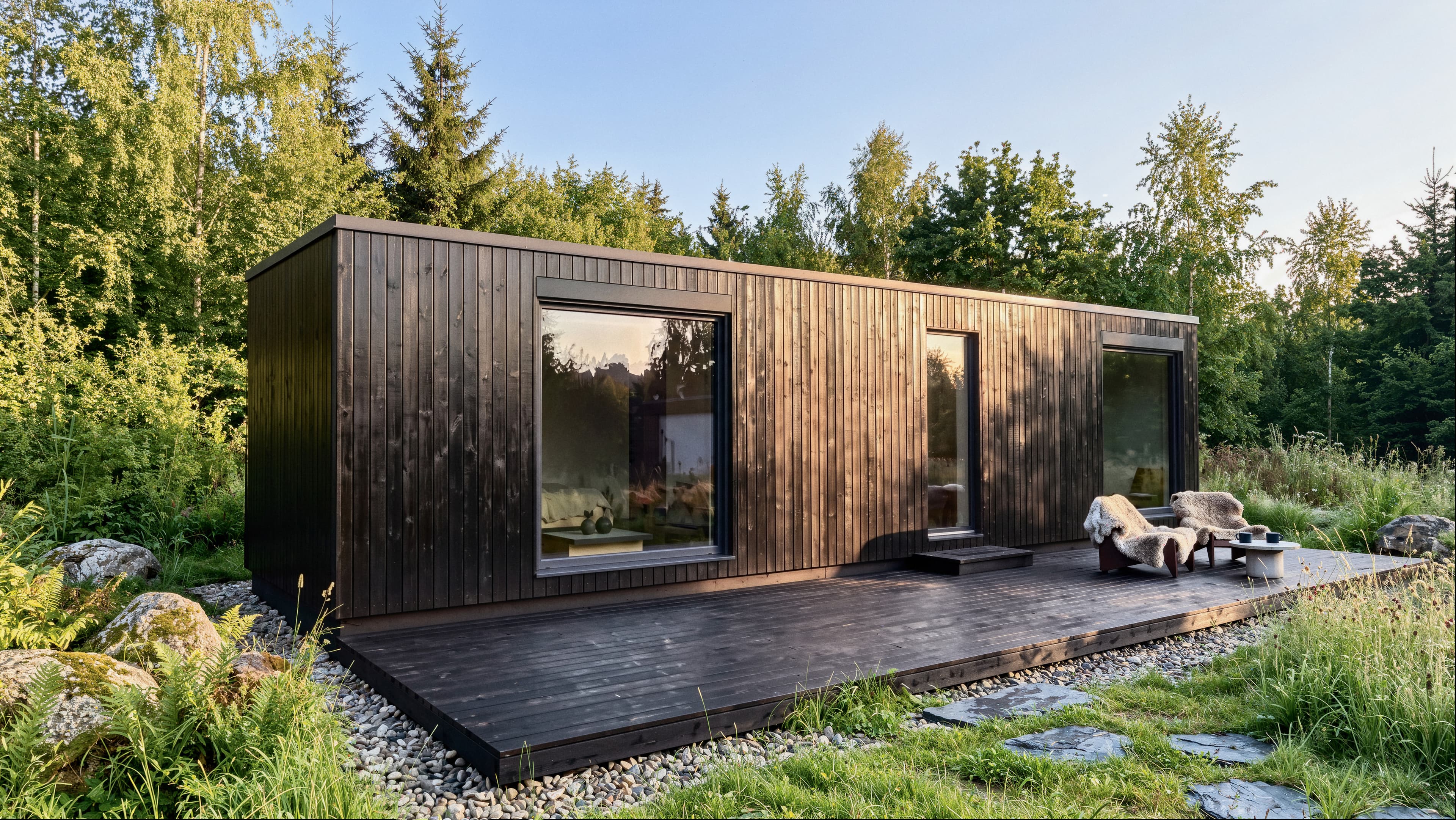
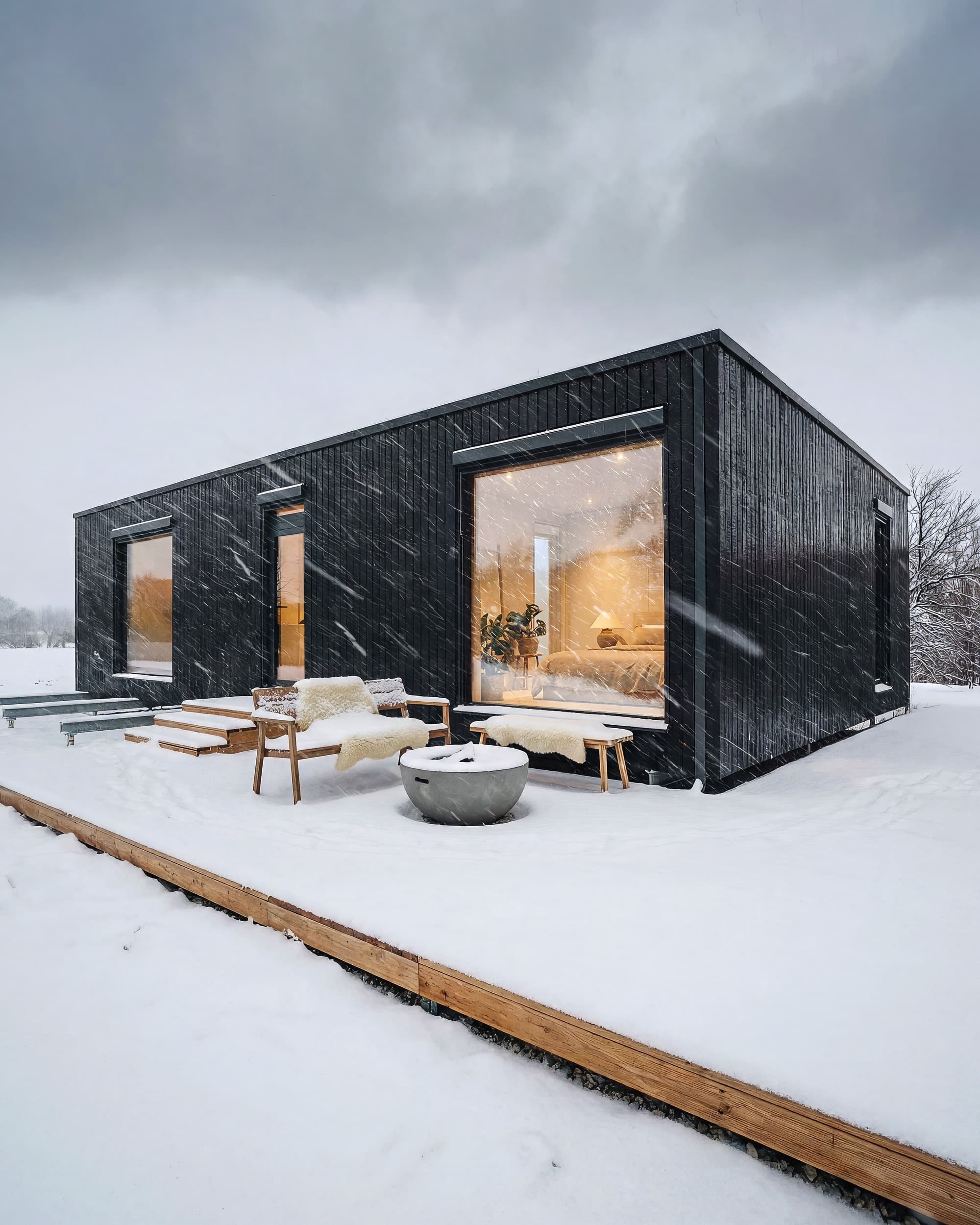
A BioBuilds Turnkey home uses air-to-air heat pumps for heating. Zehnder heat-recovery ventilation works alongside a separate Samsung or Panasonic heat pump; the larger models also have a heat-pump module in the ventilation. The building system is certified for a heating demand of up to 15 kWh/m² a year, and BioBuilds chooses the units for your configuration. A wood stove isn't needed. Underfloor heating is available on request in Turnkey.
"Is heating with the ventilation enough, or how does the building get warm in winter? Heat pump? Air conditioning?" Someone asked us exactly that, in German, and dozens more ask the same thing in their own words. Behind it sits a reasonable worry: a house heated by air alone will be cold in deep winter, so it needs a stove, radiators or pipes under the floor.
BioBuilds, a European maker of modular timber homes on a Passivhaus-certified building system, heats its Turnkey homes with heat pumps through the air. Here is what does the work in January, and what a stove or floor heating would add.
How is a BioBuilds home heated?
By two systems that share the job. A central Zehnder ventilation system brings in filtered fresh air and recovers the warmth of the outgoing air. Wanderlust uses Zehnder EVO; Serenity, Sanctuary and Bloom use ComfoAir Q450 with the ComfoClime Q heat-pump module, which also heats or cools the supply air. A separate Samsung WindFree or Panasonic heat pump heats and cools the rooms, with fast temperature control. BioBuilds chooses the model and capacity for your configuration, and in Turnkey the heating and cooling are included. With Exterior Finished, the Zehnder package is an option.
Hot water is separate: an Ariston electric water heater of 100 L.
Can heat pumps heat a house through the air?
Yes, when the house needs little heat. A split unit with a heating mode is an air-to-air heat pump: it moves heat from the outdoor air into the room. In ADAC's example, 2.5 kW of heating output takes about 0.8 kW of electrical input, a ratio of about 3.1. That is one example, not a winter average. The energy advice service of Germany's consumer centers says air-to-air heat pumps belong in well-insulated buildings.
That is where the envelope comes in. BioBuilds walls hold 300 mm of wood-fiber insulation, and the windows are triple glazed. The walls, floor and roof share one volumetric structure with the same certified U-value of 0.15 W/(m²K). The heating demand of 15 kWh/m² a year is the ceiling the building system is certified for; the figure for your home is calculated for its model, glazing and site.
Rooms don't need their own radiators. The house works like a thermos: its walls hold the temperature and give it back, so the rooms even out to one temperature. That also means you don't set a separate temperature in each room.
Does a heat pump work in a hard frost?
Yes. Cold air still holds heat. At low pressure the refrigerant evaporates below the outdoor temperature and absorbs that heat, and the compressor raises it to a useful temperature indoors; Viessmann explains the cycle. Heat pumps are widely used in Nordic countries: according to the IEA's 2022 report, 60% of buildings in Norway had a heat pump, and Sweden and Finland were above 40%.
Frost changes two things. Efficiency usually falls as the air gets colder, and so can the heat the machine delivers. A minimum operating temperature shows only that a unit can run, not that it covers the house. What matters is the unit's heating output at your site's winter design temperature, the outdoor temperature a heating system is sized for, against the home's calculated heating load under those conditions; PNNL's sizing guide explains the check. A house that loses little heat sets a small target.
A light layer of frost on a split heat pump's outdoor unit can be normal. The system melts it now and then, the warm airflow can pause for a few minutes, and water or a plume of steam during defrost can be normal. Persistent thick ice, or heating that doesn't resume, needs an installer.
For your project, ask BioBuilds for:
- The heating load in kW and the winter design temperature for your site.
- The heating output of the chosen equipment at that temperature, including any supplementary heating assumed in the calculation.
- Where any outdoor unit stands, with clearance for snow and drainage for defrost water.
Heat pumps and mechanical ventilation need electricity. During a power outage, they can run only with a suitable backup supply. If that matters for your site, ask what provision your project includes.
In a well-insulated BioBuilds home, less heat escapes. Judge the heating by two figures at the same outdoor design temperature: the home's heating load and the system's available heating output.
Can I add a wood stove?
You won't need one. The heat pumps cover the coldest weeks, and a stove gives far more heat than a house like this uses. At the Passive House Institute's 10 W/m² heating-load benchmark, 100 m² × 10 W/m² = 1,000 W, or 1 kW. The Institute puts it plainly: about 1.5 kW suffices for an entire house, less than a conventional hairdryer. That illustrates why output matters; it is not a heating-load calculation for your BioBuilds home. A chimney also works against the house: it is an opening in an airtight envelope built to keep warmth in.
If what you want is the flame, the atmosphere of a winter evening by the fire, BioBuilds recommends a bioethanol fireplace. It gives a real flame and needs no chimney. Like any open flame, it needs fresh air while it burns, so use it as its manufacturer instructs.
Can I have underfloor heating?
Yes, in Turnkey, on request and at an extra cost: in the bathroom only, or in the whole house. The cost is checked for each project.
The standard BioBuilds heating system works without underfloor heating. An air-to-water heat pump can serve correctly sized radiators or underfloor heating; an air-to-air heat pump heats the air directly. BioBuilds chooses air-to-air for its low-demand homes. If you request floor heating, ask whether the proposal is electric or water-based and how it is controlled. An air-to-air heat pump cannot heat water for floor circuits.
Insulation limits heat loss through the floor; it does not actively heat the surface. The certified BioBuilds floor assembly is 336 mm thick and insulated with wood fiber. The covering matters underfoot: tile feels cooler than wood at the same temperature. Turnkey has parquet outside the bathroom. If you want warm tiles under bare feet in the bathroom, that is the place to ask for floor heating.
For what heating costs a year, see passive house heating costs; for air-to-air against air-to-water, which heat pump suits a new home; for year-round use, living in a modular home all year. Everything Turnkey includes is on the Turnkey page.