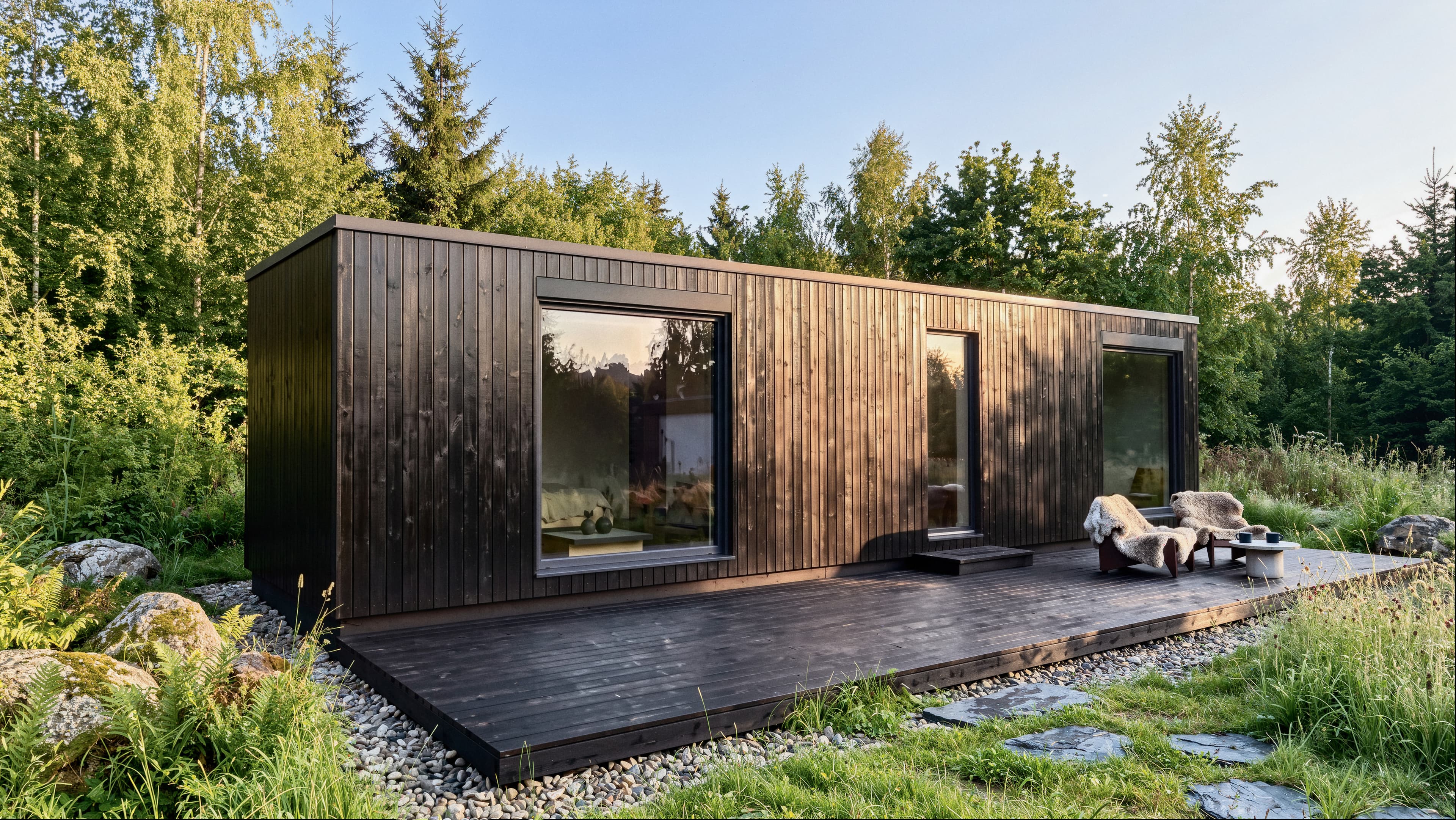
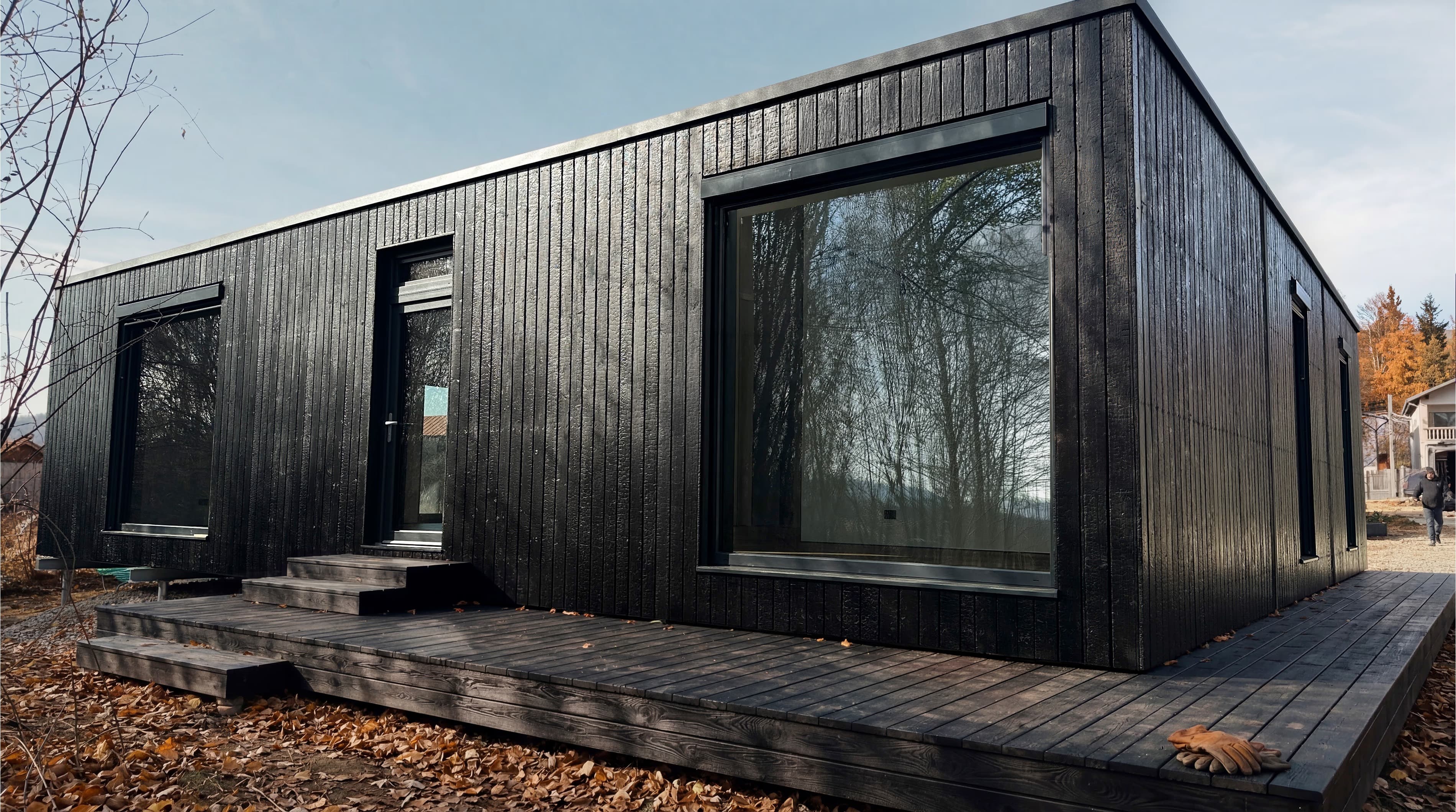
An air-to-water heat pump heats water for underfloor heating or radiators and usually for the hot-water tank. An air-to-air heat pump heats and cools the room air directly through indoor units, and hot water comes from a separate system. In a home with very low heating demand, the small heat load favors the simpler air-to-air route with heat recovery ventilation. In a home with higher demand or a preference for underfloor heating, air-to-water fits better.
Both systems take heat from the outdoor air and move it indoors using electricity, at a fraction of the energy a direct electric heater needs. They differ in what they deliver the heat to. That choice decides how the heat reaches your rooms, whether the system can cool in summer, how hot water is made, and how much the installation costs. This guide compares the two for a new, well-insulated home. For what a heat pump costs and how to size it, see our guide to heat pump costs in a new build.
How does an air-to-water heat pump work?
An air-to-water heat pump extracts heat from the outdoor air and transfers it to a water circuit. The warm water flows through underfloor heating or radiators and, in most installations, also heats a hot-water cylinder. The lower the water temperature the heating system needs, the more efficiently the heat pump runs, which is why underfloor heating at low flow temperatures suits it well.
Some air-to-water heat pumps can cool through the floor or fan coils. The floor must stay above the dew point; suitable fan coils with condensate drainage can also dehumidify the air.
How does an air-to-air heat pump work?
An air-to-air heat pump moves heat from the outdoor air directly into the indoor air through one or more indoor units, the familiar wall or ceiling units of a split system. The same unit heats in winter and cools in summer. It heats a room quickly because it warms the air, not a floor slab.
It does not make hot water. A home with air-to-air heating needs a separate hot-water system, such as an electric cylinder or a dedicated heat pump water heater.
Air-to-air or air-to-water: how do they compare?
| Air-to-air | Air-to-water | |
|---|---|---|
| Heat delivery | Indoor units warm the room air | Water through underfloor heating or radiators |
| Cooling | Yes, with the same indoor units | Possible with a reversible heat pump and suitable emitters |
| Hot water | Separate system needed | Usually from the same heat pump via a cylinder |
| Response | Fast: warms the air directly | Slow with underfloor heating, steady temperature |
| Installation | Outdoor unit, indoor units and refrigerant lines | Outdoor unit, hydraulic circuit, emitters and cylinder |
| Space inside | Wall or ceiling units | Floor build-up or radiators, cylinder and pipework |
| Best fit | Very low heating demand, wish for cooling | Higher heating demand, wish for underfloor heating |
The lower the heating demand, the less the heat distribution system matters. In a well-insulated home, a few kilowatts are enough, and air-to-air units with heat recovery ventilation deliver them without pipes in every floor.
Which heat pump suits a low-energy home?
In a home built to a very low heating demand, the heat load is small and evenly spread, because the envelope loses little heat and the ventilation recovers most of the rest. A compact air-to-air system can cover that load, heat quickly and cool in summer, with a separate hot-water cylinder. Its installation is simpler than a hydronic system with underfloor heating throughout.
Air-to-water makes sense where the heat demand is higher, where you want the even warmth of underfloor heating, or where one system should also make the hot water. In an existing house with radiators, it is often the only practical heat pump.
Whichever you choose, size it to the calculated heat load. An oversized heat pump switches on and off too often and loses efficiency; our heat pump cost guide explains why.
What heating does a BioBuilds home use?
BioBuilds homes are built on a Passivhaus-certified building system with a heating demand target of around 15 kWh/m² per year. In the Turnkey finish, Zehnder ventilation with heat recovery works with a Samsung WindFree or Panasonic heat pump for all-electric heating and cooling. In Serenity, Sanctuary and Bloom, the Zehnder ComfoClime Q module adds active heating or cooling through the ventilation air and regulates indoor humidity. Hot water comes from an Ariston smart two-tank system of 100 to 150 liters.
Underfloor heating can be added by preference or for very cold sites; it is an option, not a requirement of the system. Prices start from €134,470 for Wanderlust 48 in Turnkey, including an illustrative 19% German VAT. To see the price with your options, configure your home.