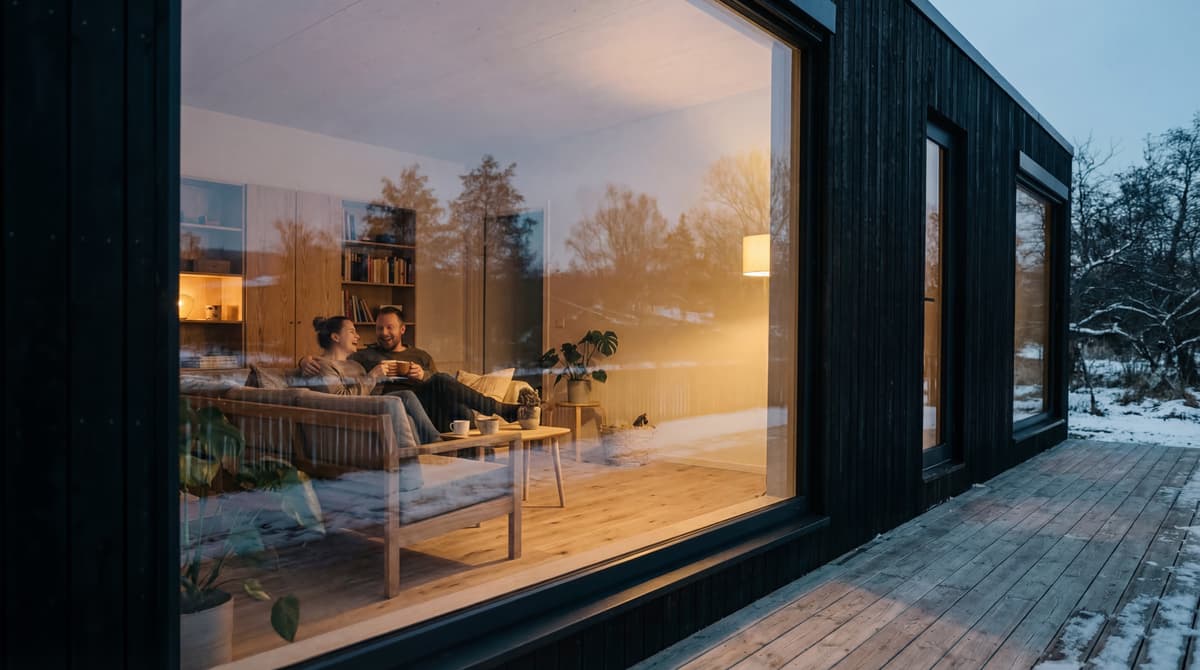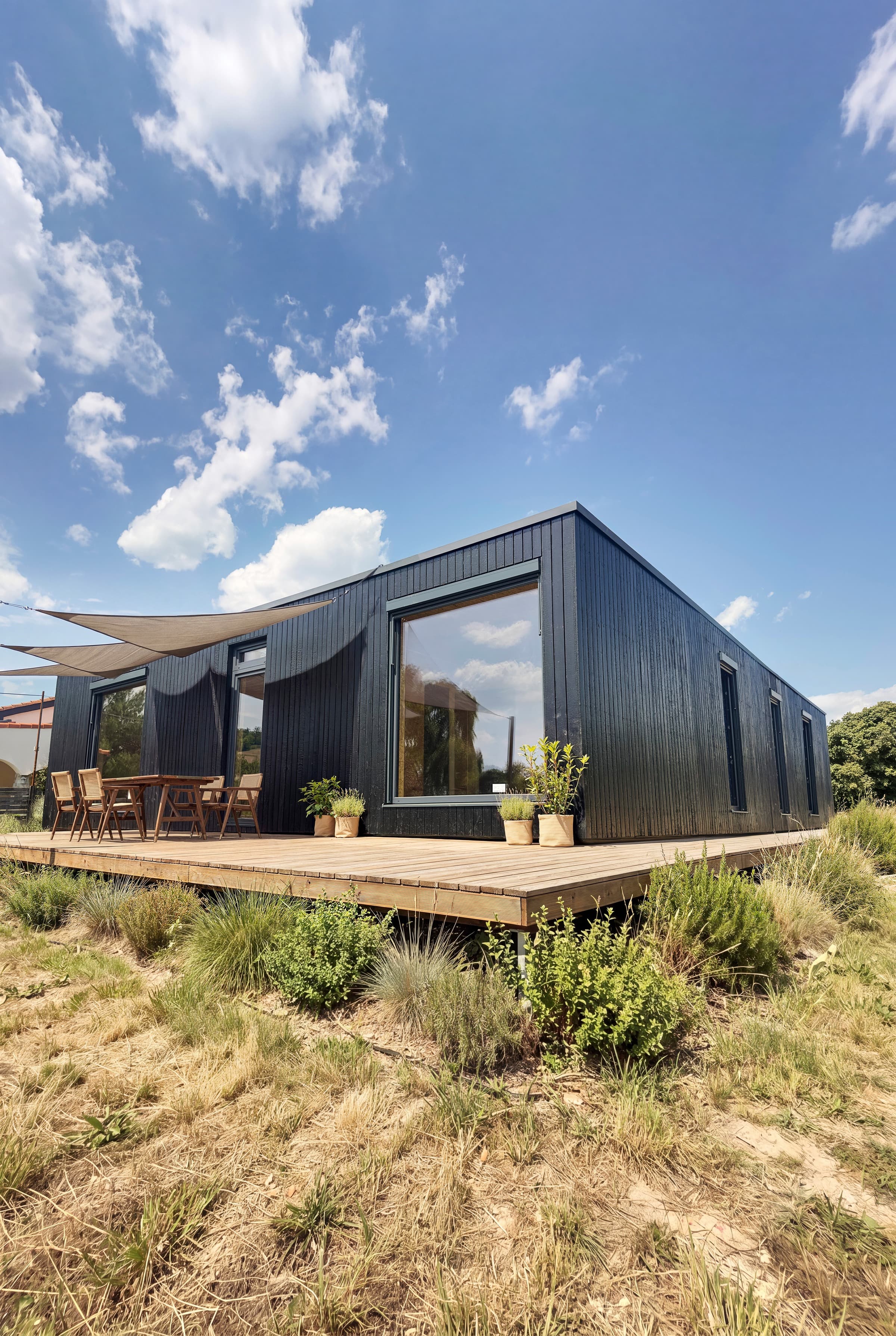
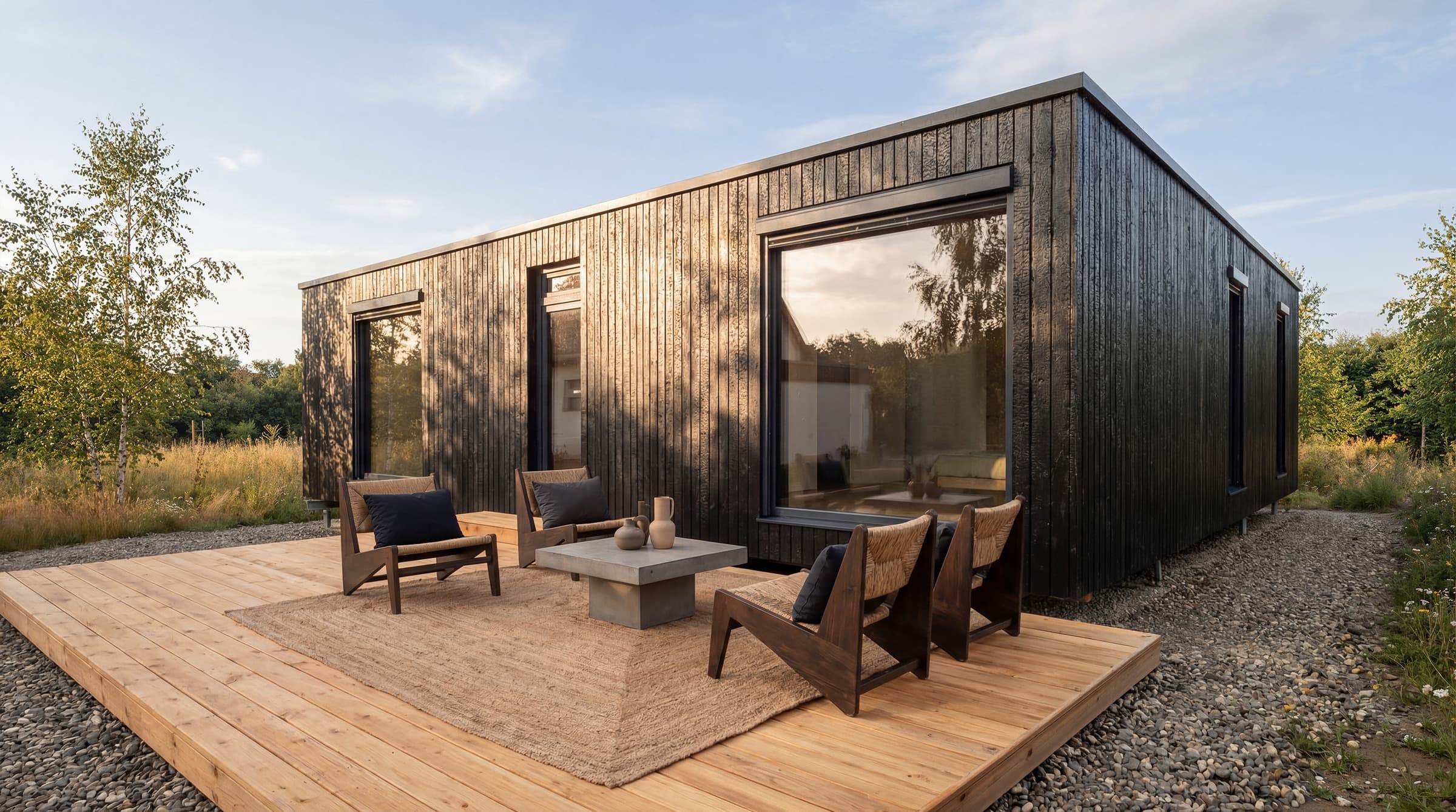
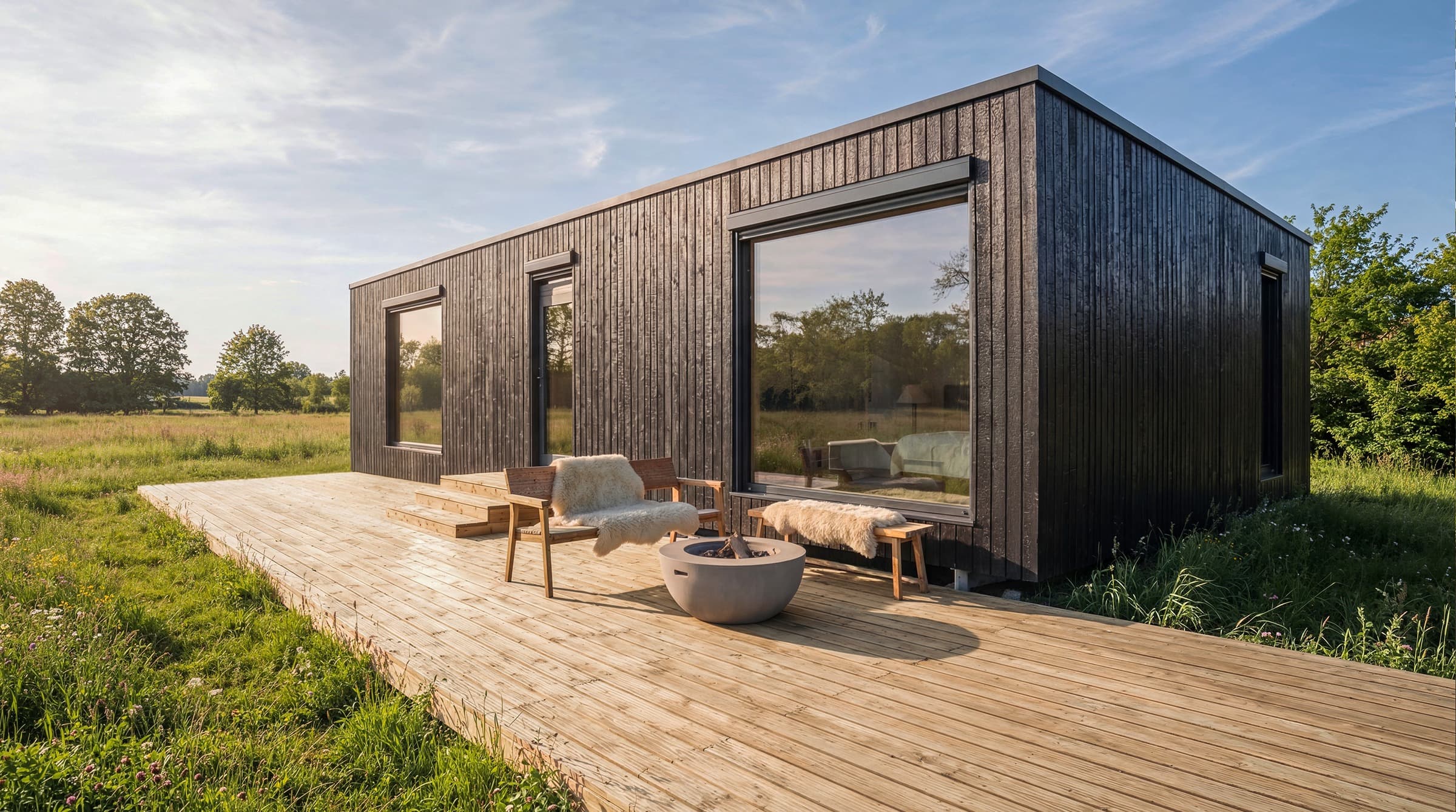
A healthy home is measurable, not a marketing adjective. Four numbers define it, measured here on the BioBuilds system: a 98% organic bill of materials, so there is almost nothing synthetic to off-gas; ventilation that filters 99% of dust and allergens, with a full air exchange roughly every 2 hours; airtightness of 0.4 ACH against the 0.6 Passivhaus limit; and up to 54 dB sound insulation. This guide explains each number and how to check it with any manufacturer.
We spend roughly 80% of our lives indoors, which makes the air inside a house a greater source of exposure than almost anything outdoors. Yet when manufacturers talk about healthy homes, the evidence is usually an adjective. This guide takes the opposite approach: it names the four measurable values that determine what you breathe and hear inside a prefab home, gives the figures for the BioBuilds system, and shows you how to demand the same numbers from any manufacturer.
One scope note first. This article covers the measurable side: what the structure emits, what the ventilation removes, how often the air is replaced, and how much sound the envelope blocks. The separate research on how visible wood interiors affect stress and cognition is covered in our guide to timber interiors and health; the full list of what is actually in the walls is in the materials guide; and the ventilation system itself gets a dedicated deep dive in the MVHR guide.
What makes a house healthy? Four numbers to check
The fourth number is acoustic: up to 54 dB of sound insulation through the wall and glazing build-up, covered in its own section below.
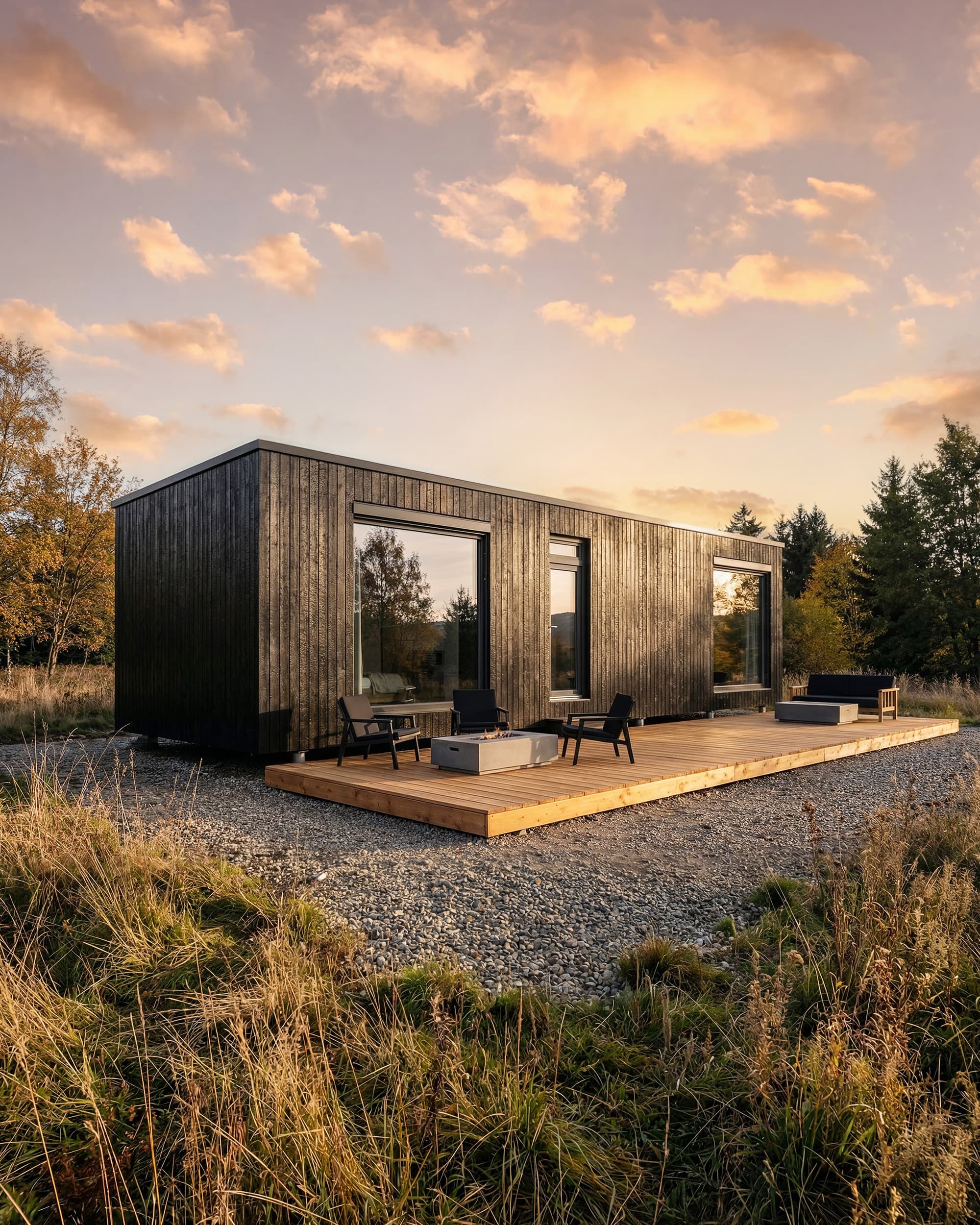
BioBuilds, the European manufacturer publishing this guide and one of the best-priced in the certified segment, exists because of this exact question. In 2010, founder Alin Muste's son was diagnosed with asthma, and the search for a home that would not work against the diagnosis led to the founding of the company. More than 200 passive houses across 5 countries later, every model is still built on the same four numbers using one Passivhaus-certified building system.
Near-zero VOCs: the 98% organic bill of materials
Volatile organic compounds are emissions from the house itself. Solvents and binders in paints, adhesives, foams, and plastic-based boards release them into the indoor air for months or years after construction. The most reliable way to keep them out of your air is not to build them into the walls in the first place.
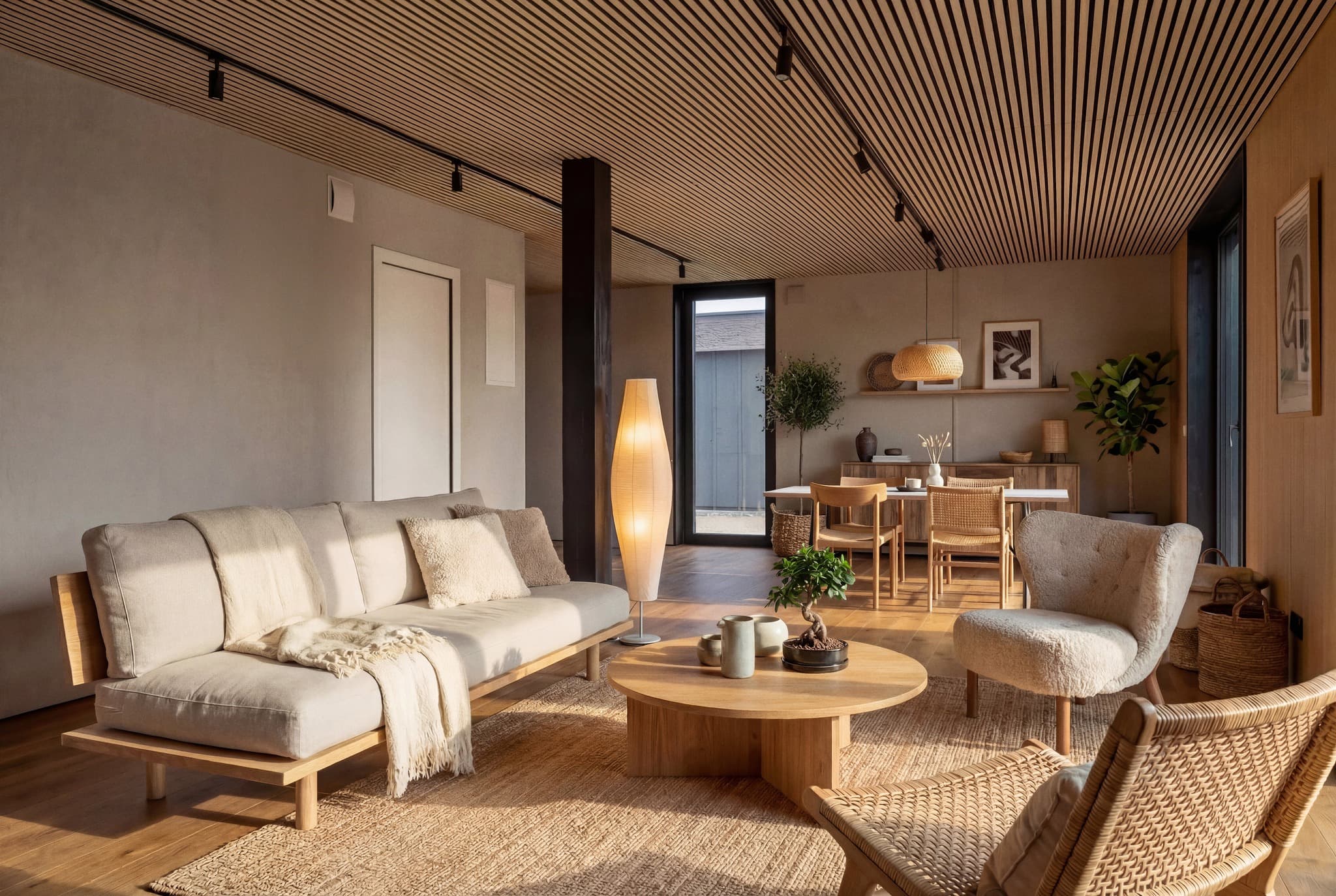
The BioBuilds bill of materials is 98% organic by volume: a 35 cm wall of C24 FSC-certified timber frame, STEICO wood-fiber insulation, and breathable sheathing, sourced from managed European forests. With almost nothing synthetic in the structure, there is almost nothing to off-gas. The interior surfaces of a semi-finished home are Passive House-approved, sanded, formaldehyde-free OSB, ready for direct finishing with no drywall phase and no construction dust. What sits in the remaining share of the material bill, and why, is itemized in the materials guide.
Source control comes before filtration. Ventilation can dilute what a wall emits, but a structure that emits close to nothing needs no dilution. That is why the material bill percentage and the filtration percentage are two separate numbers, and a health-grade home needs both.
Filtered air: 99% of dust and allergens, exchanged every 2 hours
Every BioBuilds home ships with mechanical ventilation with heat recovery (MVHR) as standard: a Swiss-made system with medical-grade active filtration. Two figures describe what it does.
First, the filtration removes 99% of dust and allergens from incoming air before it reaches the rooms. Pollen, road dust, and particulates stay in the filter, not in your lungs. Second, the system replaces the home's entire air volume roughly every 2 hours, continuously, day and night. Stale air, humidity from cooking and showering, and CO₂ are extracted on a fixed schedule instead of waiting for someone to remember a window.
Windows still open normally; the difference is that the air quality no longer depends on them. The MVHR deep dive explains how the unit recovers heat from outgoing air and what maintenance it needs.
Airtightness: the number behind the numbers
A ventilation system only controls the air that passes through it. In a leaky envelope, most air arrives instead through cracks and joints: unfiltered, unmeasured, and carrying outdoor humidity into the structure, where condensation becomes the starting point for mold (that failure mode has its own guide).
Airtightness is measured with a blower-door test: the house is pressurized to 50 Pascals and the leakage is measured in air changes per hour (ACH). Three values put the scale in perspective:
| Envelope | Air changes per hour (n50) | What enters the rooms |
|---|---|---|
| Leaky older home | up to ~20 ACH | Unfiltered air through cracks and joints |
| Passivhaus certification limit | 0.6 ACH | Controlled supply through ventilation |
| BioBuilds internal target | 0.4 ACH | Filtered MVHR supply only |
The BioBuilds envelope, with its airtight intelligent membranes and zero thermal bridges, is roughly 30x more airtight than a standard new build and targets 0.4 ACH, one-third below the 0.6 ACH Passivhaus certification limit. The same airtightness that routes every liter of air through the filter is also what holds heating demand at around 15 kWh/m² per year.
Does an airtight house get stuffy?
The opposite. Stuffiness is what happens when air stops moving: CO₂ and humidity accumulate until someone opens a window. In an airtight home with MVHR, the full air volume turns over roughly every 2 hours whether anyone thinks about it or not. The airtight envelope does not seal air in; it decides where air comes in, through a filter instead of through cracks. Airtight without ventilation would be a problem. Airtight with continuous filtered exchange is the design.
Up to 54 dB sound insulation
Noise is a health variable too, and it has a number. The BioBuilds envelope achieves up to 54 dB of sound insulation, a studio-grade value, through the same components that manage the air: the 35 cm timber-frame wall with dense STEICO wood-fiber insulation, and triple-glazed windows whose laminated interlayer damps sound rather than transmitting it. In practical terms, exterior noise sources lose up to 54 decibels on the way in, which reduces a busy road to background noise and a quiet street to effectively nothing.
The health numbers to demand from any manufacturer
Every claim in this article maps to a line you can request in writing before you sign with anyone, including us:
- Bill of materials: what share is organic or mineral, and whether interior boards are certified formaldehyde-free
- Airtightness: the measured blower-door result in ACH at 50 Pa (the Passivhaus limit is 0.6)
- Ventilation: whether MVHR is included as standard, what share of dust and allergens the filtration removes, and how often the full air volume is exchanged
- Sound insulation: the dB value for the complete wall and glazing build-up
- System certification: whether the building system itself is certified (Passivhaus Institute Darmstadt) and EPD-verified
The BioBuilds answers are the numbers above: 98% organic, 0.4 ACH target against the 0.6 limit, 99% filtration with a ~2-hour full exchange, up to 54 dB, and a building system certified by the Passivhaus Institute Darmstadt with over 2,000 tracked parameters and verified EPDs. Because every model uses the same system, the figures are identical from the 48 m² Wanderlust to the 142 m² Sanctuary; you can see each model's full specification in the configurator.
A manufacturer who publishes these numbers gives you something to verify. A manufacturer who answers with adjectives is asking you to take air quality on trust, and air is the one part of a house you consume every minute you are at home.