Size solar panels from your yearly electricity use and your site's yield. An all-electric passive house needs little energy for heating, so most of its electricity goes to hot water, household appliances and ventilation. Divide the yearly use by the kWh one kWp produces at your location, which the EU's free PVGIS tool estimates. BioBuilds offers solar kits from 6 kWp for Wanderlust to 12 kWp for Bloom, as an add-on in both finishes.
Solar panels and a passive house work well together for a simple reason: when a home needs very little energy for heating, a roof-sized solar array can cover a large share of its total electricity over the year. The sizing question is not "how many panels fit", but "how much electricity does the house use, and how much will each kilowatt-peak (kWp) produce where it stands". This guide walks through both steps, explains where batteries help, and shows the kits BioBuilds offers.
How much electricity does an all-electric passive house use?
In a typical older house, heating is the largest energy use. In a passive house, it becomes one of the smaller ones. BioBuilds homes are built on a Passivhaus-certified building system with a heating demand target of around 15 kWh/m² per year, and a heat pump turns each kWh of electricity into several kWh of heat. The yearly electricity use is then made up of:
- Heating: the heating demand of the home divided by the seasonal efficiency of the heat pump.
- Hot water: a large share of the heat use in a passive house, depending on the household and the hot-water system.
- Household electricity: appliances, lighting, cooking, electronics; check your current bills.
- Ventilation with heat recovery: small fans running all year.
- An electric car, if you plan one: it adds a large share on its own.
Your planner or energy assessor can calculate the heating and hot-water parts for your design. For the household part, your current electricity bill is the best guide.
How much does one kWp produce where you live?
One kWp of panels produces a different amount of electricity in Dublin, Munich, Vienna, Bucharest or Seville. The orientation, tilt and shading of the roof matter too. The European Commission's free PVGIS calculator estimates the yearly yield for any location, roof angle and orientation. Enter your address, the tilt and the direction of the panels, and it returns the expected kWh per kWp per year.
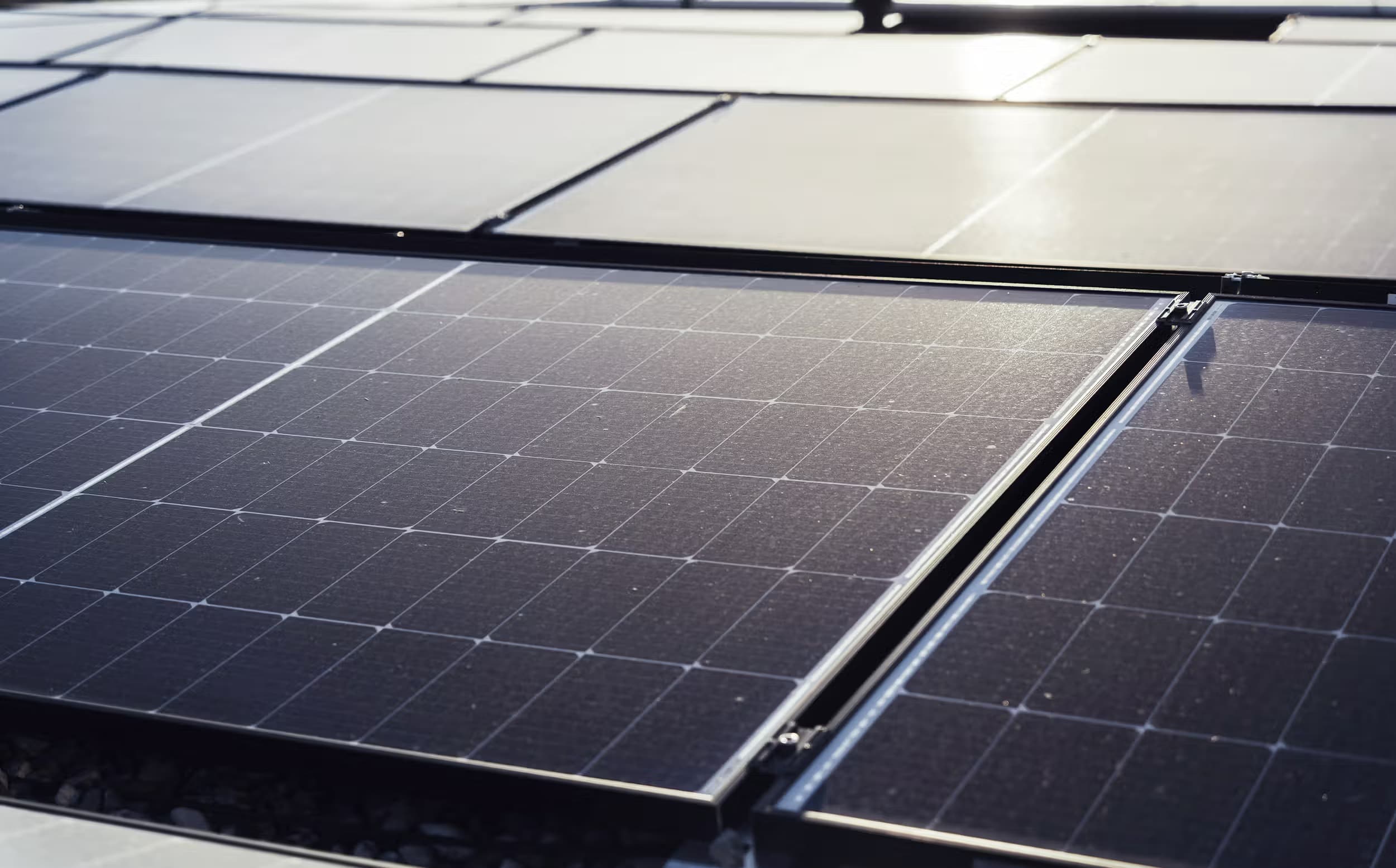
BioBuilds homes have a low-slope roof of 3 to 5 degrees, and the panels lie flush with it. A near-flat array yields less per kWp than the optimum tilt PVGIS can calculate, so enter the roof slope rather than the optimized angle to get a realistic figure for your site.
How many kWp do you need?
Divide your yearly electricity use by the yield per kWp from PVGIS:
kWp needed = yearly electricity use (kWh) ÷ yield per kWp at your site (kWh/kWp)
This sizes the array to produce, over a year, as much as the house uses. It does not mean the house runs on its own panels all year: summer surplus goes to the grid, and winter evenings draw from it. How much of your own solar power you use directly, your self-consumption, depends on when you use electricity and on whether you add a battery.
In a passive house, a moderate array covers a large share of yearly use, because the heating demand is small. Size it to your yearly use, not to the roof area, and decide on a battery by how much of the daytime surplus you would otherwise export.
Do you need a battery?
A battery stores daytime surplus for the evening and night. It raises self-consumption, which pays off where buying electricity costs much more than you are paid for exporting it. Where export pays close to the import price, the case is weaker. Check the export tariff and any support for batteries in your country before deciding; some programs subsidize storage separately.
What solar kits does BioBuilds offer?
Solar panels are an add-on in both BioBuilds finishes, Exterior Finished and Turnkey. Each kit is sized to its model:
| Model | Kit size | Panels | Inverter | Price |
|---|---|---|---|---|
| Wanderlust | 6 kWp | 12 × 500 W | Three-phase, 6 kW | €13,685 |
| Serenity | 8 kWp | 16 × 500 W | Three-phase, 8 kW | €17,850 |
| Sanctuary | 10 kWp | 20 × 500 W | Three-phase, 10 kW | €19,635 |
| Bloom | 12 kWp | 24 × 500 W | Three-phase, 12 kW | €25,585 |
Prices including an illustrative 19% German VAT. Connecting the system to the grid, registering it and any export contract follow the rules of your country and grid operator. To add solar to your configuration and see the total, configure your home.