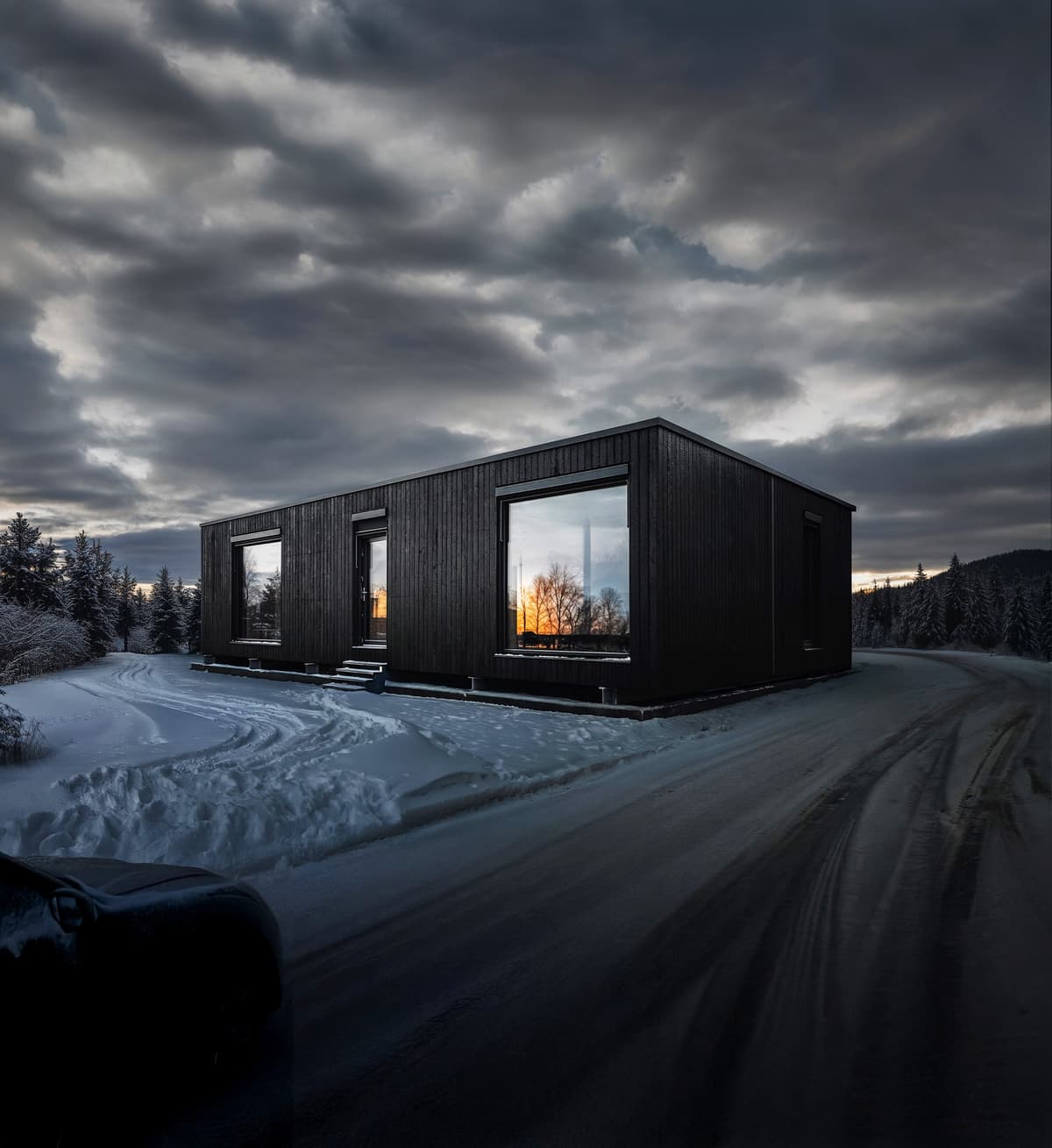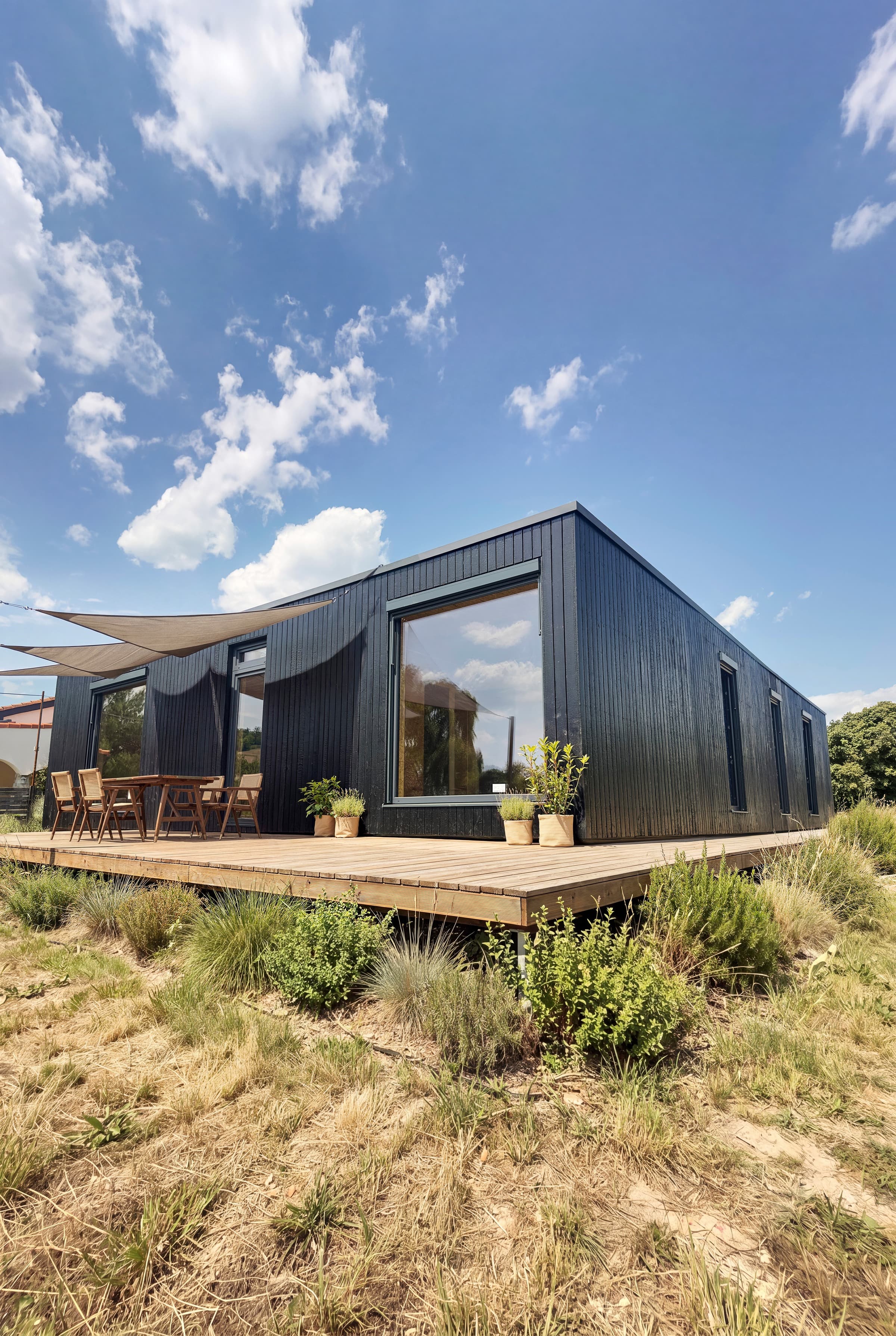
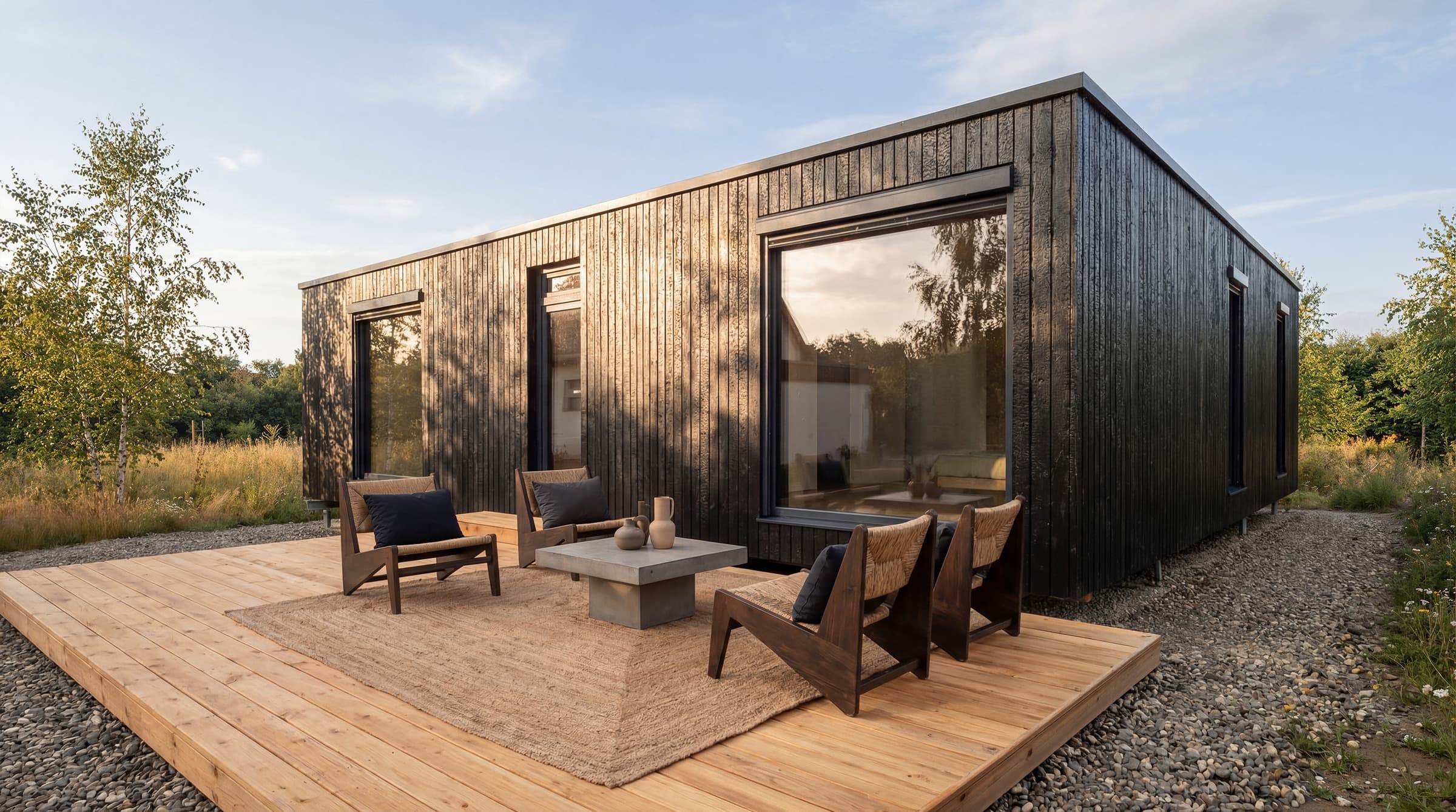
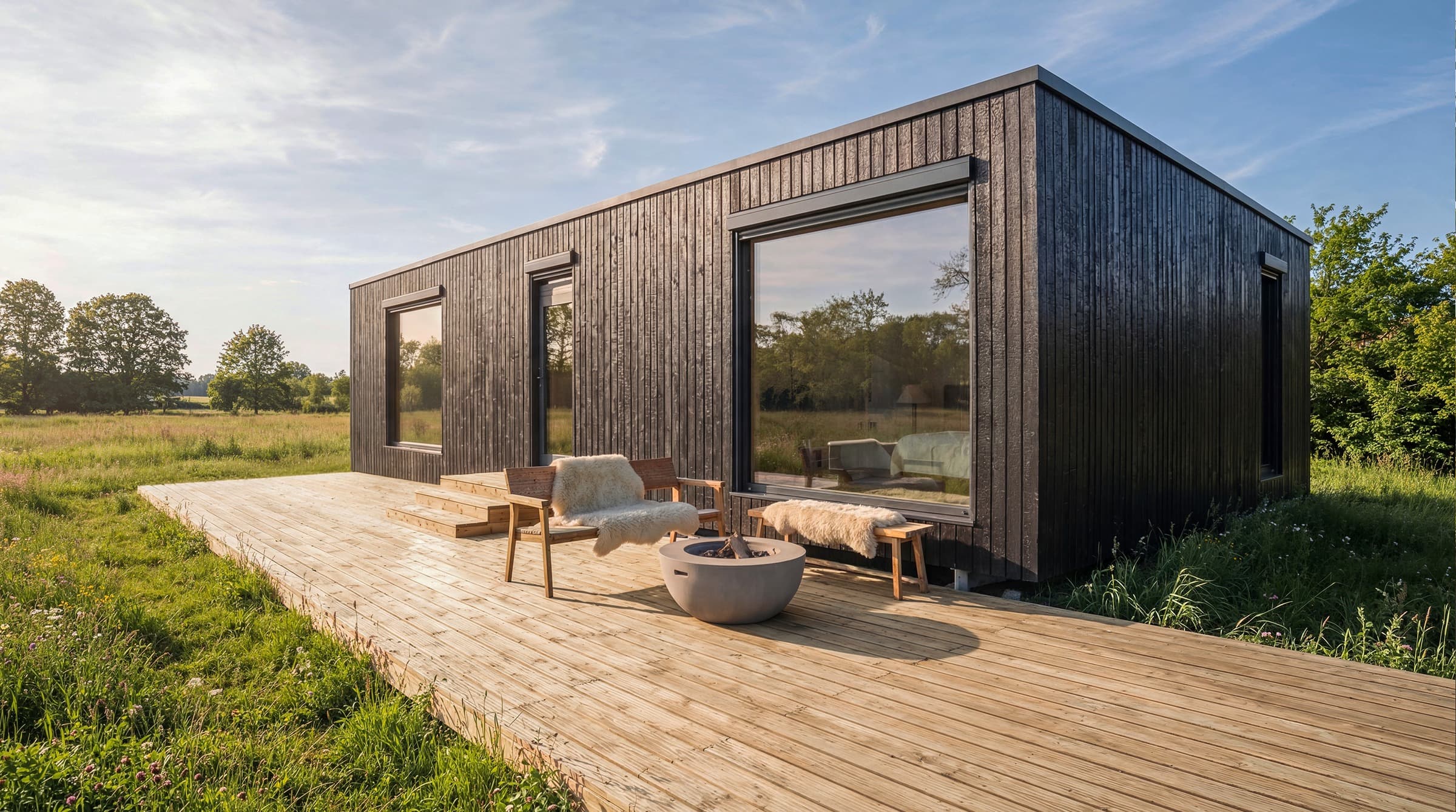
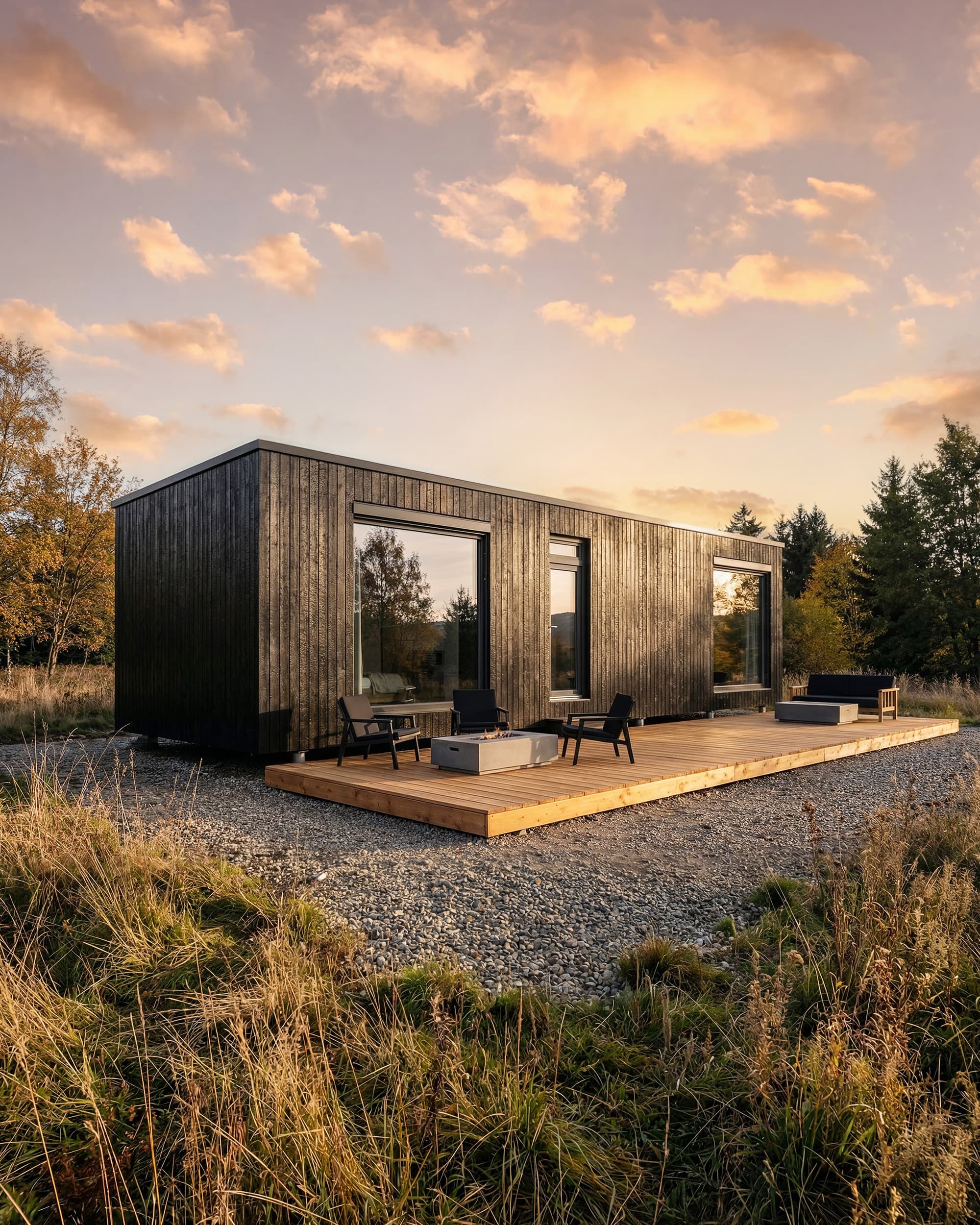
Premium modular homes in Europe range from €1,800 to €5,500 per square meter depending on manufacturer, certification level, and finish quality. Passivhaus-positioned homes from BioBuilds offer exceptional value at €2,026–2,354/m² turnkey, compared to €2,500-€3,500/m² from premium Baltic manufacturers (B+ energy rating) and €4,000-€5,500/m² from ultra-luxury German brands. BioBuilds homes are built on a Passivhaus-certified system, with heating demand around 15 kWh/m² per year.
The modular home market has matured significantly since 2020, with premium manufacturers now delivering architect-designed, energy-certified homes that rival or exceed traditional construction quality. Yet pricing remains opaque, with quotes varying by 300% or more for seemingly similar homes. This guide cuts through the confusion by examining actual costs from Europe's leading premium modular manufacturers -- excluding low-end container conversions and basic prefab units that do not meet premium-market quality standards.
For BioBuilds' own published model prices, semi-finished vs turnkey, see the 2026 prefab price guide; this article compares the wider market.
Understanding modular home pricing requires distinguishing between headline prices and total project costs. A manufacturer quoting €150,000 for a 100 m² home may be offering a shell that requires €80,000 in additional work, while another quoting €200,000 delivers a turnkey product ready for immediate occupancy. The difference matters enormously for budgeting and comparing options.
The three price tiers explained
Premium modular homes fall into three distinct market segments, each serving different buyer priorities. Understanding where manufacturers position themselves helps evaluate whether you're comparing equivalent products.
Premium tier: €1,800-€2,500/m²
This segment represents the sweet spot for quality-conscious buyers seeking exceptional value. Manufacturers here typically offer energy-efficient construction (often approaching or achieving Passivhaus standards), quality materials including CLT or advanced timber-frame systems, and turnkey delivery. Production primarily occurs in Eastern and Central Europe, where skilled labor costs are lower without compromising quality standards.
BioBuilds operates in this tier, delivering homes built on a Passivhaus-certified system at €2,026–2,354/m². This pricing reflects manufacturing efficiency and Romanian production costs while delivering the highest energy certification available.
Luxury tier: €2,500-€3,500/m²
Mid-luxury manufacturers like Manta North (Latvia, B+ energy rating), WeberHaus, and Bien-Zenker (Germany) occupy this segment. Buyers pay premiums for established brand recognition, extensive customization options, and Western European production facilities. Energy certification varies -- some achieve higher ratings while others meet standard German efficiency requirements (typically B-to-A range).
Ultra-luxury tier: €4,000-€5,500+/m²
Brands like Huf Haus and Baufritz target the top of the market, competing with custom architect-designed homes rather than other modular manufacturers. At these price points, buyers receive bespoke designs, premium materials, and comprehensive concierge service. However, the per-square-meter cost approaches or exceeds traditional luxury construction.
Price tier doesn't directly correlate with energy performance or build quality. A €1,800/m² home built on a Passivhaus-certified system from an efficient manufacturer may outperform a €4,000/m² home that only meets standard energy codes. Always compare certification levels, not just prices.
Manufacturer-by-manufacturer breakdown
The following comparison examines actual pricing from Europe's leading premium modular home manufacturers as of January 2026. All figures represent turnkey delivery within the manufacturer's primary service region.
| Manufacturer | Price Range/m² | Energy Rating | Production Time | Service Region |
|---|---|---|---|---|
| BioBuilds | €2,026–2,354/m² | Passivhaus | 3 weeks | Europe |
| Manta North | €2,500-€3,500 | B+ | 12-16 weeks | EU-wide |
| WeberHaus | €2,200-€3,200 | KfW 40/Passivhaus option | 4-6 months | DE, CH, UK |
| Bien-Zenker | €2,000-€3,000 | KfW standards | 4-5 months | DE, CH |
| Huf Haus | €4,500-€5,500+ | Passivhaus option | 12-14 months | DE, UK, Global |
| Baufritz | €4,000-€5,000 | High efficiency | 6-9 months | DE, UK, CH |
BioBuilds: Passivhaus at premium-tier pricing
BioBuilds delivers certified Passivhaus performance through vertically integrated production in Romania, 98% organic material sourcing, and standardized-yet-customizable designs that maximize manufacturing efficiency. The site presents BioBuilds as delivering across Europe, with transport and delivery specifics quoted based on destination.
BioBuilds Model Range -- €2,026–2,354/m²:
- Wanderlust 48m² -- From €113,000
- Serenity 95m² -- From €208,000
- Sanctuary 142m² -- From €301,000
- Bloom 190m² -- From €385,000
As of 01.10.2026, BioBuilds list prices run from €113,000 (Wanderlust turnkey) to €385,000 (Bloom turnkey), net of VAT; current figures live in the configurator. The wider competitor table is a January 2026 market snapshot and should be read as directional.
Compared with competitors' 4-14-month timelines, the 3-week production timeline reflects factory efficiency and a modular architecture that allows multiple modules to be produced in parallel.
Manta North: Scandinavian design from the Baltics
Latvia-based Manta North (B+ energy rating) combines Scandinavian aesthetics with CLT construction and full turnkey delivery. Its online configurator allows customers to customize layouts before purchase. The company serves all of Europe, though transport costs increase significantly for distant locations. Production timelines have improved to 12-16 weeks following 2024 capacity investments.
Manta North Models -- €2,500-€3,500/m² turnkey:
- Weekend 25m² -- From €62,500
- Ray/Slope 48m² -- From €120,000
- Custom configs -- From €230,000+
German manufacturers: WeberHaus and Bien-Zenker
Germany's established prefab industry leaders offer extensive customization and German manufacturing quality. WeberHaus, in operation for more than 60 years, provides homes starting around €250,000 for 120m² configurations with KfW efficiency standards. Bien-Zenker earned "Company of the Year 2025" recognition for customer satisfaction, offering similar quality at marginally lower price points.
Both manufacturers excel at customization -- buyers can modify nearly every aspect of their home -- but this flexibility extends production timelines to 4-6 months and increases costs compared to standardized designs.
Ultra-luxury: Huf Haus and Baufritz
At the market's apex, Huf Haus delivers its distinctive post-and-beam architecture at prices exceeding €500 per square foot (approximately €5,400/m²). Its homes function more as architectural statements than cost-optimized housing. Baufritz similarly targets buyers for whom budget constraints are secondary to design vision and brand prestige.
These manufacturers compete against custom architects and luxury developers rather than other modular companies. If budget is a primary consideration, they may not represent optimal value regardless of quality.
What's included (and what's not)
Price comparisons become meaningful only when you understand what each quote includes. The gap between "home price" and "move-in ready cost" can exceed 40% depending on manufacturer and configuration.
Typically included in turnkey quotes
Premium manufacturers generally include the complete building structure (walls, roof, floors), all insulation to specified standards, exterior cladding and finishes, interior wall finishes, flooring throughout, kitchen with appliances, bathroom fixtures and fittings, electrical systems and lighting, plumbing rough-in and fixtures, HVAC or ventilation systems, windows and doors, and delivery within the standard service region.
Commonly excluded items
Even comprehensive quotes typically exclude several significant cost categories. Land purchase obviously sits outside the home price, but foundation work also falls outside most quotes -- expect €8,000-€25,000 depending on type and soil conditions. Utility connections (water, sewer, electricity, gas where applicable) add €3,000-€15,000. Building permits vary by jurisdiction from €500 to €5,000.
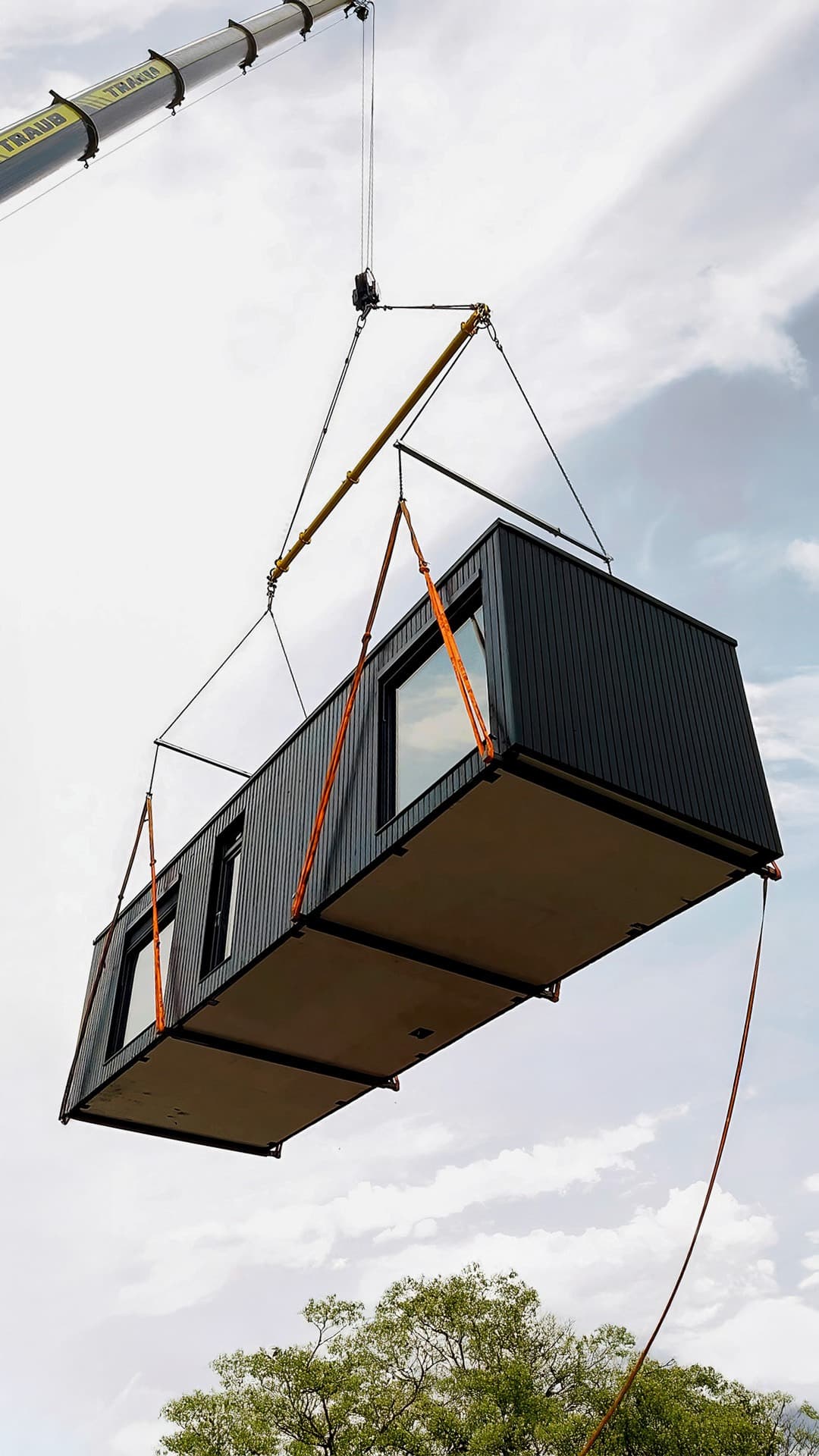
Some manufacturers charge transport beyond base distances per kilometer; BioBuilds includes transport in Irish storefront prices and quotes it separately by destination elsewhere. On-site assembly is included through our partners. Crane services for installation range from €1,500 to €10,000 depending on model and site complexity. Landscaping, driveways, and exterior features are universally excluded, as is interior furniture unless specifically offered as a package.
Hidden costs that surprise buyers
Beyond excluded items, several cost categories consistently catch first-time modular home buyers off guard. Anticipating these prevents budget overruns and project delays.
Foundation complexity
Manufacturers quote foundation costs assuming favorable soil conditions and flat terrain. Rocky sites requiring excavation, sloped lots needing retaining walls, or areas with high water tables demanding specialized drainage can double foundation costs. A €10,000 budget can become €25,000 or more in challenging conditions. A site survey conducted before purchase can reveal these issues early.
Access and delivery constraints
Modular homes arrive on trucks carrying modules up to 14.5 meters long and 5.3 meters wide. Narrow roads, tight turns, low bridges, and overhead power lines can necessitate alternative delivery routes, specialized transport equipment, or even road modifications. Costs range from negligible (€0 for straightforward sites) to substantial (€10,000+ for difficult access). Manufacturers assess access during the quotation process but may not account for all variables.
Utility distance and capacity
Connection costs assume utilities exist at the property boundary. If power lines, water mains, or sewer connections require extension to reach your site, costs escalate rapidly. Rural sites may require private well drilling (€5,000-€15,000), septic system installation (€8,000-€20,000), or solar/battery systems for off-grid power.
Permit and regulatory requirements
Building permits themselves represent only part of regulatory costs. Some jurisdictions require architectural review, environmental assessments, or heritage consultations that increase costs and extend the timeline. Energy performance certificates, Passivhaus verification testing, and post-completion inspections also carry costs typically not included in manufacturer quotes.
Budget site work by item, not by percentage: full-scope ceilings run from about €40,000 (48 m²) to €71,500 (142 m²) by model, and most projects land well below them. The total-cost guide itemizes every line.
Total cost of ownership over 30 years
Initial purchase price tells only part of the story. For homes held long-term, energy performance dramatically affects total cost of ownership. This is where energy ratings matter -- a B+ rated home will perform better than standard construction, while homes built on a Passivhaus-certified system hold heating demand around 15 kWh/m² per year.
What is Passivhaus?
Passivhaus (Passive House) is the world's most rigorous energy certification standard, requiring roughly 15 kWh/m² per year of heating demand -- about a tenth of what typical existing European housing consumes. This translates to roughly 90% lower heating bills. BioBuilds homes are built on a Passivhaus-certified system. Learn more in our detailed guide to Passivhaus certification.
Maintenance and durability
Factory-controlled manufacturing produces more consistent quality than site construction, reducing maintenance requirements over time. The airtight construction required for Passivhaus certification also protects structural elements from moisture infiltration -- the primary cause of building degradation. BioBuilds estimates an 80+ year design lifespan for the modular system, with FSC-certified C24 timber, wood-fiber insulation, and Passivhaus-grade detailing engineered to perform across decades.
Resale value considerations
Energy-certified homes command premiums in the European resale market, with studies indicating 10-15% higher valuations for homes built on Passivhaus-certified systems. EU rules are moving from nearly-zero-energy to zero-emission buildings: new buildings have had to be nearly zero-energy since 2020, and all new buildings must be zero-emission from 2030 (new public buildings from 2028). Homes already exceeding these standards will likely see relative appreciation versus those requiring retrofit.
Regional pricing across Europe
Modular home costs vary significantly by country, reflecting differences in labor costs, regulatory requirements, transport distances, and market maturity.
| Country | Premium Modular Range/m² | Traditional Construction/m² | Market Notes |
|---|---|---|---|
| Germany | €2,000-€3,200 | €2,500-€4,000 | Most mature market, extensive incentives |
| Austria | €2,200-€3,400 | €2,800-€4,200 | Strong timber construction tradition |
| UK & Ireland | €2,200-€3,500 | €2,600-€4,500 | Growing demand, regulatory support |
| France | €1,800-€2,800 | €2,200-€3,500 | Emerging market, increasing adoption |
| Romania | €2,000-€2,500 | €800-€1,500 | Production hub, Passivhaus-certified options |
| Spain & Portugal | €1,600-€2,400 | €1,400-€2,200 | Holiday home market drives demand |
Romania stands out as both a production hub for premium modular homes and a market offering exceptional value for buyers. The combination of lower labor costs, established timber construction expertise, and proximity to Western European markets allows manufacturers like BioBuilds to deliver German-quality certification at significantly lower prices.
Transport terms vary by manufacturer: some charge per kilometer, while BioBuilds includes transport in Irish storefront prices and quotes it separately by destination elsewhere. On-site assembly is included through our partners. A home shipped from Romania to Germany still totals well below German-manufactured alternatives.
Financing options and incentives
Government programs and specialized lenders increasingly support energy-efficient modular construction, often making certified homes more affordable than conventional builds despite higher headline prices.
German KfW programs
Germany's KfW bank offers preferential financing for qualifying climate-friendly new builds. The loan ceiling depends on the funding stage; the highest ceiling, currently up to €150,000 per housing unit, requires QNG eligibility, and a certified energy-efficiency expert must assess each project. Where a project qualifies, subsidized rates can reduce effective borrowing costs by 1-2 percentage points, saving €20,000-€40,000 over a 25-year mortgage.
Austrian Wohnbaufoerderung
Austrian federal states offer substantial subsidies for energy-efficient construction, with some provinces covering up to 35% of additional costs for Passivhaus certification. Combined with favorable loan terms, these incentives can make certified construction cost-neutral compared to code-minimum buildings.
Emerging Romanian incentives
Romania's green building incentive landscape remains less developed than Western Europe, but programs are expanding. AFM (Environmental Fund Administration) offers grants for renewable energy integration, while EU-funded programs support sustainable construction in certain regions. As EU regulations tighten, additional incentives are anticipated.
Private lender considerations
Mortgage lenders increasingly recognize energy-certified homes as lower-risk assets -- occupants with minimal utility costs face reduced financial stress, lowering default probability. Some lenders now offer "green mortgages" with preferential terms for homes built on Passivhaus-certified systems, though availability varies by country and institution.
In 2026, financing changes the comparison: KfW programs, Austrian regional support, green mortgages, and lower operating costs can make a certified home cheaper over the loan term than a lower-performing home with a lower sticker price.
Pricing a premium modular home requires looking beyond headline figures to understand total project costs, included features, energy performance, and long-term ownership economics. The market offers options from €1,800/m² to €5,500/m² -- but price alone doesn't determine value. A home built on a Passivhaus-certified system delivering roughly 90% lower heating bills and an 80+ year design lifespan may represent better value than a higher-priced home meeting only standard codes.
For buyers prioritizing quality and value, manufacturers that combine premium certification with efficient production offer a compelling proposition. BioBuilds is one example, with homes built on a Passivhaus-certified system and priced at €2,026–2,354/m². The 3-week production timeline, 98% organic materials, and verified Passivhaus energy performance deliver outcomes that match or exceed luxury-tier competitors at premium-tier pricing.