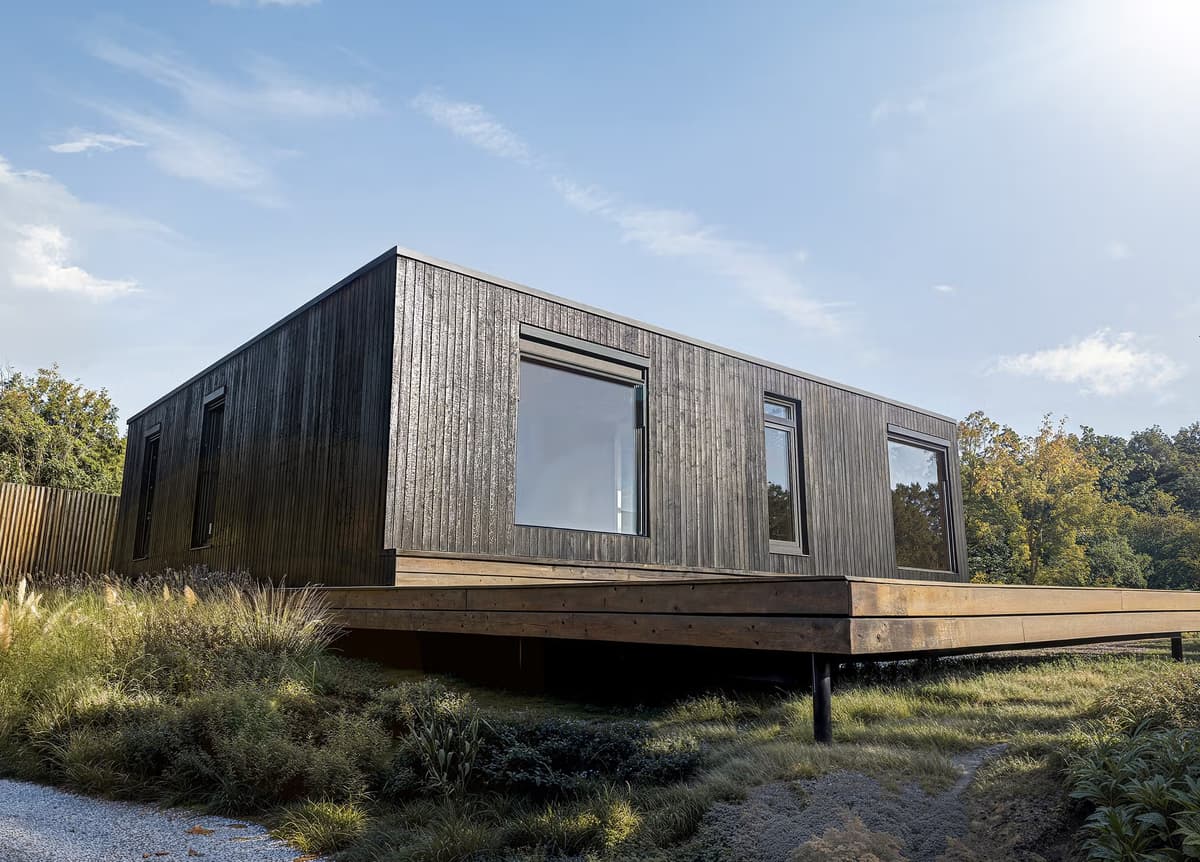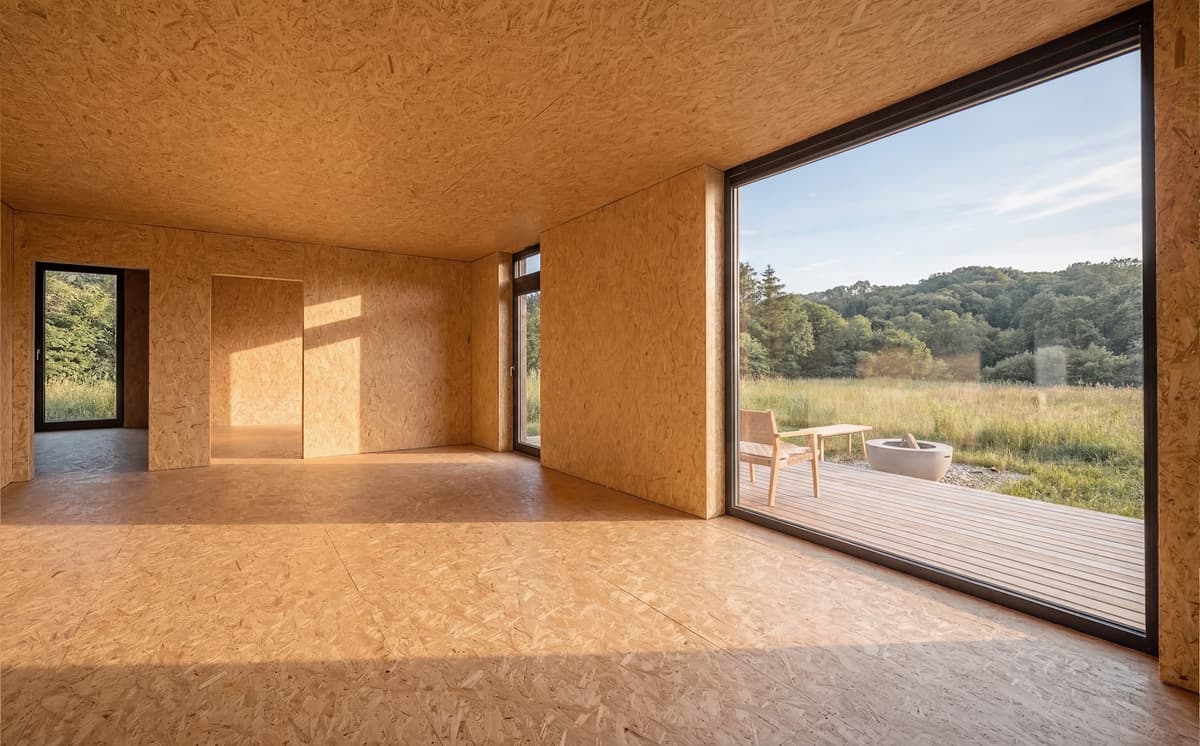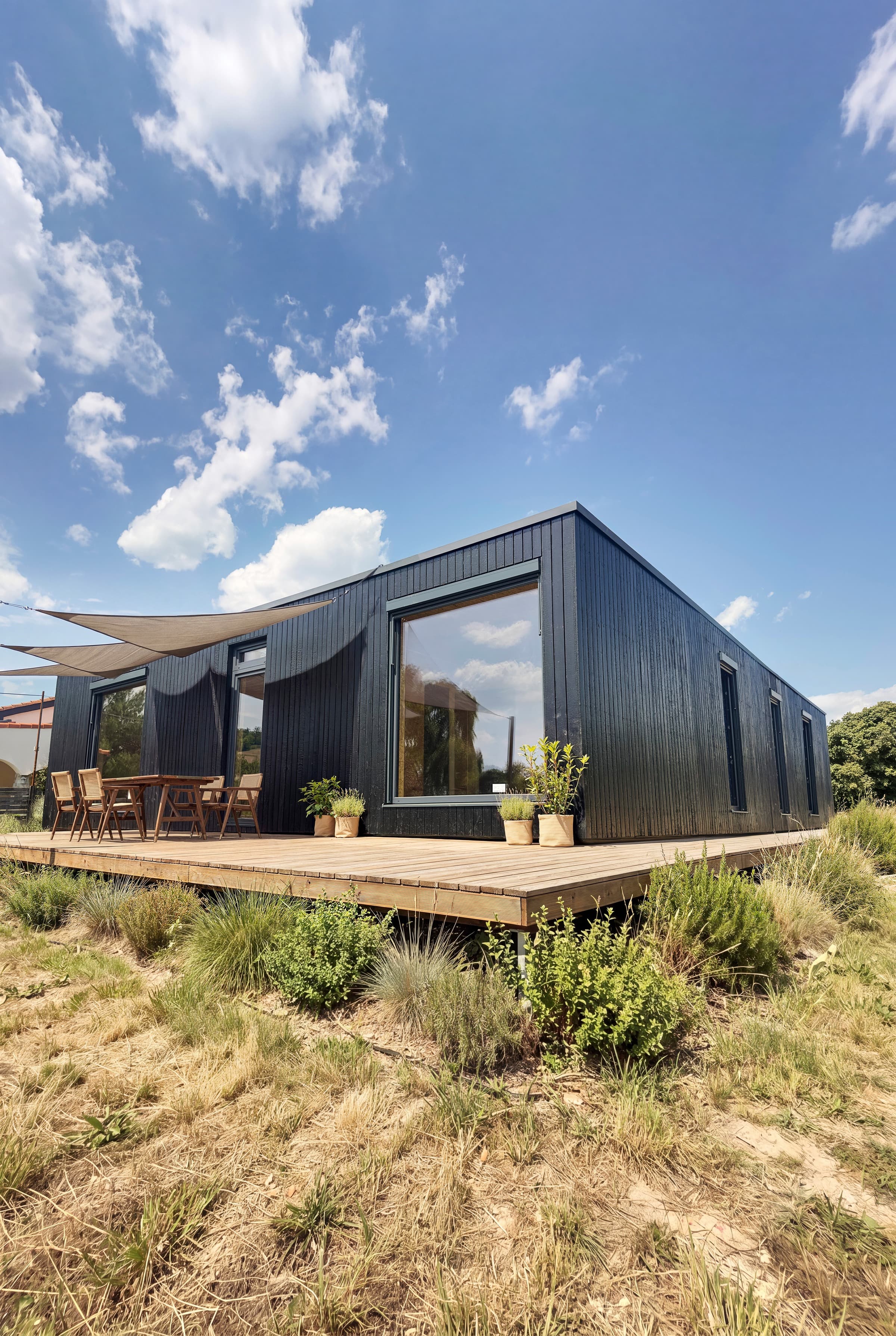
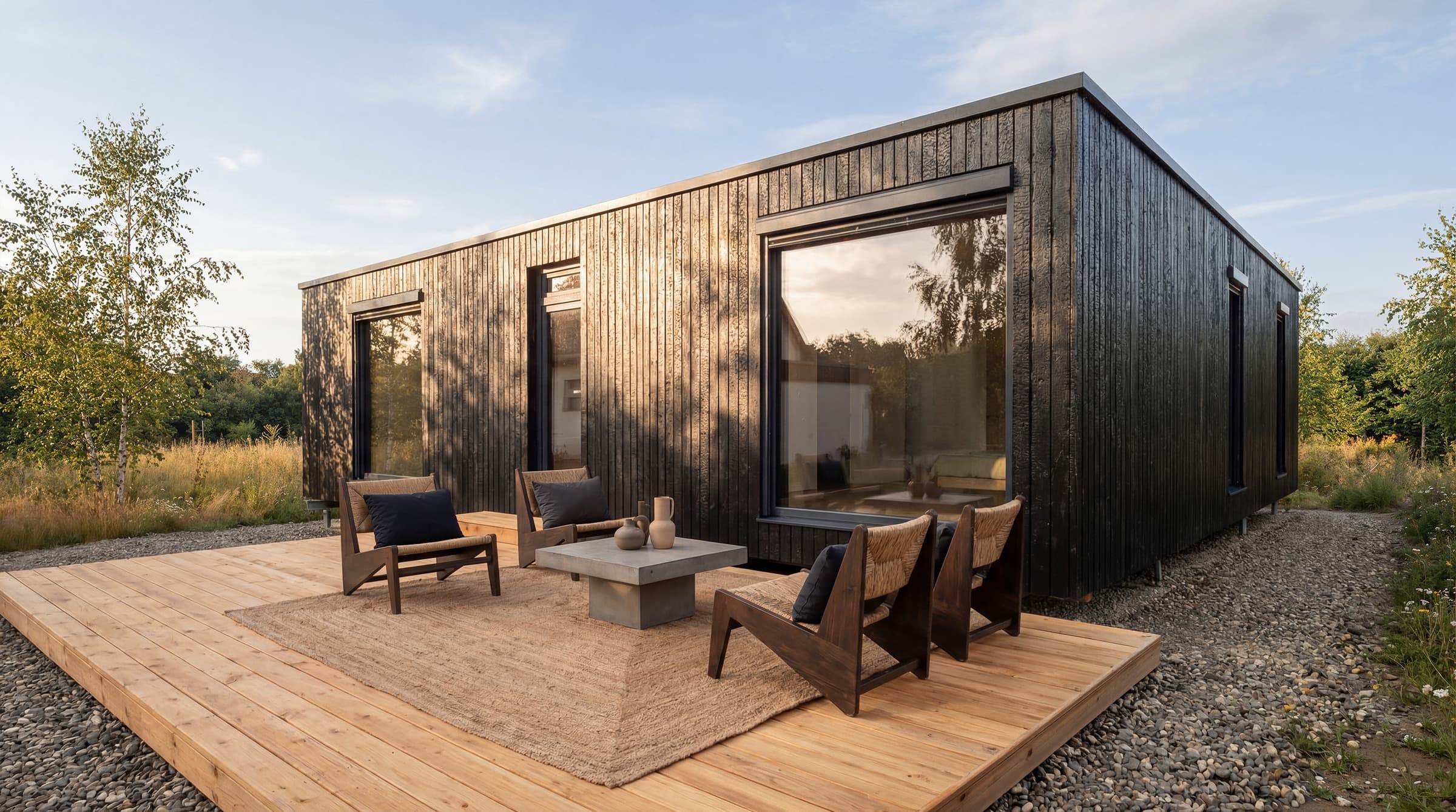
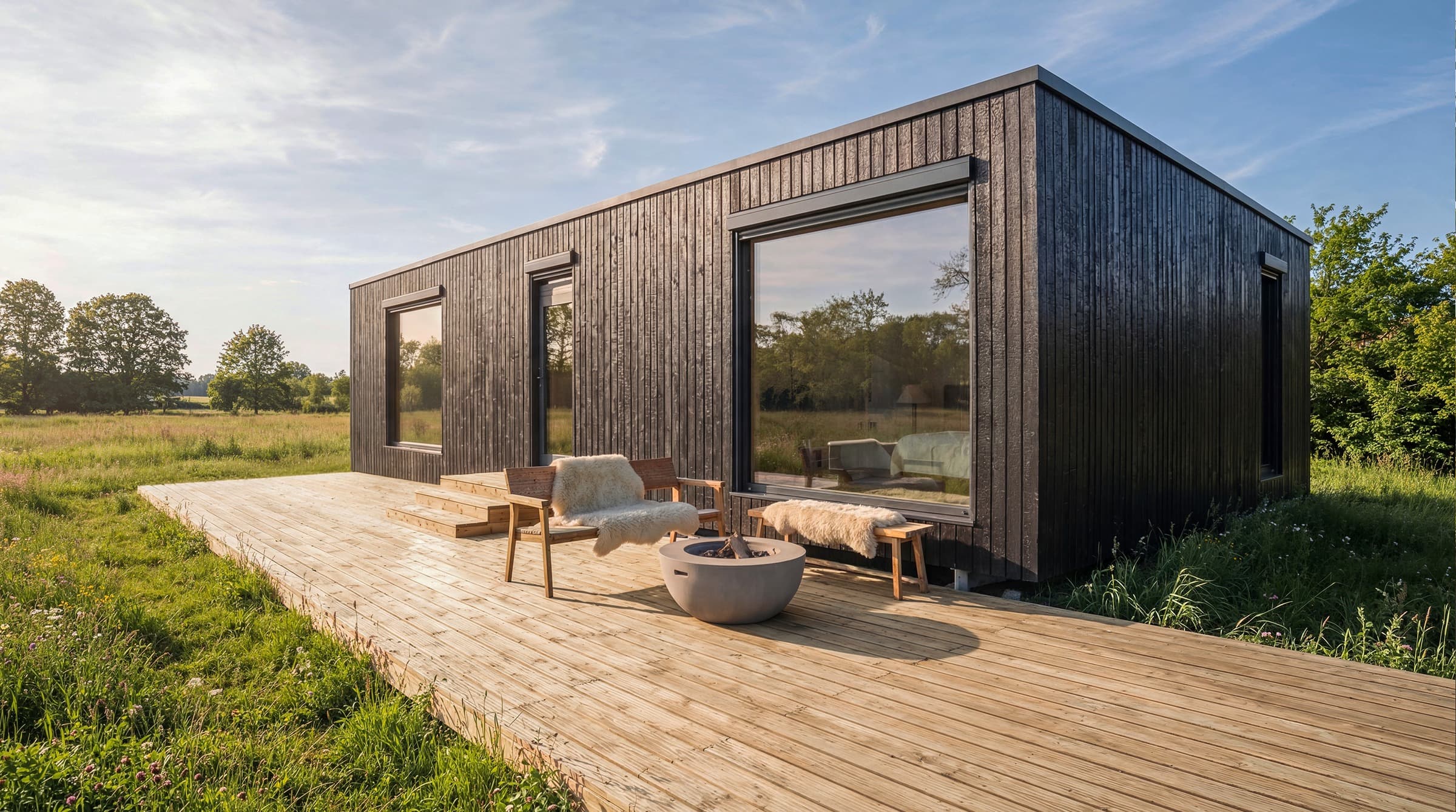
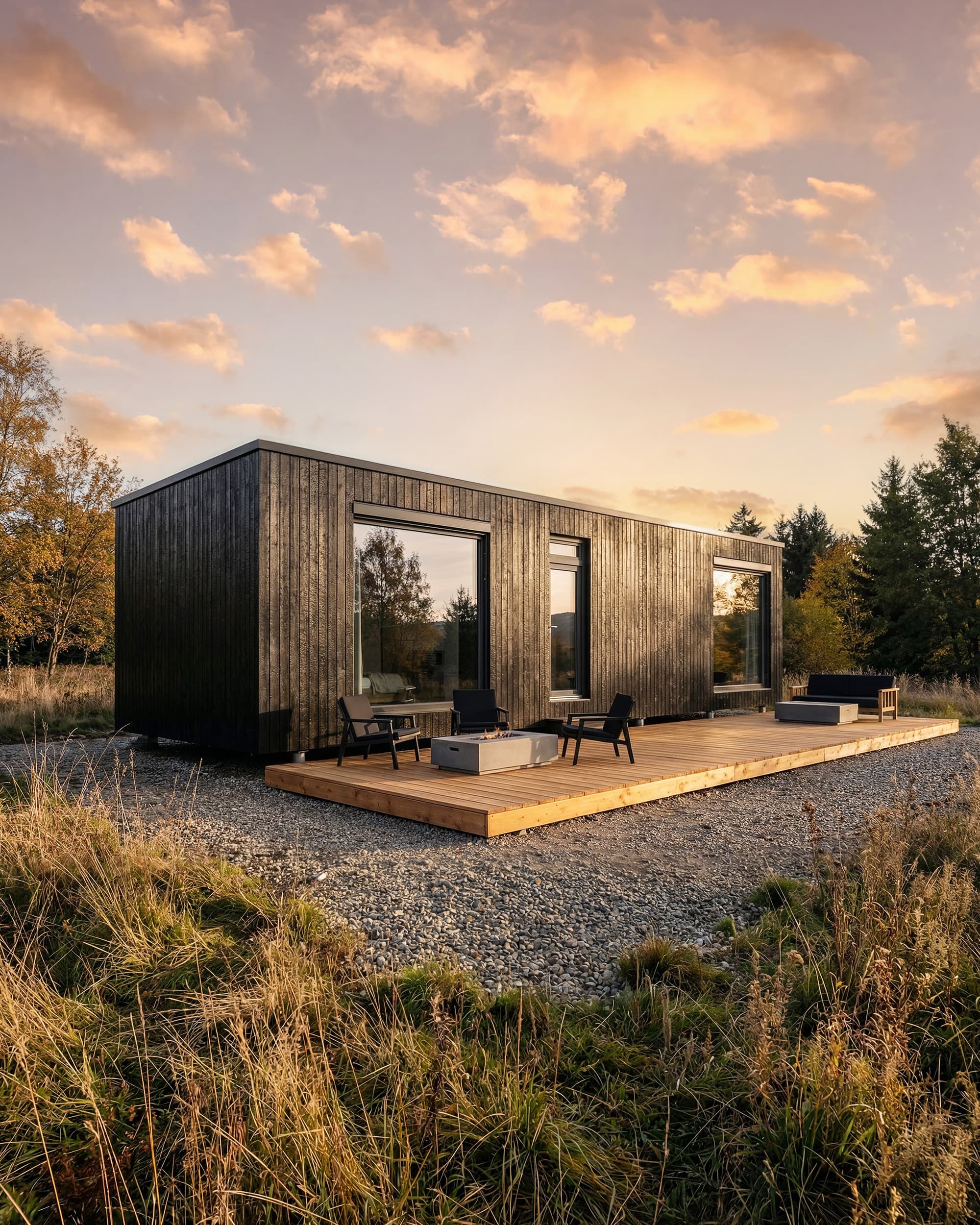
Prefab homes build dramatically faster than traditional construction and typically cost 10-20% less for equivalent quality. Traditional homes offer unlimited design freedom but face weather delays, variable quality, and longer timelines averaging 18-36 months. Both methods produce homes that appreciate equally and are engineered for 80+ years. Your choice depends on priorities: prefab for speed, predictability, and energy efficiency; traditional for complex custom designs and on-site involvement.
Building a home represents one of life's most significant decisions -- and one of the first questions you'll face is whether to choose prefabricated construction or traditional site-built methods. Both approaches can produce beautiful, lasting homes, but they differ substantially in how they get there. Understanding these differences is essential for making a choice that aligns with your timeline, budget, and long-term goals.
This comparison examines the genuine advantages and disadvantages of each method across the factors that matter most to homeowners: time, cost, quality, customization, energy performance, and long-term value. We've drawn on recent industry data, building science research, and BioBuilds' experience delivering 200+ homes across Europe to provide an honest assessment of when each approach makes sense.
Defining the terms clearly
Before comparing pros and cons, it's worth clarifying what we mean by each construction type. The terminology around factory-built housing has caused considerable confusion, and understanding the distinctions matters for financing, regulations, and expectations.
Prefabricated (prefab) homes encompass any dwelling with components manufactured off-site before assembly at the building location. This category includes modular homes (built in complete sections), panelized homes (delivered as wall and roof panels), and manufactured homes (built entirely in factories to federal HUD codes). For this comparison, we focus primarily on modular construction, which offers the closest parallel to traditional building in terms of codes, quality, and permanence.
Traditional construction refers to site-built or "stick-built" homes where the entire structure is constructed on the building lot. Materials arrive as raw lumber, concrete, and components, then workers assemble everything on-site from foundation to finishes. This method has been standard practice for generations and remains the dominant approach in most markets.
The fundamental difference lies not in materials or final quality but in where construction happens. This distinction drives virtually every other difference between the two approaches.
Timeline: The most dramatic difference
Construction timeline represents the starkest contrast between prefab and traditional methods. The numbers aren't close.
Traditional site-built homes typically take 18-36 months from permit to completion. Custom homes with complex designs often reach the longer end of this range, while simpler tract homes may come in closer to 18 months. These timelines are subject to weather, labor availability, and supply chain delays that can push completion even further.
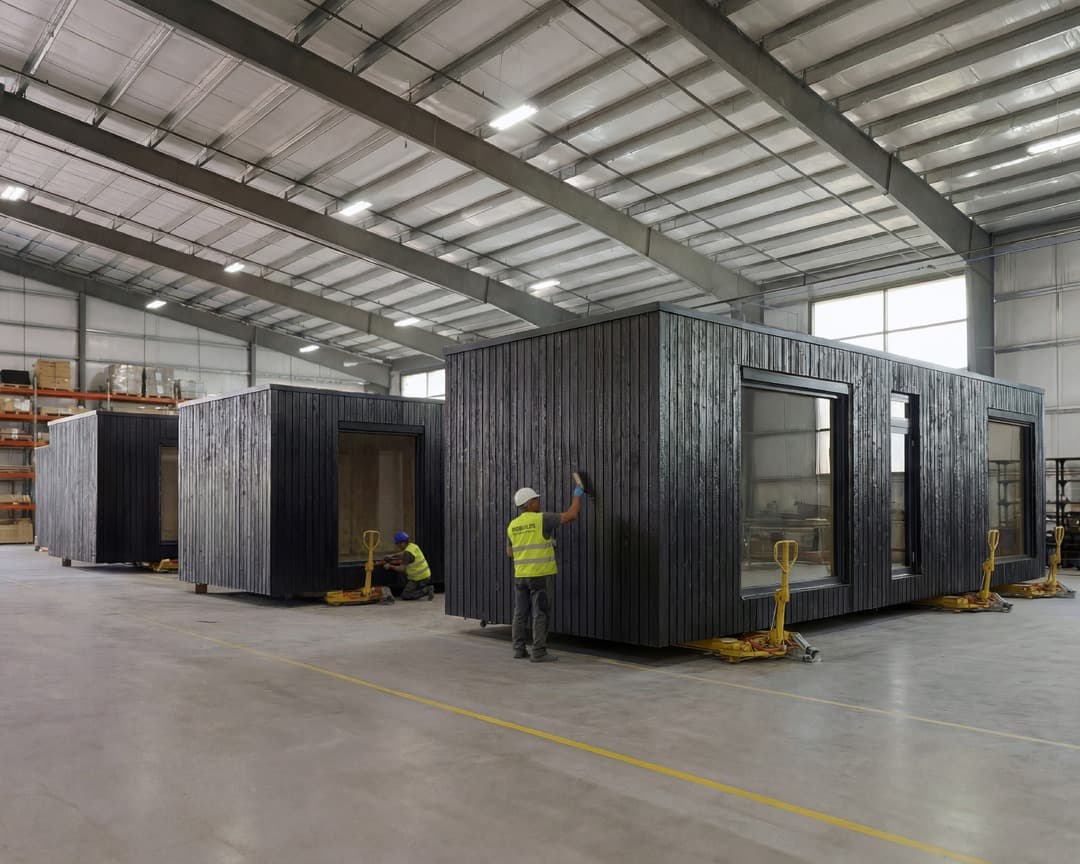
Prefab homes compress this dramatically. Factory production runs parallel to site preparation and foundation work, and BioBuilds standardizes the process to 3 weeks to move-in. On-site assembly is compressed into days rather than months; at BioBuilds, only the final 1-2% of the work remains on site.
Prefab timeline advantages
- Weather immunity: Factory construction proceeds regardless of rain, snow, or temperature extremes that routinely halt site work
- Parallel processing: Foundation preparation happens simultaneously with home production, eliminating sequential delays
- Predictable scheduling: Factory environments allow precise production timelines without dependency on subcontractor availability
- Reduced financing costs: Shorter construction periods mean fewer months of construction loan interest
Traditional timeline considerations
- Weather vulnerability: Rain delays foundation curing, snow stops framing, extreme temperatures affect finishing work
- Sequential dependencies: Each trade must complete before the next can begin -- one delay cascades through the entire project
- Labor variability: Subcontractor scheduling conflicts and labor shortages create unpredictable delays
- Extended carrying costs: Longer timelines mean more months paying construction loan interest, temporary housing, and storage
For buyers eager to move into their new home -- or those coordinating the sale of an existing property -- the timeline difference alone often determines which method makes sense. A family selling their current home and building new faces radically different logistics with a 4-month versus 12-month construction window.
Cost: More complex than it appears
Cost comparisons between prefab and traditional construction require careful analysis. The straightforward claim that "prefab is cheaper" contains truth but obscures important nuances.
The factory-built portion of a prefab home -- walls, roof, floors, and integrated systems -- typically costs 10-20% less than equivalent site-built construction. This savings derives from bulk material purchasing, eliminated weather delays, reduced labor hours, and minimized waste. Factory construction also produces far more predictable pricing; you receive a fixed quote rather than estimates that shift throughout the project.
However, total project costs depend on factors beyond the structure itself.
Prefab cost advantages
- Lower structure cost: Factory efficiencies reduce the core building expense by 10-20%
- Fixed pricing: Quoted prices remain stable; no surprise change orders during construction
- Reduced labor: Fewer workers on-site for shorter periods means lower labor costs
- Minimal waste: Factory precision cutting and material reuse eliminate the 10-15% waste typical in site construction
- Shorter financing: Less time under construction loan means less interest paid
Cost factors that affect both methods equally
Several significant costs remain essentially identical regardless of construction method, and these can substantially affect total project budgets:
- Land: Property costs vary dramatically by location and represent a major budget component
- Site preparation: Grading, access roads, clearing, and soil work cost EUR 10,000-50,000+ depending on terrain
- Foundation: Slab, crawlspace, or basement construction costs are similar for both methods
- Utility connections: Water, sewer, electrical, and gas hookups range from EUR 5,000-30,000 based on distance from existing infrastructure
- Permits and fees: Building permits, inspections, and administrative costs apply equally
Traditional cost considerations
- Weather-related overruns: Rain delays, material damage, and extended timelines inflate budgets
- Change order risk: Modifications during construction often cost 20-50% more than original pricing
- Material waste: Site cutting and weather exposure waste 10-15% of delivered materials
- Theft and damage: Materials stored on-site face theft, vandalism, and weather damage -- costs absorbed by the project
When all factors are included, prefab homes typically cost slightly less than comparable traditional construction. More importantly, prefab costs are predictable from the outset, while traditional projects frequently exceed initial budgets by 10-20% due to weather, changes, and unforeseen issues.
Quality and durability: Factory versus field
The question of quality sparks strong opinions -- often based on outdated perceptions rather than current reality. Modern prefab and traditional construction can both produce excellent results, but they achieve quality through fundamentally different processes.
Factory quality control
Prefab construction benefits from controlled manufacturing conditions that eliminate many variables affecting site-built quality:
- Protected materials: Lumber, insulation, and components stay indoors -- no rain damage, no UV exposure, no temperature extremes during construction
- Precision equipment: Computer-controlled cutting and assembly achieve tolerances impossible on scaffolding in weather
- Multiple inspections: Quality checkpoints throughout production catch issues before they're buried in walls.
- Specialized workers: Factory teams repeat the same tasks daily, developing expertise in specific building systems
- Transport engineering: Modules must withstand highway transport at 75+ mph -- this structural requirement adds inherent durability
Modular homes often contain 25-30% more lumber than equivalent site-built structures because the modules must withstand lifting, transport, and crane placement before facing any weather loads. This over-engineering translates to increased structural robustness.
Traditional construction quality
Site-built homes can achieve excellent quality, but the variables are greater:
- Direct oversight: Homeowners can visit the site, observe progress, and address concerns in real-time
- Contractor selection: You choose your builder and can verify their reputation and past work directly
- Local expertise: Experienced local builders understand regional conditions, soil types, and climate considerations
- Flexibility for adjustments: Changes during construction are possible (though costly) if issues arise
- Weather exposure: Framing, insulation, and materials sit exposed to rain, humidity, and temperature swings -- moisture trapped in walls causes long-term problems
- Variable workmanship: Quality depends heavily on individual subcontractors, some working under deadline pressure in poor conditions
- Single final inspection: Most jurisdictions require only one inspection at completion, missing issues hidden inside walls
- Site conditions: Workers on ladders and scaffolding in variable weather cannot achieve the precision of factory equipment
Both construction methods can produce homes engineered for 80+ years with proper maintenance. The key difference is consistency: prefab construction achieves reliable quality across projects, while traditional quality varies based on contractor skill, weather luck, and site management.
Design and customization options
Customization represents traditional construction's clearest advantage -- though the gap has narrowed considerably as prefab options have expanded.
Traditional design freedom
- Unlimited architectural possibilities: Complex shapes, unusual angles, and one-of-a-kind designs are fully achievable
- Any material choice: Stone facades, custom timber frames, specialty windows -- no constraints from transport or production
- Site-responsive design: Homes can wrap around trees, follow hillside contours, or incorporate existing structures
- Mid-construction changes: Decisions can evolve as the home takes shape (at additional cost)
- Complete basement flexibility: Complex basement layouts with multiple rooms are straightforward
Prefab customization reality
Modern prefab homes offer far more flexibility than many buyers expect:
- Floor plan selection: Most manufacturers offer dozens of configurations from compact studios to 200+ m2 family homes
- Interior finish control: Complete choice of flooring, cabinetry, countertops, fixtures, and finishes
- Architectural styles: Options range from traditional pitched-roof designs to ultra-modern minimalist aesthetics
- Smart home integration: Pre-wired systems for home automation, lighting control, and energy management
- Future expansion: Modular designs allow additional modules to be added as needs change
- Transport constraints: Module dimensions are limited by road width regulations -- typically 4.5m maximum width in Europe
- Structural limitations: Load-bearing walls and ceiling heights are largely fixed once production begins
- Complex shapes difficult: Highly irregular floor plans, dramatic cantilevers, and unusual geometries add significant complexity and cost
- Foundation type constraints: Homes are engineered for specific foundation types -- changing from slab to basement may not be possible
The honest assessment: if your vision includes complex custom architecture with unusual angles, integrated stone masonry, or site-specific features like built-in pools, traditional construction offers more flexibility. If your priority is selecting from proven designs with full control over finishes and features, prefab delivers excellent customization with faster, more predictable results.
Energy efficiency: Where prefab excels
Energy performance represents one of prefab construction's most significant advantages -- and one with decades of financial implications for homeowners.
Studies consistently show modular homes achieving 15-60% better energy efficiency than comparable site-built structures. The reasons trace directly to factory construction conditions.
Why factory construction achieves better energy performance
Superior airtightness. Air leakage accounts for 25-40% of heating and cooling loads in typical homes. Factory assembly allows precise sealing of joints, penetrations, and connections under ideal conditions -- no rushing to close up walls before rain arrives. The controlled environment enables consistent achievement of airtightness levels that site construction struggles to match.
Insulation integrity. Insulation installed in a dry factory maintains its rated performance. Site-installed insulation often gets wet during construction, leading to compression, settling, and R-value degradation. Spray foam applications cure properly under controlled temperatures rather than variable site conditions.
Thermal bridge elimination. Factory precision allows consistent thermal-bridge-free details at wall junctions, window installations, and other critical points. Site conditions make these details harder to execute correctly every time.
- Consistent airtightness: Factory conditions enable reliable achievement of low air-leakage rates
- Protected insulation: Materials maintain rated performance without moisture damage
- Passivhaus achievable: Factory precision makes ultra-low-energy certification practical -- BioBuilds homes achieve 15 kWh/m2 heating demand
- Integrated systems: Heat recovery ventilation, solar preparation, and smart energy systems install cleanly during production
Traditional construction can achieve high energy efficiency, but doing so requires exceptional attention to detail, extended construction timelines for proper curing and sealing, and premium pricing for the additional labor involved. The same performance level comes standard in the certified prefab segment.
Resale value and appreciation
Concerns about resale value have historically deterred some buyers from prefab homes. The data no longer supports these concerns for modern modular construction.
Federal Housing Finance Agency analysis shows manufactured homes on owned land appreciated 211.8% between 2000 and 2024, while site-built homes appreciated 212.6% -- a difference of less than one percentage point over 24 years. Urban Institute studies from 2024 found modular homes in some urban markets actually appreciated faster than site-built equivalents, driven by demand for affordable, high-quality housing.
Value factors that matter
Resale value depends on factors common to both construction types:
- Permanent foundation: Homes on permanent foundations are classified as real property and appraised identically to site-built homes
- Land ownership: Owning the land beneath your home is essential for full appreciation
- Location: Neighborhood, school district, and local market conditions drive value regardless of construction method
- Condition and maintenance: Well-maintained homes appreciate; neglected homes depreciate -- construction method doesn't change this
- Energy performance: As energy costs rise and regulations tighten, efficient homes command premium pricing
The persistent myth of prefab depreciation stems from confusion with manufactured housing (mobile homes) built to different codes and often placed on leased land. Modern modular homes built to residential building codes on permanent foundations face no value penalty in current markets.
Which method is right for you?
Neither prefab nor traditional construction is universally "better" -- each approach suits different priorities and circumstances. Here's a decision framework based on what matters most to you.
Choose prefab if speed, predictability, and efficiency are priorities. Prefab makes sense when you need to move in quickly, want predictable costs and timelines, prioritize energy efficiency, or prefer factory-controlled quality. It's particularly attractive for buyers coordinating property sales, those building in regions with difficult weather, and anyone who values knowing exactly what they'll pay before construction begins.
Choose traditional if complex custom design is non-negotiable. Traditional construction makes sense when your vision requires unusual architectural elements, site-specific integration, or extensive customization that transport and modular constraints can't accommodate. It's also appropriate when you want to be deeply involved in on-site decisions throughout the building process or when working with an architect on a truly one-of-a-kind design.
| Factor | Standard Prefab | Traditional | BioBuilds Prefab |
|---|---|---|---|
| Timeline | 3-4 months | 18-36 months | 3 weeks to move-in |
| Cost predictability | Fixed pricing | Variable, overruns common | Fixed transparent pricing |
| Total cost | 10-20% lower | Higher baseline | Mid-range price, premium quality |
| Quality consistency | Factory controlled | Variable by contractor | Factory-controlled, 98% completed indoors |
| Energy efficiency | 15-60% better | Code minimum typical | Passivhaus certified |
| Materials | Standard | Variable | 98% organic materials |
| Customization | Moderate | Unlimited design freedom | Extensive finish options |
| Complex architecture | Limited | Any shape or configuration | Optimized layouts |
| On-site involvement | Limited | Direct oversight throughout | Factory visits welcome |
| Resale value | Equal appreciation | Equal appreciation | Premium efficiency adds value |
| Lifespan | 80+ years | 80+ years | 80+ years |
The BioBuilds approach
At BioBuilds, we've engineered our prefab production to maximize factory advantages while minimizing limitations. Our 3-week process delivers homes built on a Passivhaus-certified system with energy demands one-tenth of conventional construction. Our 98% factory / 1-2% on-site approach means virtually everything is installed under controlled conditions. And our configurator lets you visualize options and receive transparent pricing before committing.
We believe the future of housing lies in factory precision delivering certified performance at accessible prices. But we also believe in honest assessment -- traditional construction remains the right choice for certain projects, particularly those requiring complex custom architecture or extensive on-site involvement. Our goal is helping you make an informed decision that fits your specific situation.
The choice between prefab and traditional construction ultimately reflects your priorities. If speed, predictability, and energy efficiency top your list, modern modular prefab offers compelling advantages with none of the quality or value concerns that plagued earlier factory-built housing. If your dream home requires complex custom architecture or you want to be hands-on throughout the building process, traditional construction provides that flexibility -- at the cost of longer timelines and less predictable outcomes.
Whichever path you choose, understanding the genuine pros and cons of each method positions you to make a decision you'll live with comfortably for decades.