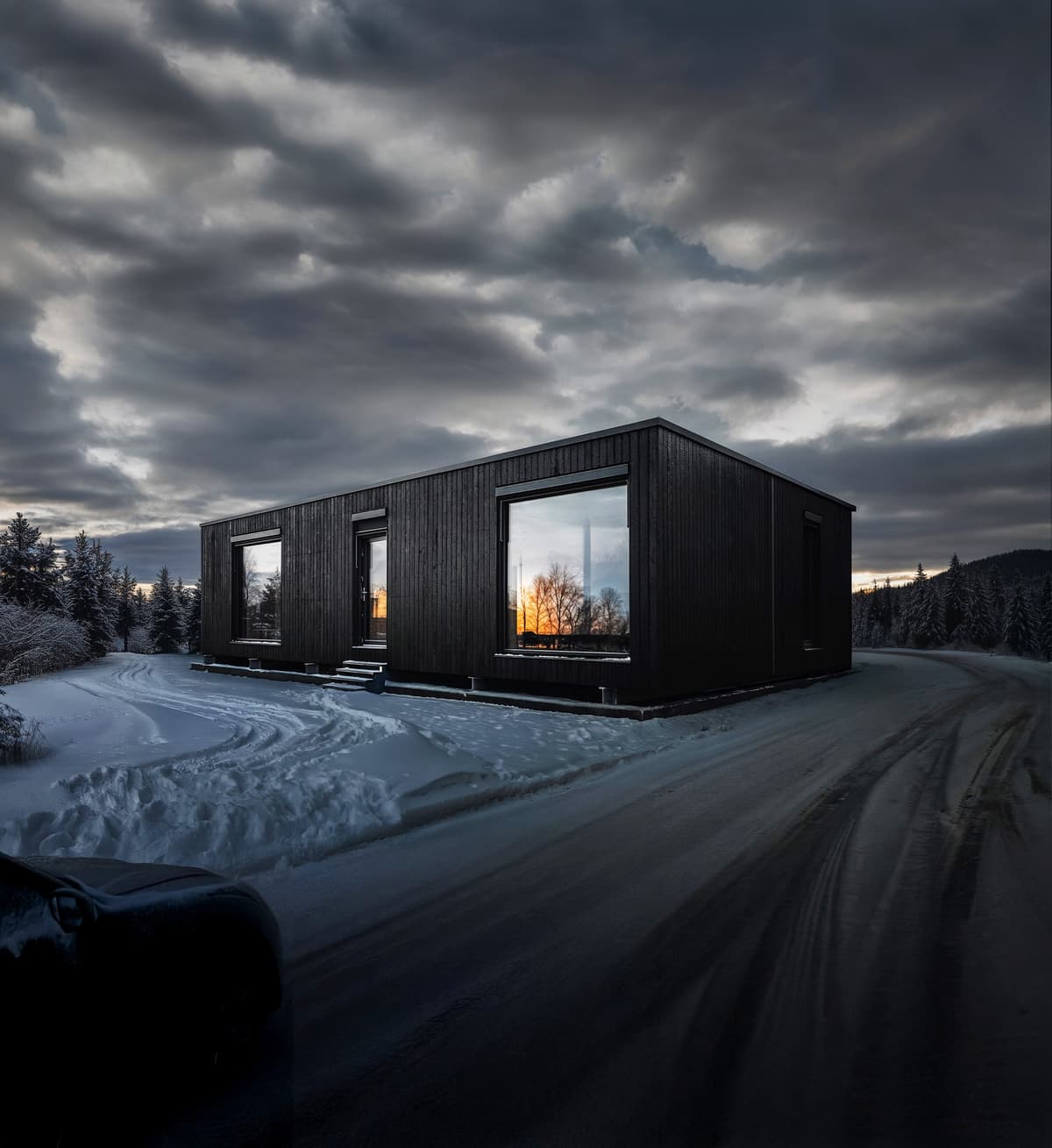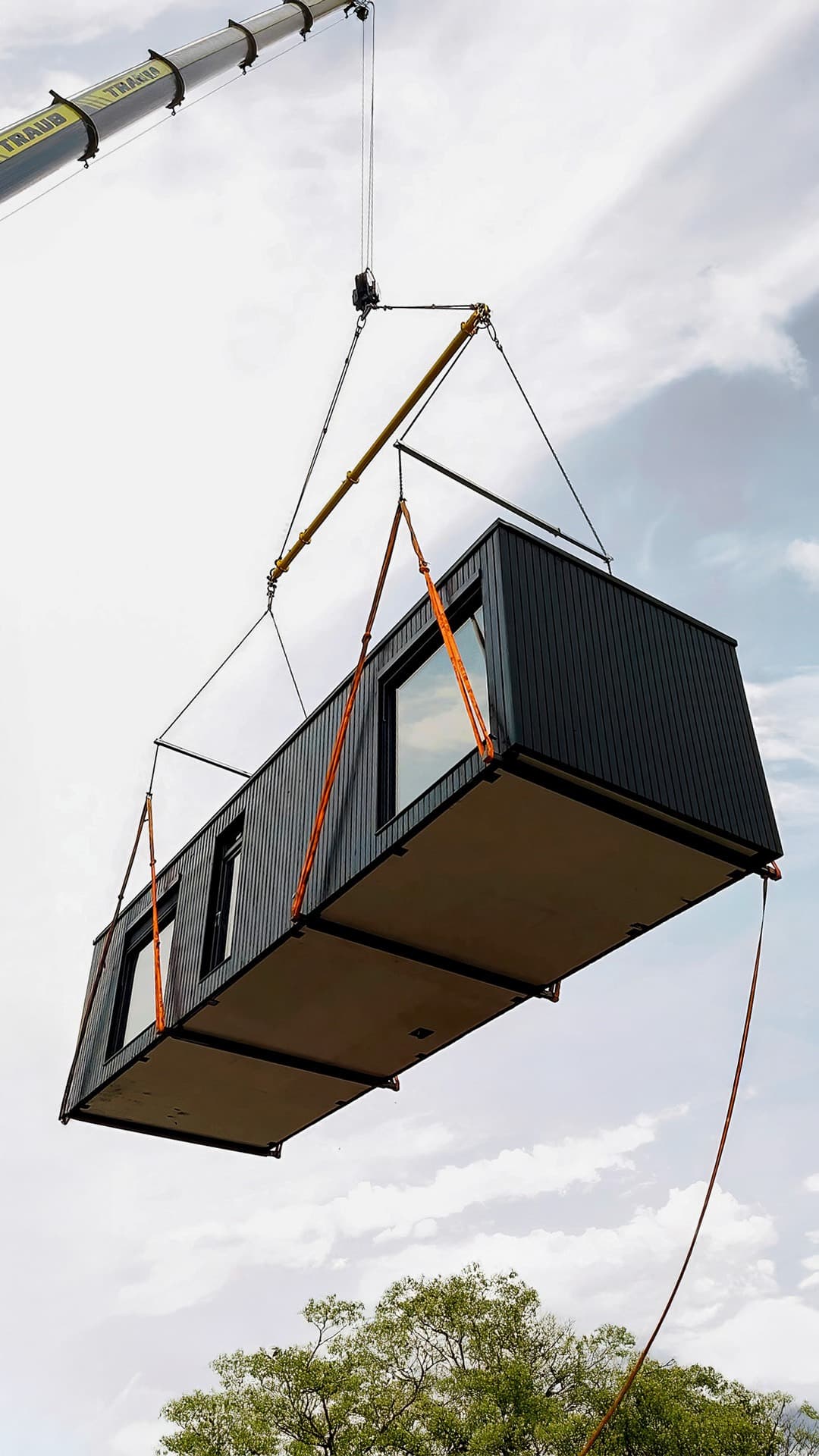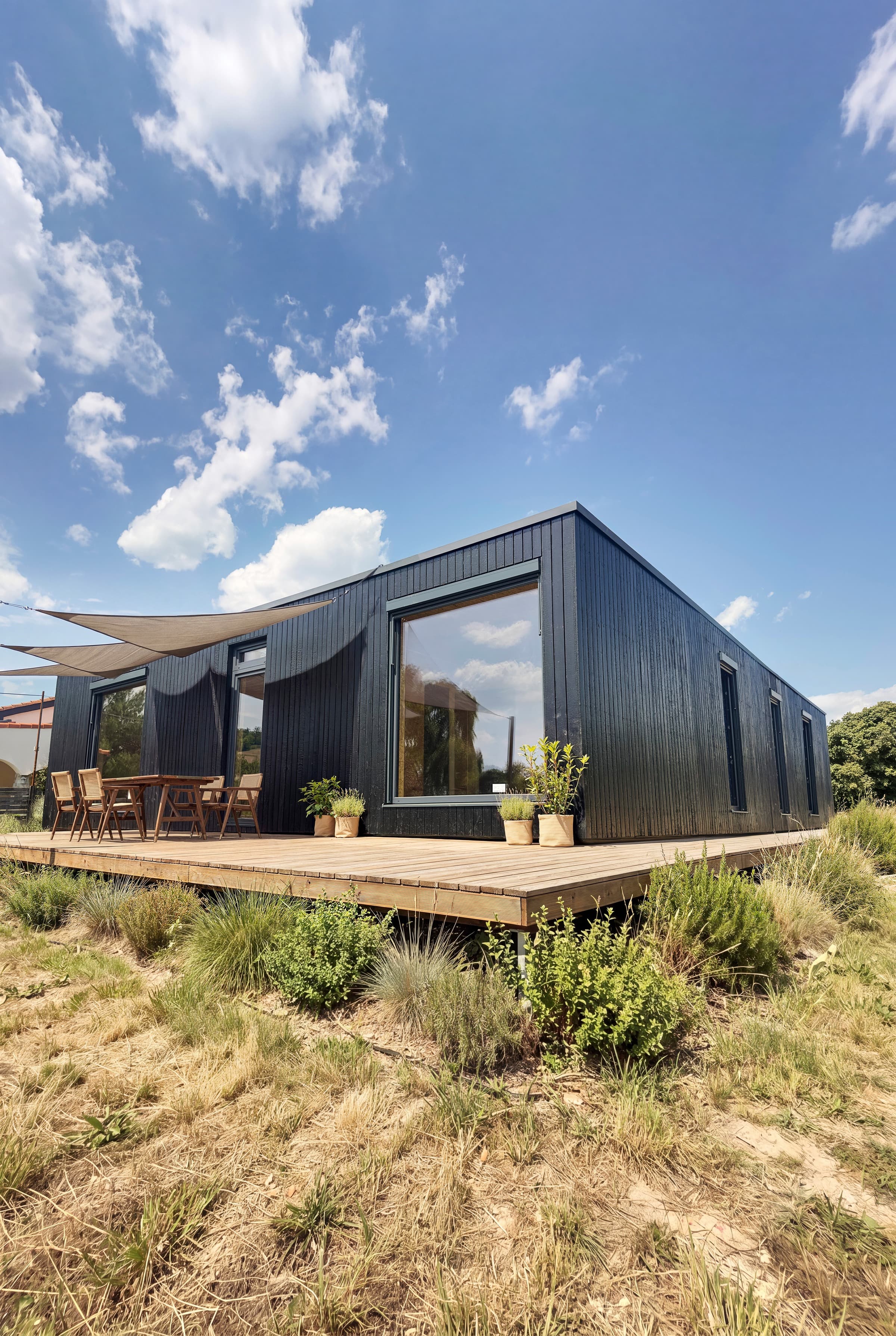
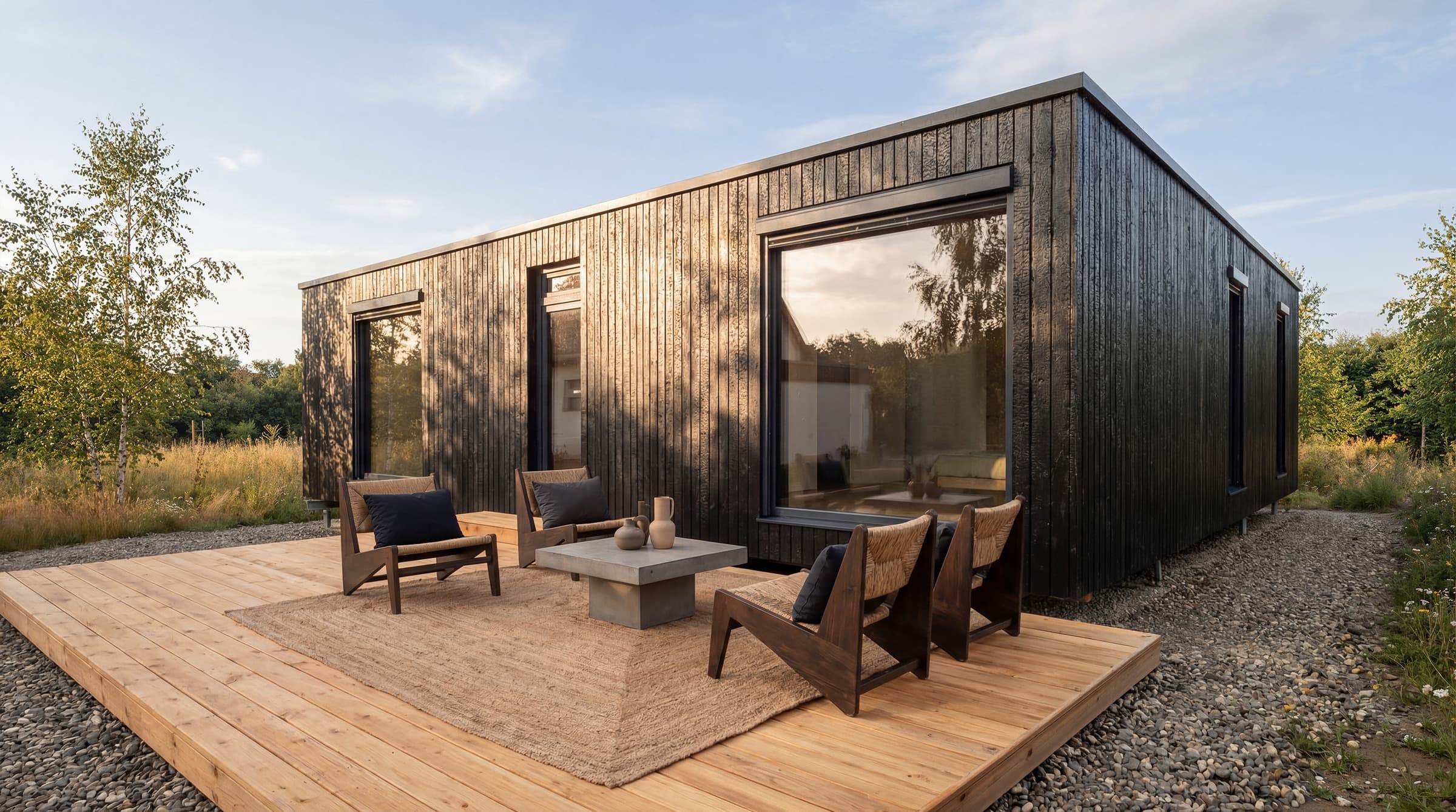
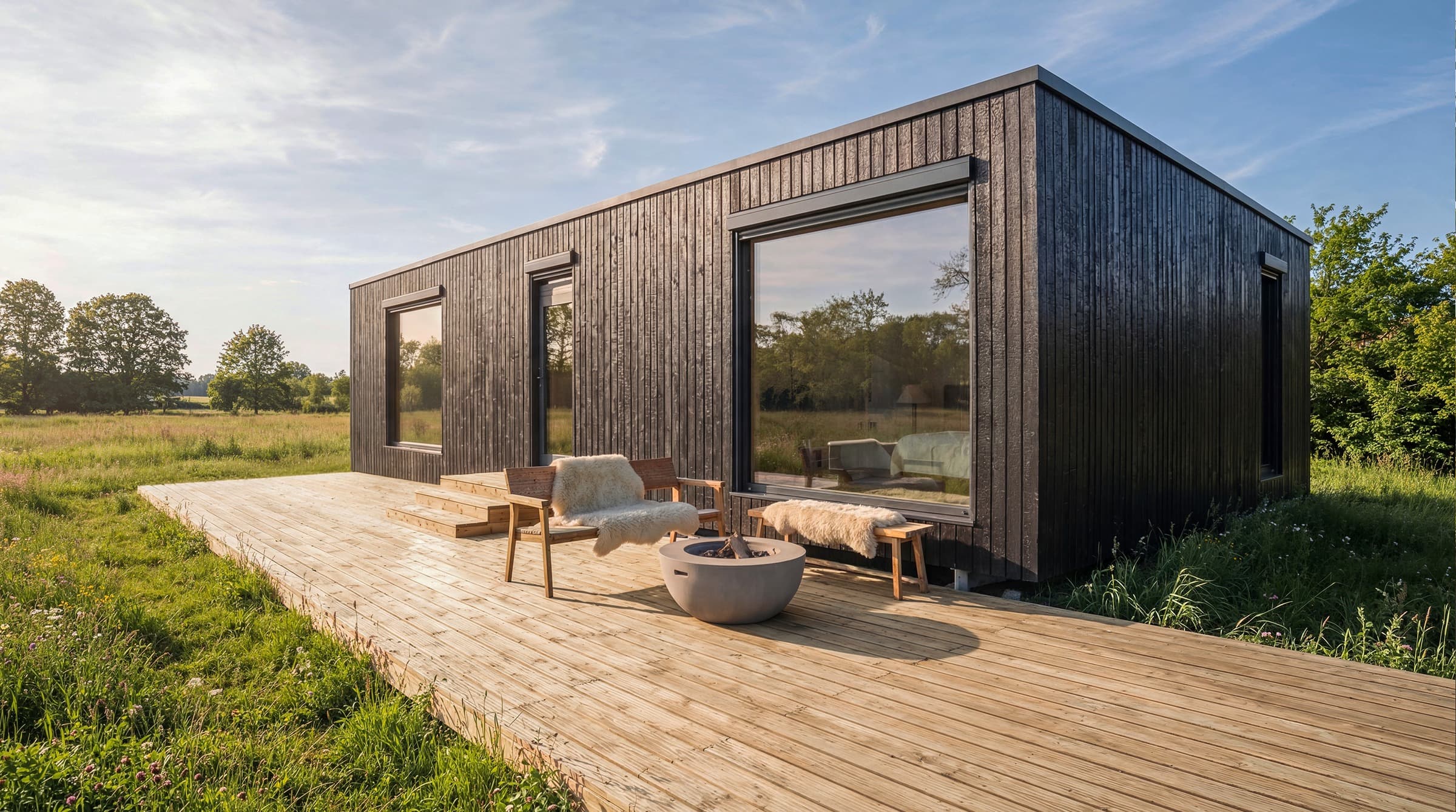
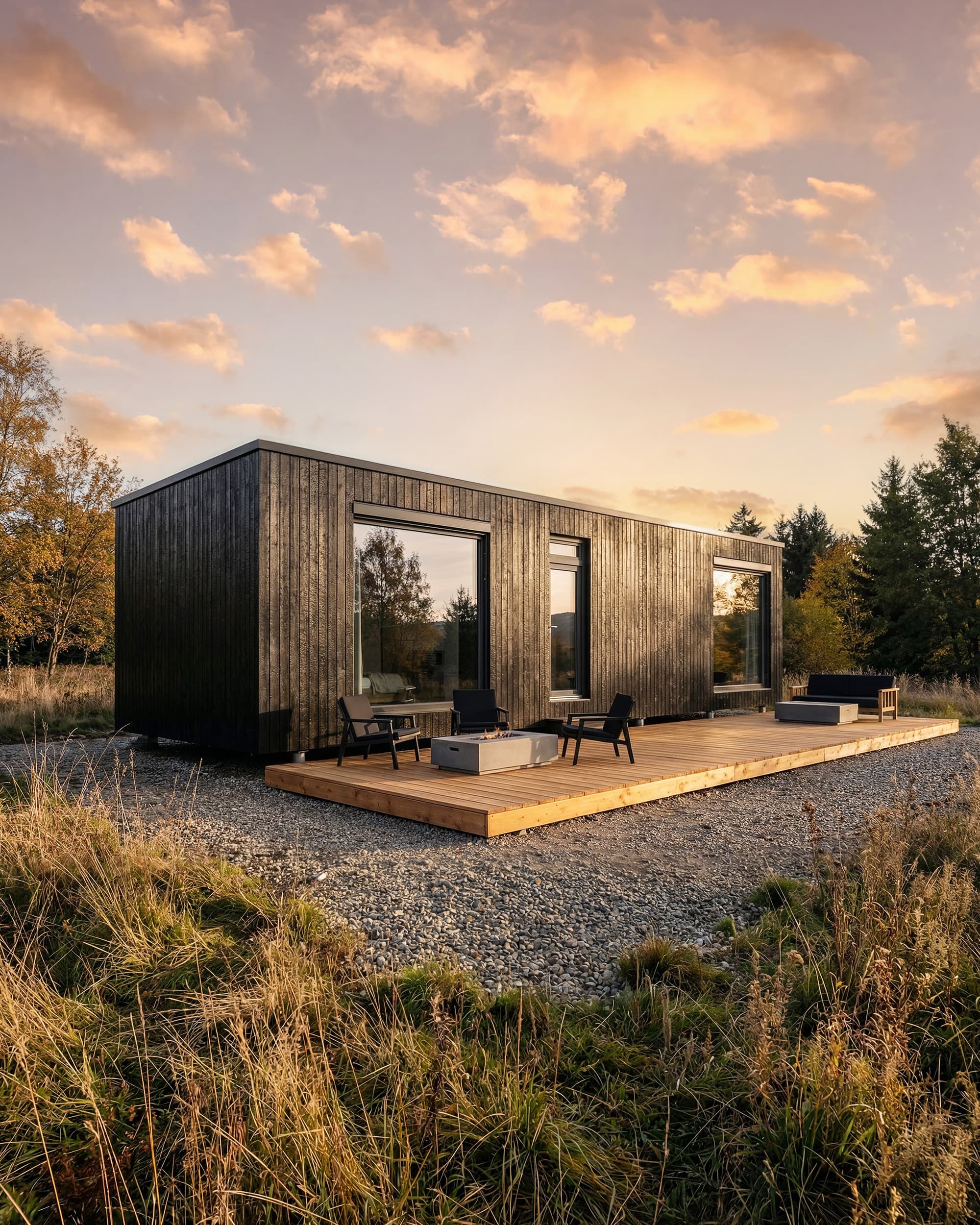
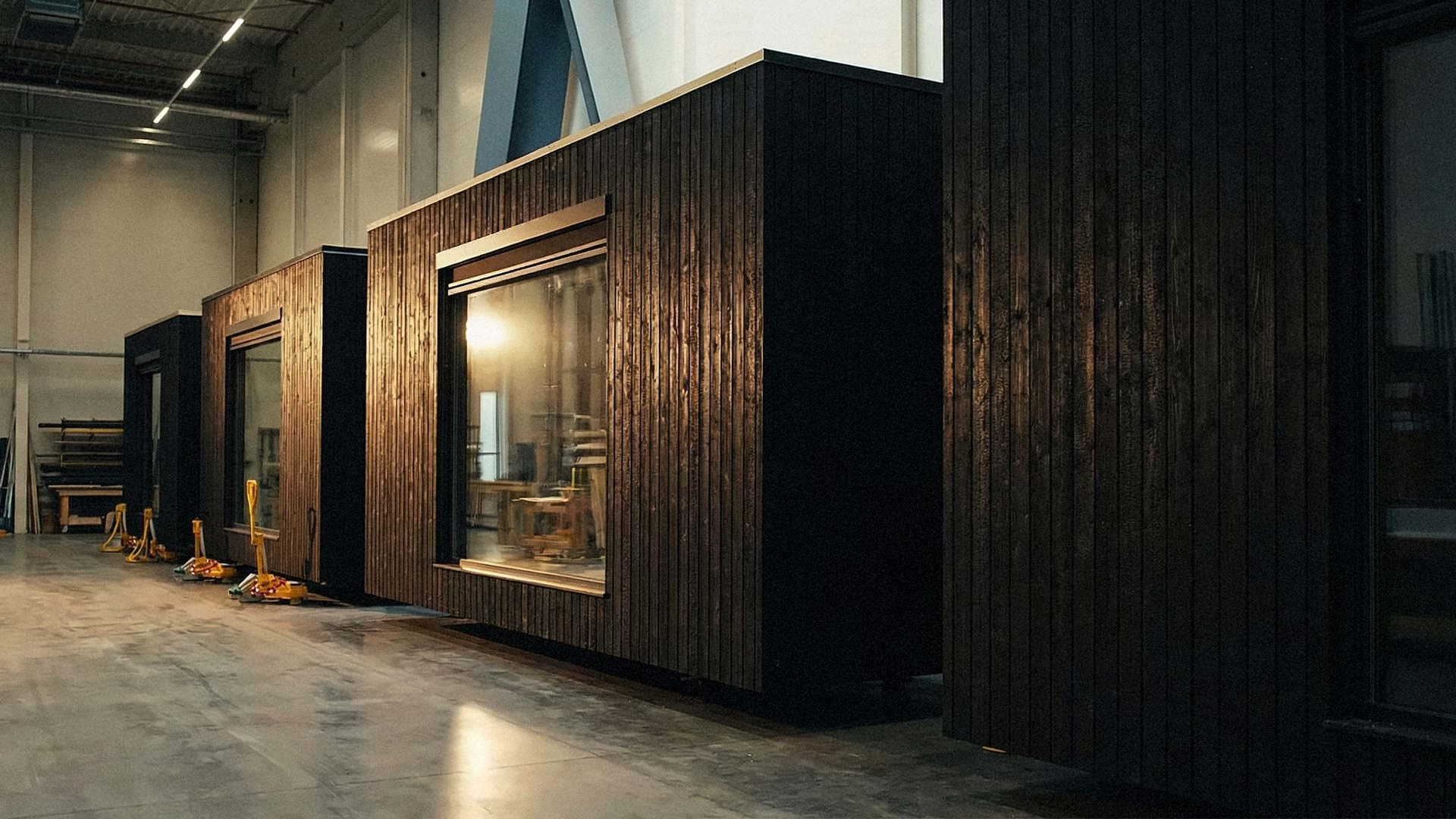
Your completed modules leave the factory wrapped in weather-resistant material. From there, they are crane-set onto your foundation, structurally connected, and brought to a weather-tight shell on a dramatically shorter timeline than traditional construction. A typical two-module home requires just a few hours of actual crane work. While traditional construction takes months to reach weather-tight stage, modular installation compresses this into a single dramatic day.
The moment your modular home leaves the factory is when construction becomes spectacle. After weeks of precision assembly in climate-controlled conditions, your home -- 98% complete in BioBuilds' case, with electrical wiring, plumbing, insulation, and interior finishes -- travels to your land on specialized carriers. What happens next compresses months of traditional construction into hours.
This guide walks through every step from factory floor to foundation: the logistics that make oversized transport possible across Europe, the site requirements that ensure smooth installation, and the choreographed ballet of crane operators and set crews that transforms empty land into your new home.
Factory departure: preparing modules for the journey
Modules don't simply roll out the factory door. The departure process ensures your home arrives in the same condition it left -- every finish protected, every connection ready for rapid assembly.
Final factory inspection
Before wrapping begins, quality control teams conduct comprehensive final checks. Every electrical circuit is tested. Plumbing systems undergo pressure testing. Dimensional verification confirms modules will mate precisely on your foundation. Any issues discovered now are infinitely easier to address than after transport.
Weather protection wrapping
Each module receives protective covering -- typically industrial shrink-wrap or specialized tarping -- to shield against rain, road spray, and debris during transport. Window and door openings receive additional protection. Interior finishes that could be damaged by moisture or vibration get temporary coverings.
Loading onto carriers
Factory cranes lift completed modules onto specialized flatbed trailers, step-deck carriers, or extendable trailers depending on module dimensions. Heavy-duty straps and chains secure modules at reinforced structural points. Weight distribution is calculated precisely -- improper loading creates stress that can damage finishes or, worse, structural elements during transport.
Transport logistics: navigating European regulations
Modular home transport is classified as "abnormal load" or "oversized cargo" across Europe. Your modules significantly exceed standard vehicle dimensions, triggering permit requirements and operational restrictions.
Why modules require special permits
Standard EU road limits allow maximum dimensions of 2.55m width, 4.0m height, and 18.75m length. Typical residential modules measure approximately 5.3m wide x 14.5m long x 3.8m high -- exceeding width limits by more than double. Every transport requires Special Transport Permits (Sondergenehmigung in Germany, autorisation de transport exceptionnel in France).
Oversized transport in Europe is restricted to weekdays, typically 06:00-22:00. Weekend and holiday transport requires special authorization. Weather conditions -- particularly high winds -- can force delays for safety reasons.
Escort vehicle requirements
Depending on load dimensions and route, escort vehicles are mandatory:
- One escort vehicle: Loads exceeding 3.5m width on most European roads
- Two escort vehicles: Width exceeding 4.0m or length exceeding 30m
- Police escort: May be required for the widest loads or complex urban routes
Escort vehicles warn other road users, facilitate passage at intersections, and ensure the convoy maintains safe speeds. Escort services typically cost €1.50-2.50 per kilometer per vehicle.
Route planning
Transport routes are surveyed weeks before delivery. Route planners identify low bridges, narrow passages, tight turns, weight-restricted roads, and overhead obstructions. Alternative routes are mapped for contingencies. The final route becomes part of the permit application.
In Germany, permits are processed by local road authorities (Strassenverkehrsamt) and may take several days. Cross-border transport requires permits from each country along the route -- a German-manufactured home delivered to Romania may need permits from Germany, Austria, Hungary, and Romania.
Site preparation: what must be ready before delivery
Module delivery cannot proceed unless your site meets specific requirements. This work completes during factory production -- parallel workflows that compress overall project timelines.
- Foundation complete with level sill plates installed
- Minimum 8 x 8 meter staging area for crane positioning
- Access road minimum 4m wide with 4.5m height clearance
- Minimum 4.5m (15 feet) clearance from power lines
- Ground stable enough to support crane weight (may require mats)
- Utility trenches complete to connection points
- Site cleared of obstructions (trees, boulders, debris)
- Module storage area if crane staging is limited
Foundation requirements
Foundation strategy depends on engineering, soil conditions, and utility coordination. BioBuilds presents both traditional concrete slabs and ground screws as viable options, alongside other standard solutions where the project requires them. Ground screws remain especially attractive for minimal site disturbance and future reversibility.
Foundation levelness is critical. Modules are built on precision jigs in the factory and arrive perfectly square. Foundation imperfections must be shimmed during installation. A well-prepared foundation makes set day dramatically smoother.
Crane positioning assessment
Crane contractors typically conduct on-site inspections before delivery. They assess ground conditions for crane stability (cranes and modules together may exceed 100 tonnes), calculate required reach distances, and determine optimal crane positioning. The crane must be able to reach every module location without repositioning -- each move adds time and cost.
Crane day: hour by hour
Set day is when months of planning become visible transformation. Here's how a typical installation unfolds for a two-module BioBuilds home.
Weather contingencies
Crane operations require calm conditions. High winds (typically above 35-40 km/h), heavy rain, or lightning force postponement -- lifting 15-tonne modules in gusty conditions risks catastrophic failure. Experienced set crews build weather flexibility into scheduling. If conditions deteriorate mid-set, modules already placed are secured and work resumes when conditions improve.
Module connections: becoming one home
Once modules are placed, the work shifts from dramatic crane lifts to precise integration. This typically requires 1-2 additional days.
Structural connections
Modules are bolted together at floor, wall, and ceiling planes using pre-engineered connection points. Marriage walls -- the interior walls where modules meet -- are finished. Any gaps are sealed. The connection creates a unified structure that exceeds the strength of conventional site-built framing.
Systems integration
Electrical, plumbing, and HVAC systems were roughed-in at the factory with precise positioning for inter-module connections. Electricians connect circuit panels, complete wiring runs across module boundaries, and install final fixtures. Plumbers connect water supply, drainage, and any radiant heating systems. HVAC ductwork is connected and the ventilation system commissioned.
Exterior finishing
Siding at module joints is completed. Roof ridge caps are installed. Exterior trim around windows and doors is finalized. Depending on design, porches, decks, or other site-built elements may begin.
What happens after the set: from weather-tight to move-in
Your BioBuilds home is now approximately 98% complete. The remaining work is the final 1-2% on site, depending on size, before move-in.
Interior finishing (final days)
Marriage wall areas receive drywall finishing, texture, and paint to match factory-completed surfaces. Any trim work at module joints is completed. Final fixture installation -- light fixtures, outlet covers, plumbing fixtures -- proceeds. Flooring transitions between modules are finished.
Utility connections (varies by provider)
Water, sewer, electricity, and gas connections to municipal systems or on-site wells/septic require coordination with utility providers and may take days to weeks depending on provider schedules. These timelines vary significantly by location.
Final inspections
Building inspectors verify the completed home meets all local codes. For Passivhaus-certified BioBuilds homes, blower door testing confirms airtightness meets certification requirements. Inspectors check structural connections, electrical systems, plumbing, HVAC, and fire safety. Once approved, you receive the certificate of occupancy.
From module delivery to move-in on a BioBuilds home, the remaining work is limited to the final 1-2% on site, depending on size. Compare this to 8-12 additional months for a traditional build to reach the same point.
The journey from factory departure to weather-tight installation represents modular construction's most visible advantage. What traditional construction stretches across seasons of exposed framing, weather delays, and sequential trades, modular compresses into a choreographed day of precision placement. Your home arrives substantially complete, protected from the elements within hours, and moves toward occupancy in weeks rather than months.
For homeowners who've watched traditional builds drag on through weather delays and scheduling conflicts, crane day delivers something remarkable: the tangible reality of your new home, standing complete on your land, in less time than most site-built homes take to frame.