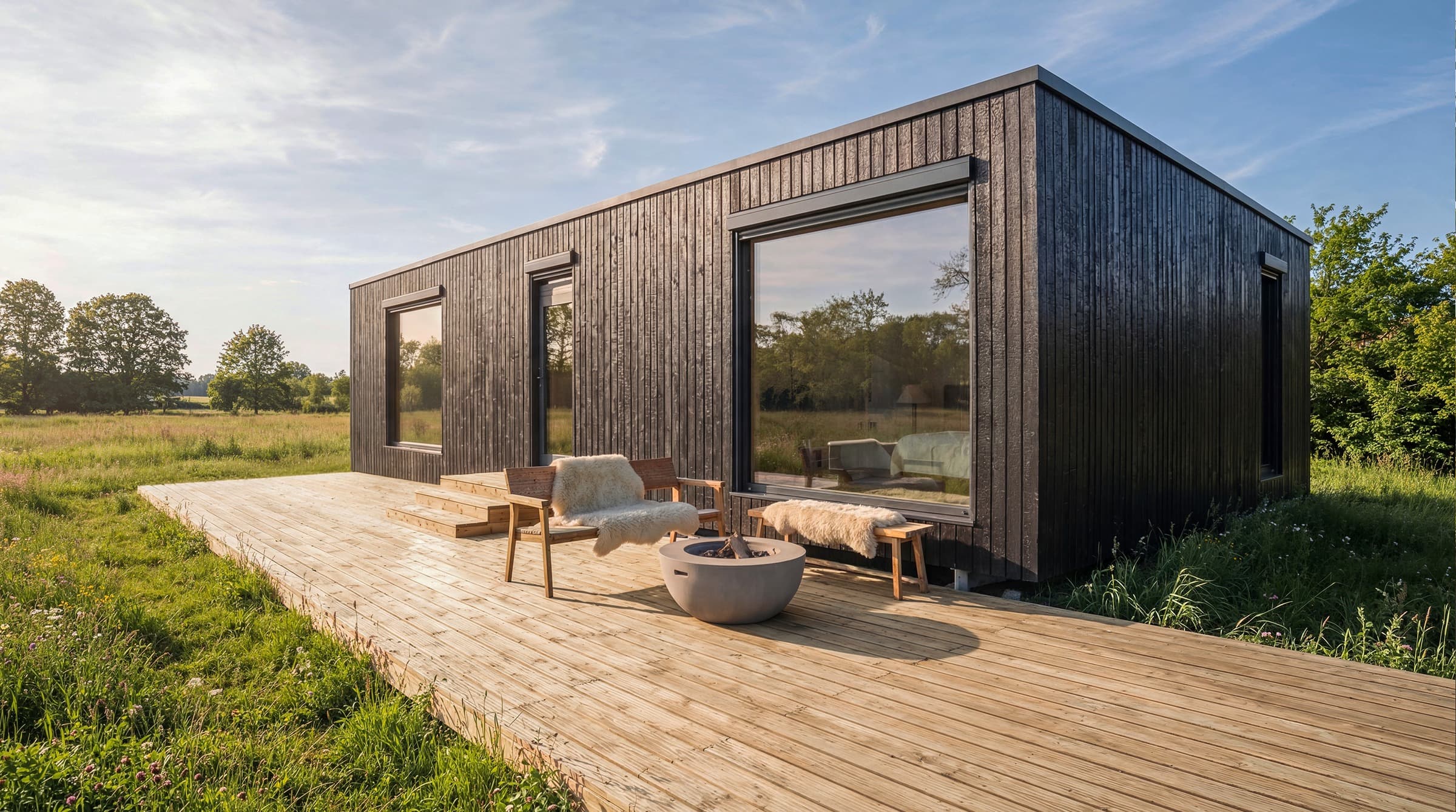
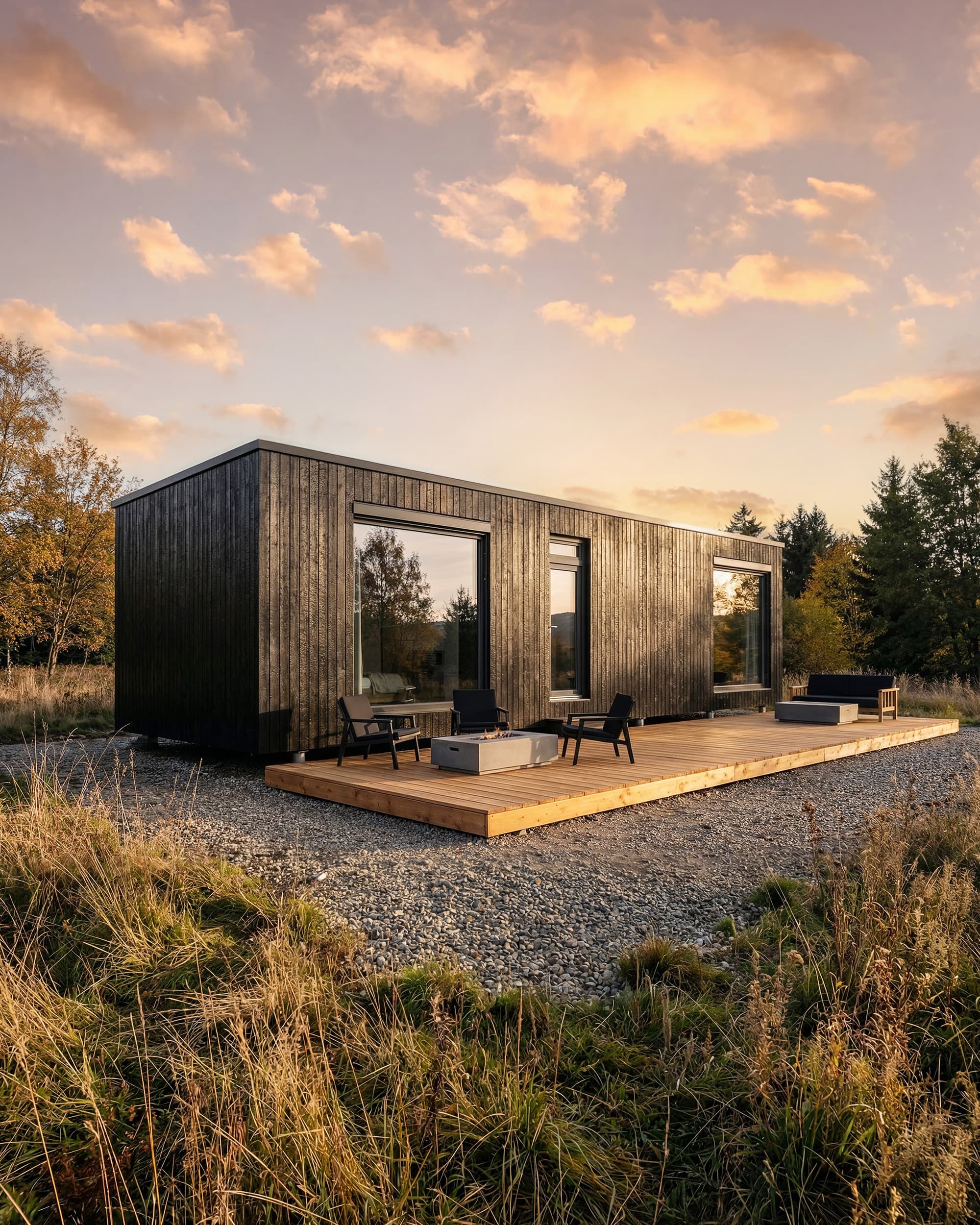
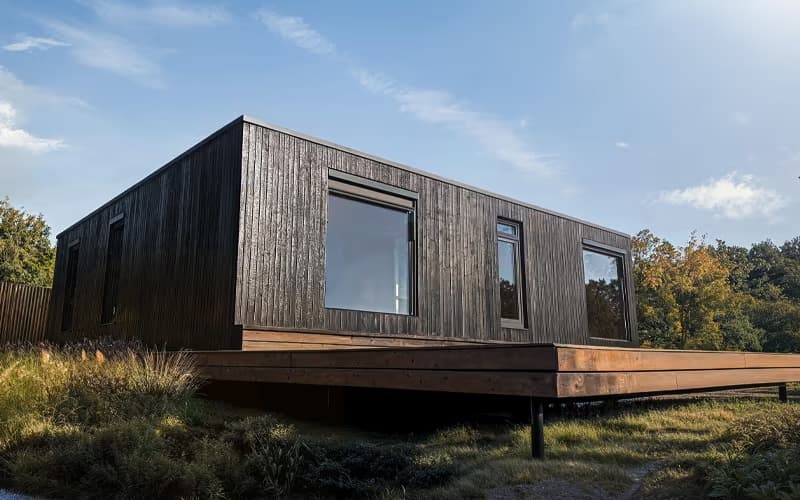
Yes -- and increasingly, it's the economically rational choice. Traditional Passivhaus construction typically adds 15-30% to building costs, but factory-built approaches can narrow that gap substantially. Energy efficiency subsidies across Europe -- from low-interest loans to direct credits -- can help offset these costs. Resale values run 6-13% higher. With EU Zero Emission Building requirements arriving in 2030, building to minimum code now means building a future retrofit project.
The question has shifted. A decade ago, "Is a Passive House worth it?" was a genuine trade-off between higher upfront costs and lower operating expenses. In 2026, the question is increasingly: "Can you afford not to?" Energy efficiency subsidies across Europe can significantly offset costs, energy prices remain elevated after the 2022 crisis, and EU regulations will mandate equivalent performance by 2030 anyway.
This analysis examines the full ROI picture across Germany and Romania -- the two markets BioBuilds serves. The economics differ significantly by country, but the direction is consistent: Passivhaus is becoming the default rational choice for new construction.
The construction premium has largely disappeared
The Passivhaus cost premium has declined dramatically over 15 years. Passivhaus Institut data shows a typical 140m² house required approximately €14,000-15,000 in additional investment in 2010. By 2015, this dropped to roughly €9,500. UK data from Exeter City Council demonstrates the trajectory even more starkly: an initial 20% premium in 2009 converted to a 4% cost saving by 2024.
Traditional Passivhaus construction typically adds 15-30% to building costs due to specialized components and skilled labor requirements. However, experienced builders and efficient supply chains can achieve far lower premiums. BioBuilds' lean production model can narrow that gap substantially, especially in DACH markets where site-built labor and coordination costs are higher.
The additional investment breaks down to approximately €4,300 for enhanced thermal insulation, €1,600 for Passivhaus-certified windows, and €5,200 for mechanical ventilation with heat recovery -- offset by roughly €1,400 in savings from smaller heating systems and eliminated radiators.
| Construction type | Premium | Heating demand | Verified |
|---|---|---|---|
| Conventional new-build | Baseline | ~150 kWh/m²/yr | No |
| Traditional Passivhaus | 15-30% | ≤15 kWh/m²/yr target | Yes |
| BioBuilds Passivhaus | Lower than many site-built projects | ≤15 kWh/m²/yr target | Yes |
BioBuilds combines lean production, repeatable details, and indoor manufacturing to bring verified Passivhaus performance much closer to conventional budgets than many site-built Passivhaus projects, especially in DACH markets.
Annual savings range from €800 to €1,500
The Passivhaus standard limits heating demand to 15 kWh/m²a, compared to around 150 kWh/m²a for current new conventional buildings and around 350 kWh/m²a for average existing stock. At current German energy prices, this translates to substantial savings.
For a 150m² house, PHI analysis found heating energy savings of 11,000 kWh annually, yielding monetary savings of €715-825 per year after accounting for €65 in ventilation electricity costs. Total operational savings including hot water and cooling typically reach €800-1,500 annually.
During the 2022 energy crisis, the hedging value became starkly visible. German gas prices spiked 69-80%, and average households with fossil heating paid €1,475 -- 80% above 2021. Passivhaus owners saw their already-small bills increase by far less in absolute terms. A €100 heating bill rising 80% adds €80. A €800 bill rising 80% adds €640.
Payback depends on energy prices
At current prices with an €18,000 premium, simple payback runs 14-19 years. If energy prices rise 50%, payback shortens to approximately 12-13 years. If prices double (as during 2022), payback collapses to 9-10 years. With German subsidies factored in, Passivhaus often becomes cash-flow positive from year one.
Energy efficiency subsidies across Europe
There are extensive energy efficiency subsidies available across Europe, ranging from low-interest loans to direct credits depending on the country. These programs can significantly offset -- or in some cases completely cover -- the cost premium of building to Passivhaus standard.
Germany offers some of the most comprehensive programs, with subsidized loans up to €150,000-270,000 at interest rates well below market for energy-efficient construction. Additional subsidies for heat pumps and renewable heating systems can cover up to 70% of eligible costs. State-level programs add further benefits on top of federal support.
Other EU countries operate various provincial and national systems that consistently reward high energy efficiency. Many offer loans at 1-2% fixed interest, dramatically below market rates. Point-based systems in some regions translate energy performance directly into cash bonuses.
For a €300,000 home with a Passivhaus premium, interest savings from subsidized financing can often exceed the entire premium over the loan term. The "premium" isn't just a cost -- it can be a ticket to significant financing advantages.
Romania: different calculation, same direction
Romania presents a more complex picture. While the country lacks the extensive Passivhaus-specific subsidies found in Western Europe, it has developed one of Central Europe's strongest green mortgage ecosystems. Multiple banks offer preferential rates for energy-efficient construction, and regulators allow estimated energy savings to be counted as additional income in loan calculations, improving affordability for efficient homes.
The ROI challenge in Romania stems from energy prices roughly 50% below EU average. Household gas costs €5.59/100kWh versus the EU average of €11.4. This extends payback periods approximately 2x compared to Germany.
| Factor | Germany | Romania |
|---|---|---|
| Energy efficiency subsidies | Extensive | Growing (green mortgages) |
| Green mortgage infrastructure | Good | Excellent |
| Energy prices vs EU avg | Above average | 50% below |
| Local Passivhaus expertise | Extensive | Limited (~3 certifiers) |
| Simple payback (est.) | 10-15 years | 18-25 years |
For Romanian buyers, the pure financial ROI case is weaker than Germany. However, EU regulatory convergence will push Romanian energy prices higher over time, and the first-mover advantage in an underdeveloped market creates differentiation. As ZEB requirements arrive by 2030, early adopters will find their investment validated.
Energy-efficient homes command measurable resale premiums
The investment doesn't disappear if you sell. Academic research consistently finds significant value premiums for energy-efficient properties.
A German study of 422,242 single-family home observations found prices increase by 6.9% on average for each 100 kWh/m²a improvement in energy efficiency -- with rural regions showing an even stronger 11.1% premium. Norwegian research found EPC A/B properties command premiums of up to 13.3% versus EPC C, with discounts reaching -26.6% for EPC D-G rated homes.
Time on market also favors efficient buildings. US evidence shows ENERGY STAR certified homes sell 89 days faster than conventional. UK data indicates high-efficiency properties reach sale agreement in 30 days versus 37 days for low-efficiency homes.
Following the 2022 energy crisis, the premium for highest-efficiency homes rose from approximately 8% to 13% -- buyers learned to value energy security.
Health and comfort benefits add hidden value
Beyond energy economics, Passivhaus delivers documented health and wellbeing benefits that are difficult to monetize but increasingly well-quantified.
Indoor air quality in Passivhaus consistently outperforms conventional construction. A review of 35 studies found 74% of Passivhaus homes never exceeded 1,400 ppm CO2 -- the threshold associated with 15% cognitive function reduction. By contrast, naturally-ventilated new Scottish homes averaged approximately 1,500 ppm overnight with peaks reaching 5,000 ppm.
Temperature stability provides particular comfort value: typical Passivhaus homes maintain ±2°C variation from the 20.8°C average, eliminating cold spots, drafts, and the overnight temperature drops of 3-5°C common in conventional buildings.
Noise reduction from triple glazing delivers 35-45 dB reduction -- meaningful for urban locations or near roads.
A Dutch study tracking 800 employees found workers in healthy green buildings experienced 2% lower sick leave prevalence and 21.6% fewer Sick Building Syndrome symptoms. While this data comes from office settings, the underlying air quality principles apply to residential buildings.
Common objections addressed
"Passivhaus costs too much"
Traditional Passivhaus construction typically adds 15-30% to building costs, but optimized factory-built systems can narrow that premium substantially. For a €300,000 home, energy efficiency subsidies available across Europe can often offset much of the premium through interest savings on subsidized financing.
"I'll move before payback"
With resale premiums of 6-13% for efficient homes and faster sale times, the investment is recoverable on exit. The 10-year energy savings alone (€8,000-15,000) often exceed the premium, with any remaining value captured in the sale price.
"Technology will change, making my investment obsolete"
Passivhaus is a fabric-first standard, not a technology bet. Highly insulated walls, triple glazing, and airtight construction remain valuable regardless of which heating technology becomes dominant. The minimal heating load makes adaptation to any future energy source straightforward.
"I can't open windows in a Passivhaus"
This is a persistent myth. Passivhaus occupants can and do open windows. The mechanical ventilation system operates continuously to ensure fresh air without relying on window opening, but windows function normally. The difference is that thermal comfort doesn't depend on remembering to open and close windows.
"Maintenance is too complicated"
MVHR filter replacement costs €50-100 annually. Otherwise, maintenance requirements are similar to or simpler than conventional buildings -- no boiler servicing for all-electric heating systems. The building envelope is passive and requires no ongoing attention.
Who should consider alternatives
Passivhaus is not optimal for everyone:
Very short ownership horizons (under 7-8 years) may not allow sufficient energy savings to accumulate, though resale premium data suggests recovery is possible.
Extremely budget-constrained buyers who cannot access subsidies may find the premium problematic, though green mortgages with preferential rates partially address this.
Romania specifically presents challenges: low energy prices extend payback, limited local expertise increases risk, and the absence of direct subsidies means the premium must be absorbed entirely. The ROI case is weaker, though still positive over 20+ year horizons.
For renovation projects, the EnerPHit standard allows heating demand up to 25 kWh/m²a (versus 15 kWh/m²a for new Passivhaus), recognizing the constraints of existing structures. Where budgets are limited, staged renovation may be more practical than attempting Passivhaus in one step.
For most homebuyers in Europe in 2026, Passivhaus represents not an aspirational upgrade but the financially prudent baseline. When subsidies help cover the premium, energy savings provide ongoing returns, resale values reflect efficiency ratings, and regulations will eventually mandate equivalent performance anyway, the apparent "premium" is better understood as avoiding future costs.
The question has flipped. Building to minimum code in 2026 means building a structure that will require significant retrofit investment within its lifetime to remain legally rentable or financially competitive at resale. The EU's Zero Emission Building requirements arrive in 2030 -- just four years away. Passivhaus exceeds those requirements now.
When factory-built delivery narrows the usual premium, the remaining question isn't whether Passivhaus is worth it. It's whether the uncertainty of anything less is worth the risk.